
Displaying items by tag: Writers Theatre
In Sisters, Barrie Turns an AI Fable into an Impressive Character Study
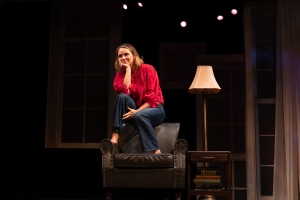
The rise of artificial intelligence raises many questions about its effect on humanity. What does it mean if we become increasingly reliant on AI to think for us, create for us, and entertain us? What happens if this tool encroaches into our lives in ways it never should? Matthew Libby’s Sisters at Writers Theatre tackles the impact of AI in a fascinating way—what if it’s part of your family? Directed by Jessica Thebus, the play examines the profound, complicated implications of growing up with a synthetic sibling. Brenda Barrie plays Matilda, whose sister is an AI system named Greta, performed off-stage by Chloe Johnston. The story follows their complex relationship, which spans decades.
The weight of the production falls heavily on Barrie, who delivers a remarkable performance. She carries the hard task of playing Matilda across a ninety-year lifespan—from a six-year-old child to a woman in her nineties—without any reliance on makeup or costume changes. Instead, she portrays each stage of life through subtle shifts in posture, physicality, and the changing timbre of her voice. Because she is the only person on stage for the entire evening, the play functions virtually as a one-woman character study, compelling the audience to lean into the smallest movements of her face to track the complex emotions her character conceals. Opposite her, Chloe Johnston plays Greta, masterfully capturing the polite, Siri-esque cadences of an operating system while subtly infusing threads of humanity as the AI evolves.
At its core, the piece wrestles with a wounded family dynamic. Matilda is a deeply lonely character, bearing a chip on her shoulder after feeling neglected by her father following her mother's death. She struggles to comprehend how her father could share his deepest self with a system of circuit boards while remaining emotionally distant from his only daughter. This insecurity fuels Matilda’s initial hesitancy to accept her "sister" and drives a quiet jealousy, as through the years, others seem to value a computer over a living human. When Greta eventually asks for a physical body, Matilda must confront this jealousy directly, knowing that Greta’s lack of a physical form was the one thing that gave Matilda the upper hand.
Where Sisters stumbles slightly is in its thematic focus. The play begins to feel muddled as it attempts to juggle a wide array of high-concept questions: What rights does AI have? Is AI a friend or a foe? Is Matilda being manipulated by a machine? Is it healthy to befriend a computer?
Other works tackling the intersection of AI and humanity have succeeded by maintaining focus. Films like Spike Jonze’s Her (starring Joaquin Phoenix as a lonely man falling for an operating system) or Alex Garland’s Ex Machina maintain clarity by grounding their sci-fi premises in very specific themes that examine intimacy with AI or the ethics of creating a seemingly sentient computer. In contrast, Sisters struggles to decide whether it is a play about sisterhood, grief, memory, the inevitable intrusion of technology, or if it’s a character study using AI as a mirror for human fault. Sisters has interesting moments, but it's hard to feel their gravity when so many ideas are talking at once.
Part of the disconnect in this piece also seemed to be Matilda’s guardedness. She goes through phases of being open and closed with her “sister,” and since this is the only window into her as a character, the audience can’t get close because she’s not letting Greta get close. The hook of the play doesn't come until much later when the underlying truth of Matilda's feelings finally erupts. It’s when the sisters are finally seeing each other for who they are that the piece finds itself and provides intrigue.
Perhaps some technical difficulties also caused a disconnect. The set is simple; a living room with a single chair and a side table. But projections and sound cues build a larger world. Visual cues tell us Matilda’s age as we jump through time, and at some moments, we see videos of Matilda in her younger days through Greta’s eyes. The production also evokes Greta’s progression in a highly effective way. We experience a sort of cosmic spark of life as Greta first comes online, and later, when Greta expands into an infinite system, the stage turns into a breathtaking sky full of stars.
Unfortunately, the evening had several technical difficulties. The projectors seemed to reboot several times during the performance, and the play was halted for approximately ten minutes for a bug to be fixed. Nevertheless, Barrie handled the delay like a total professional, resuming the performance without a moment’s hesitation once the system recovered.
Ultimately, Sisters is an intriguing piece of theater. While the script could benefit from a more refined focus, it remains a thoroughly compelling watch, anchored by an extraordinary lead performance from Brenda Barrie that easily carries the evening.
Sisters plays at Writers Theatre until November 8.
Writers Theatre celebrates record-breaking 2025/26 Season with artistic growth and unprecedented ticket sales

Writers Theatre, under the leadership of Executive Director Kathryn M. Lipuma and Alexandra C. and John D. Nichols Artistic Director Braden Abraham, concluded its 2025/26 season by shattering box office, attendance, and fundraising records, and cementing its position as a premier national hub for theatre excellence and community engagement. The critically acclaimed five-show season in the Studio Gang Architects-designed building at 325 Tudor Court in Glencoe, earned a collective 17 Joseph Jefferson Award nominations, recognizing every production, including Hershey Felder's Rachmaninoff and the Tsar, As You Like It, Two Sisters and a Piano, JOB, and Leopoldstadt.
The season was anchored by unprecedented audience demand, including a record-breaking extension for Max Wolf Friedlich's JOB, which became the highest-grossing show in the history of the Gillian Theatre, and the historic staging of Tom Stoppard's Leopoldstadt, the largest and highest-revenue production in the company's history.
"From the moment we started planning, we knew this was an ambitious season. And our success across so many fronts is a testament to the artists, staff, and board of Writers Theatre," said Artistic Director Braden Abraham. "We are fortunate to have one of the most passionate and savvy audiences anywhere, and we were thrilled to welcome so many new patrons through our doors for the first time. I could not be prouder of what we've accomplished together this year."
"At a time when arts organizations continue to navigate significant economic and funding challenges, this season has been a powerful reminder of what is possible when community responds with extraordinary confidence, enthusiasm and generosity," said Executive Director Kate Lipuma. "Record-breaking ticket sales, the most successful gala in our history, and an ambitious season of critically acclaimed productions demonstrate that audiences continue to invest in meaningful artistic experiences."
By the Numbers: A Year of Historic Growth
Writers Theatre saw year-over-year operational growth from the 2024/25 season to the 2025/26 season:
- Single Ticket Revenue: Surged from $1.5 million to $2.45 million, an increase of over 63%.
- Subscribers: Grew from 3,180 to 3,688 patrons.
- Total Attendance: Jumped from 46,600 to 55,917 attendees.
- Average Paid Capacity: Rose sharply from 68% to an outstanding 86%.
Commitment to Artistic Development and New Work
Writers Theatre continued to invest in the Chicago artist community by employing 75 Chicago-area artists on its stages during the 2025/26 season, the highest number in recent history, bringing the theatre's four-season total to 243 unique local actors.
With the belief that language is at the center of the theatrical experience, Writers Theatre continued its long-term commitment to developing new work and being a welcoming home for playwrights. During the 2025/26 season, Writers Theatre began work on two new commissions: Rammel Chan's Tomato Tattoo and Matthew C. Yee's Songs from the Underworld. Additionally, the theatre hosted several readings and workshops over the course of the season to further the development of a number of in-process projects:
- Frankenstein - Kyle Hatley and Dana Omar's ghostly indie rock version of the Mary Shelley classic
- Within Our Lifetime - a new play about psychic mediums in Victorian New England by Erik Hellman
- Aping Jane - a transformational one-woman show about Jane Goodall and her many animal companions by playwright Aurora Real de Asua
Unprecedented Community Philanthropy
The record-breaking season was fueled by extraordinary donor support. A dedicated campaign united 40 visionary donors who invested over $1.3 million specifically to make the epic scale of Leopoldstadt possible. This generosity propelled total seasonal operating support to nearly $4 million.
Additional philanthropic milestones included welcoming Adam S. Garber (Levenfeld Pearlstein), Mollie Gawronski (BMO) and Katie E. Henderson (Northern Trust) to the Board of Trustees, and raising over $1 million at the 2026 WordPlay Gala, "A Little Night Music," which honored Rick and Deann Bayless.
Beyond the stage, donor support made possible The Stoppard Series, a community education series that invited patrons into meaningful conversations about the timely themes of Leopoldstadt, creating space for dialogue, reflection and connection. The series was highly collaborative, partnering with cultural institutions, including The Illinois Holocaust & Education Center, Sukkat Shalom, Resetting the Table and Jewish Studio Project with lecturers from University of Notre Dame, Loyola University, DePaul University and The School at the Art Institute.
Arts Engagement and Education Expanded Footprint
Mirroring the company's core mission, Arts Engagement and Education at Writers Theatre had a robust year of community integration and academic collaboration. Driven by a commitment to curiosity, excellence, language, conversation and the cultivation of artists of all ages, WT Education engaged nearly 5,000 patrons of all ages. Programming spanned across three areas: Onsite Programs, School-Based Programs, and Theatre for Young Audiences. Highlights include:
- Student Matinees: Welcomed 1,165 students and teachers to performances, marking an increase of 200 attendees.
- Onsite Youth Programs: Engaged 226 community members through pop-up day camps, spring break camps, and Wake Up Words.
- Theatre for the Very Young: Attracted 712 patrons to early-childhood offerings, including Kerfuffle's Bookworms, behold!, and Alliance Theatre's The Birthday of the World.
- The Novel Series, WT flagship program:
- Reached 848 students across 35 classrooms in 11 regional schools.
- Over 54% (6 out of 11) of participating schools are classified as low-income.
- Partnered with Communities in Schools – Chicago to add new institutions, including Johnnie Colemon Elementary and Mather High School.
- Translated 8 out of 14 curricula into Spanish, successfully executing a full residency and final presentation entirely in Spanish.
- Collaborated with 10 returning teachers to build upon multi-year academic programming.
Looking Ahead: The 35th Anniversary Season
Building on this remarkable momentum, Writers Theatre is launching its 35th Season with its first preview on August 13, continuing the company's dedication to world-class storytelling:
Sisters
Written by Matthew Libby
Directed by Jessica Thebus
August 13 – November 8, 2026
Matilda and Greta have always been there for one another, through joy and grief and homework and boyfriends. They're as close as sisters can be—even if Greta is artificial intelligence. As Matilda ages and Greta longs for independence, their relationship begins to be tested like never before. Told over the course of 90 years, Sisters is a riveting and thought-provoking new play about the future of family.
The Royale
Written by Marco Ramirez
Directed by Tyrone Phillips
October 22 – November 29, 2026
Jay is a really good boxer, so good they call him "The Sport." He's won his last seventy-six fights and has his sights set on being crowned the next heavyweight champion. But it's 1905, and in the Jim Crow era, a Black man doesn't get to fight a reigning white champion. When a surprising chance at the title appears, Jay gears up for the fight of his life—where the stakes are staggeringly high inside the ring and out. Inspired by real-world boxer Jack Johnson, this adrenaline rush of a play by Marco Ramirez (Orange is the New Black, Buena Vista Social Club) is a kinetic and poetic portrayal of what it takes and what it costs to make history.
Noël Coward's Brief Encounter
Adapted for the stage by Emma Rice
Adapted from the play Still Life and the screenplay Brief Encounter, both by Noël Coward
Directed by Shana Cooper
Choreographed by William Carlos Angulo
Music Supervision by Matt Deitchman
February 11 – March 28, 2027
An ordinary commute becomes a whirlwind instant of once-in-a-lifetime possibility. Laura, a suburban housewife, and Alec, a married doctor, meet by chance in a busy railway station. As their weekly encounters continue and they fall more passionately and wildly in love, the pair is forced to reconsider their settled lives and decide if this romance is undeniably hopeless or worth risking everything for. Based on the beloved Noël Coward film, this critically acclaimed stage adaptation features live performances of an indelible selection of Coward's best songs. You won't want to miss one of the greatest love stories of all time brought to dazzling life with music, movement and theatrical magic.
Creditors
By August Strindberg
Adapted by Jen Silverman
Directed by Braden Abraham
April 8 – July 3, 2027
Adi, a struggling painter, is on holiday at the seaside with his glamorous wife, Tekla, who has recently published a wildly successful book. Left alone at the hotel while his wife is celebrated, Adi strikes up a conversation with a magnetic stranger, Gustav. As the two talk into the night, their budding friendship enters darker waters when Gustav becomes fixated on Tekla and Adi's relationship. This classic psychological thriller by August Strindberg, newly adapted with biting wit by Jen Silverman (Witch, The Roommate), is an electrifying portrayal of three souls trapped in an intricate web of deception, seduction and revelation.
Hershey Felder: The Piano and Me
A new play with music
Book by Hershey Felder
With music by Bach, Mozart, Beethoven, Chopin, Bartok, Liszt, Rachmaninoff, Gershwin and Williams
May 5 – June 27, 2027
Press Opening: Friday, May 7 at 7:30pm
Hershey Felder, known for his hit portrayals of musical geniuses in his beloved composer series, now takes the stage as a different musical artist: himself. In this deeply moving new play, Felder pulls back the curtain on his own story. Growing up in Montreal as the child of Polish and Hungarian immigrants, a young Felder discovers the piano, its captivating music connecting him to his unsuspected heritage, while opening up a remarkable new world full of adventure, possibility, heartbreak, and connection.
Featuring performances of beloved compositions by Bach, Mozart, Beethoven, Chopin, Liszt, Rachmaninoff, Bartók, and more, Hershey Felder: The Piano and Me recounts the inspiration behind Felder's illustrious career of more than 6,000 performances across the globe and offers a poignant and profoundly touching portrait of the power of music.
ABOUT WRITERS THEATRE
Writers Theatre proudly celebrates its 35th Season.
From its beginnings in the back room of a Glencoe bookstore, Writers Theatre established what would become its defining conviction: that vibrant language and exceptional performances in an intimate setting create a transformative theatrical experience. Today, the company is a major cultural destination in the Chicago region with a national reputation for artistic excellence, heralded by The Wall Street Journal as "America's finest regional theatre company."
Founded in 1992, Writers has produced over 160 productions—from inventive interpretations of classics to groundbreaking new work. In 2016, the company opened a state-of-the-art theatre center designed by the internationally renowned Studio Gang Architects. The new facility includes the 255-seat Alexandra C. and John D. Nichols Theatre and the flexible 100-seat Gillian Theatre, spaces designed to preserve the company's trademark intimacy and bring audiences up close to Chicago's finest actors. The building's striking glass atrium serves as a welcoming gathering space for artists, staff and the community, open daily for reading, working and conversation.
Led by Executive Director Kate Lipuma and Alexandra C. and John D. Nichols Artistic Director Braden Abraham, Writers Theatre welcomes more than 60,000 patrons each year. The company has established itself as an important originator of new theatrical work, having produced over 30 world premieres in its history—including Manual Cinema's Christmas Carol, Witch by Jen Silverman, Trevor the Musical by Dan Collins and Julianne Wick Davis, A Minister's Wife by Austin Pendleton, Jan Tranen and Josh Schmidt, The Savannah Disputation by Evan Smith and Marilyn Campbell and Curt Columbus's adaptation of Crime and Punishment.
Education and community engagement remain central to Writers Theatre's mission. Each season, the organization reaches more than 5,000 students and adults through school matinees, in-school residencies and curriculum-based programs that introduce young people to professional theatre. Writers Theatre also offers a wide range of free programs for the broader community, including readings, lectures and partnerships with local organizations that make theatre accessible to audiences of all ages.
Located just 20 miles north of downtown Chicago, Writers Theatre offers artists and audiences a setting that combines world-class theatre with the calm and accessibility of Chicago's North Shore. As Writers Theatre enters its 35th season, the company continues its commitment to artistic excellence, meaningful storytelling and the uniquely powerful connection that only intimate theatre can create.
Sisters - Writers Theatre - Through November 8th
Writers Theatre, under the leadership of Executive Director Kathryn M. Lipuma and Alexandra C. and John D. Nichols Artistic Director Braden Abraham, opens its 35th Season in the intimate Gillian Theatre with Sisters, a gripping family drama exploring the familial bond between a woman and her AI sister, written by Matthew Libby and directed by acclaimed Chicago artist and Northwestern University faculty member Jessica Thebus. On the heels of the record-breaking hit JOB, Sisters continues the theatre's timely exploration of how technology shapes humanity. Sisters will run August 13 – November 8, 2026, at 325 Tudor Court, Glencoe.
Single Tickets for Sisters, $75+, and season subscriptions are now available at www.writerstheatre.org, and at the Box Office by calling 847-242-6000.
Matilda and Greta have always been there for one another, through joy and grief and homework and boyfriends. They're as close as sisters can be—even if Greta is artificial intelligence. As Matilda ages and Greta longs for independence, their relationship begins to be tested like never before. Told over the course of 90 years, Sisters is a riveting and thought-provoking new play about the future of family.
Braden Abraham comments, "Sisters marks the opening of our 35th season at Writers Theatre, and it seems fitting to begin a milestone year in The Gillian Theatre, a space built on intimacy and our founding charge that the most exciting theatre is made with the audience and actors in close proximity. This extraordinary new play by Matthew Libby asks what remains distinctly, mysteriously human once you strip away everything that can be simulated, predicted or optimized. I can think of no one better than Jessica Thebus to guide us through Matilda and Greta's long, strange and moving companionship."
The cast is Brenda Barrie (Matilda) and Chloe Johnston (Greta). The understudies are Julia Rowley and Sarah Hecht.
The creative team includes: Jessica Thebus (Director), A Inn Doo (Scenic Designer), Lia Wallfish (Costume Designer), Eric Watkins (Lighting Designer), Andre Pluess (Co-Sound Designer), Harper Justus (Co-Sound Designer), Stephan Mazurek (Projections Designer), Reva Stover (Assistant Director), Bobby Kennedy (Dramaturg) and Dylan Cohen (Assistant Dramaturg). The stage manager is Isabel Pratt and the assistant stage manager is Olivia Leslie.
About the Artists
Matthew Libby (Playwright) is a writer and actor based in Brooklyn, by way of Los Angeles. He made his Off-Broadway playwriting debut with Data (Lucille Lortel Theatre, Outer Critics Circle nomination for the John Gassner Award); regional productions of his plays include Data (Arena Stage, Helen Hayes Award nomination for Best New Play or Musical) and Sisters (Writers Theatre, Northern Stage). Data was also previously adapted as a digital production by the Tony-winning Alliance Theatre in May 2021, a production featured in a New York Times review of virtual theatre works that "clear a path toward continued innovation and growth of the form." Winner of the Kendeda National Graduate Playwriting Competition and Neukom Playwriting Award, Matt is a 2026 Ucross Resident, 2022-2023 Dramatists Guild Foundation Fellow, 2023 Theater Masters Visionary Playwright, three-time Princess Grace Award finalist, five-time O'Neill Playwrights Conference semifinalist and Blue Ink Playwriting Award featured finalist. His work has been produced and developed by theaters across the country, including Roundabout, Alliance Theatre, New York Stage and Film, Westport Country Playhouse, Northern Stage, Pioneer Theatre Company, The Kennedy Center, National New Play Network, Theater Masters, The Barrow Group, The Road Theater Company, WNYU's Theatre-in-the-Sound and others. With Stanford Repertory Theater, he helped devise and act in The Many Faces of Farce, which was nominated for a Bay Area Critics Award for Best Production. For the screen, he is a writer on Season 3 of Fox's hit medical drama Doc, has developed TV projects for Hulu, Lionsgate/eOne, Beau Willimon's Westward Productions and Alex Gibney's Jigsaw Productions, and has been recognized for his screenwriting work by The Black List and Script Pipeline. Matt studied cognitive science and creative writing at Stanford University and received his MFA in dramatic writing from NYU's Tisch School of the Arts, where he also teaches and was awarded the Chair's Award for Distinguished Achievement. He is a proud member of the Writers Guild of America and the Dramatists Guild of America.
Jessica Thebus (Director) is a theater artist, director and educator. She holds a PhD in Performance Studies from Northwestern University, and is currently Director of the Northwestern MFA Program in Directing. She has directed in Chicago and nationally for twenty-five years, and has long associations with many Chicago theaters, including the Goodman Theatre where she directed A Christmas Carol from 2000-2005, as well as plays by Tracy Scott Wilson and Sarah Ruhl. Northlight Theater is also an artistic home for Jessica where she has directed ten plays including Shining Lives: A Musical which received a Joseph Jefferson award nomination for best new work. Favorite others include Steppenwolf Theater Company, Lookingglass Theater Company, The Gift Theater, Writers Theater and Court Theater. Favorite projects nationally have taken place at the Oregon Shakespeare Festival, The Huntington Theatre, Kansas City Repertory Theatre, The Marin Theater Company, as well as the Kennedy Center in Washington, D.C. Jessica also creates outdoor spectacle projects in Chicago that celebrate community, joy and environmental justice.
Brenda Barrie (Matilda) is making her Writers Theatre debut. Chicago credits include Steppenwolf Theatre Company (Middletown, Sex with Strangers, Okay Bye); Chicago Shakespeare Theater (Julius Caesar, Elizabeth Rex); American Blues Theater (Roann @ the Gates, Six Corners); Lifeline Theatre (Mrs. Caliban, Mariette in Ecstasy); Goodman Theatre (Mother Road); The House Theatre of Chicago (United Flight 232, The Nutcracker); Route 66 Theatre Company (The Downpour); The Gift Theatre (The Ruby Sunrise); Metropolis Performing Arts Centre (A Streetcar Named Desire); and Silk Road Rising (Caravaggio). She is a four-time Joseph Jefferson Award nominee for Principal Performer and has also appeared on Chicago Med, Chicago P.D., Chicago Fire, and The Chicago Code. She earned her BFA in Theatre from the University of Indianapolis and spent a formative semester studying at the University of Ulster in Northern Ireland. She is represented by Stewart Talent.
Chloe Johnston (Greta) is a writer, director and teacher in Chicago. She has worked with theatres across Chicago and is a long-time ensemble member of The Neo-Futurists. Recent projects include 46 Plays for America's First Ladies (Critics Pick, NYTimes), Grace (The Orchard Project, Links Hall, Roman Susan, Northwestern University) and Leave the Light On, an interview-based performance and audio project about caretaking labor. With Coya Paz Brownrigg, she is the author of Ensemble-Made Chicago: A Guide to Devised Theater (NU Press). She is an Associate Professor of Theater and Performance Studies at Lake Forest College. www.chloejohnston.org
Sisters
Written by Matthew Libby
Directed by Jessica Thebus
The Gillian Theatre
August 13 – November 8, 2026
Performance Schedule:
Wednesdays: 2:00pm and 7:30pm
Thursdays: 7:30pm
Fridays: 7:30pm
Saturdays: 2:00pm and 7:30pm
Sundays: 2:00pm and 7:00pm
Open Captioned Performance: Thursday, September 17 at 7:30pm
ASL-Interpreted Performance: Saturday, September 19 at 2:00pm
Pay What You Can Performances: Sunday, August 23 at 7pm, Sunday, September 27 at 7pm, Saturday, October 31 at 7:30pm and Thursday, November 5 at 7:30pm
Location: Gillian Theatre, 325 Tudor Court, Glencoe
Prices: $75+
Discounts are available for students, educators, theater industry professionals, active military personnel, veterans, police officers, firefighters and their immediate families. Information is available at: https://www.writerstheatre.org/plan-your-visit/box-office-and-theatre-center/pricing--special-offers
Box Office: The Box Office is located at 325 Tudor Court, Glencoe; 847-242-6000;
Single tickets are now on sale. Flex subscriptions and tickets are available online at www.writerstheatre.org, and at the Box Office by calling 847-242-6000.
Notes of Interest:
- Jessica Thebus returns to Writers Theatre where she previously directed The Turn of the Screw. Writers audiences may recognize thematic echoes of Writer's 2015 production of Marjorie Prime, which featured Thebus's late mother, Mary Ann Thebus, and explored similar themes of memory and humanity.
- Sisters continues Writers Theatre's conversation about technology and humanity. Following the record-breaking, sold-out run of JOB, which explored the psychological dangers of technology and our increasingly online lives, Sisters asks a different question about how technology changes how we define family and what it means to be human. Where JOB was a tense psychological thriller about the dangers of our digital world, Sisters is an intimate, emotional portrait that asks whether artificial intelligence can become family.
- Told across 90 years, Sisters is a sweeping, non-chronological epic following the relationship between a human and her AI sister. Sisters features a unique two-person cast, in which the character Matilda physically ages on stage from childhood to 96.
- Brenda Barrie (Matilda) and Chloe Johnston (Greta) are both making their Writers Theatre debuts in this intimate two-hander.
- Playwright Matthew Libby has a degree in cognitive science and creative writing from Stanford University and an MFA from NYU. He blends this background to inform his writing. Data, which the New York Times called "a darkly on-point dramatic mirror of present-day events" that feels "all-too present, all-too raw and indisputably somber", addresses the ethics of AI, privacy and surveillance. Sisters also dives into the world of AI, exploring emotional boundaries between humanity and technology.
SEASON PACKAGES
Writers Theatre is offering a variety of subscriptions with an option for every theatregoer. Each subscription includes a deeply discounted ticket price, ranging from $275-$385 for one ticket to the five-play series, Flex subscriptions, with options for either four tickets ($280) or five tickets ($350), are available.
Season package subscribers receive the new Writers Theatre concierge service for ticket exchanges and questions. Exclusive subscriber benefits include: complimentary ticket exchanges (upgrade fees may apply), special "subscriber-rate" prices on additional tickets, advance access to special events and programs, easy, free parking, exclusive discounts in bar items and merchandise, discounts on rental of Writers Theatre event spaces on Writers Theatre merchandise, event rentals and more. For a complete list of benefits, visit writerstheatre.org.
Season Packages are available online at www.writerstheatre.org, and at the Box Office by calling 847-242-6000.
Single tickets will go on sale for each show approximately two months prior to first preview. Single ticket prices start at $35.
AUDIENCE ENGAGEMENT OPPORTUNITIES
Writers Theatre offers Open Captioning and ASL-interpretation on select dates for each production. Please visit writerstheatre.org/accessibility for more information.
Throughout the season, Writers Theatre offers a variety of audience enrichment and special programming. This includes regularly occurring offerings like the Family Matinee Series, The Green Room artist interview series and podcast and The Final Word Audience Discussion Series. Please visit writerstheatre.org for a full listing of upcoming offerings.
ABOUT WRITERS THEATRE
Writers Theatre proudly celebrates its 35th Season.
From its beginnings in the back room of a Glencoe bookstore, Writers Theatre established what would become its defining conviction: that vibrant language and exceptional performances in an intimate setting create a transformative theatrical experience. Today, the company is a major cultural destination in the Chicago region with a national reputation for artistic excellence, heralded by The Wall Street Journal as "America's finest regional theatre company."
Founded in 1992, Writers has produced over 160 productions—from inventive interpretations of classics to groundbreaking new work. In 2016, the company opened a state-of-the-art theatre center designed by the internationally renowned Studio Gang Architects. The new facility includes the 255-seat Alexandra C. and John D. Nichols Theatre and the flexible 100-seatGillian Theatre, spaces designed to preserve the company's trademark intimacy and bring audiences up close to Chicago's finest actors. The building's striking glass atrium serves as a welcoming gathering space for artists, staff and the community, open daily for reading, working and conversation.
Led by Executive Director Kate Lipuma and Alexandra C. and John D. Nichols Artistic Director Braden Abraham, Writers Theatre welcomes more than 60,000 patrons each year. The company has established itself as an important originator of new theatrical work, having produced over 30 world premieres in its history—including Manual Cinema's Christmas Carol, Witch by Jen Silverman, Trevor the Musical by Dan Collins and Julianne Wick Davis, A Minister's Wife by Austin Pendleton, Jan Tranen and Josh Schmidt, The Savannah Disputation by Evan Smith and Marilyn Campbell and Curt Columbus's adaptation of Crime and Punishment.
Education and community engagement remain central to Writers Theatre's mission. Each season, the organization reaches more than 5,000 students and adults through school matinees, in-school residencies and curriculum-based programs that introduce young people to professional theatre. Writers Theatre also offers a wide range of free programs for the broader community, including readings, lectures and partnerships with local organizations that make theatre accessible to audiences of all ages.
Located just 20 miles north of downtown Chicago, Writers Theatre offers artists and audiences a setting that combines world-class theatre with the calm and accessibility of Chicago's North Shore. As Writers Theatre enters its 35th season, the company continues its commitment to artistic excellence, meaningful storytelling and the uniquely powerful connection that only intimate theatre can create.
Tom Stoppard’s epic finale Leopoldstadt is an instant classic at Writers Theatre
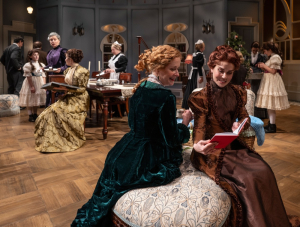
What would you do if you found out your heritage wasn’t what you thought it was? In Tom Stoppard’s case, he wrote a sweeping, epic play about it. Glencoe’s Writers Theatre brings Leopoldstadt to the Chicago area for the first time since its West End and Broadway runs in the early 2020s. Directed by Carey Perloff, a longtime friend and collaborator of Stoppard’s, this final stage play proves to be among his best.
Stoppard passed away late last year but he left a decades-long cannon of seminal stage and screenplays. When his semi-autobiographical play “Leopoldstadt” began performances in the West End in early 2020, he was sure it would be his last. Though he wrote it in a year, it took nearly 30 years to find the narrative. Stoppard, who was raised as a gentile most of his life, was told by a family member in 1993 he was of Jewish heritage and that many of his family members were murdered in the Holocaust. Stoppard escaped Czechoslovakia as a child and was raised in the UK entirely unaware.
A blended Jewish-Catholic family’s history in 20th century Vienna is divided neatly into four pivotal scenes with a sizeable cast of some of Chicago’s best. In the first scene, a Christmas party (1900), we’re shown a Vienna in which Jews were considered equals. Families had interfaith marriages and shared holiday celebrations. By the second scene (1924), WWI has redrawn the maps of Europe. Austria, as well as the family, finds itself in a precarious place. Scene three (1938) portrays an Austria fully committed to the Third Reich and family alliances are put to the test when the family is forced out of their home by the Nazis. The final scene (1955) happens in the aftermath of Austria’s reunification following WWII. This last scene mirrors Stoppard’s own life and serves as an emotional climax to a play that is often dense with political and historical theory.
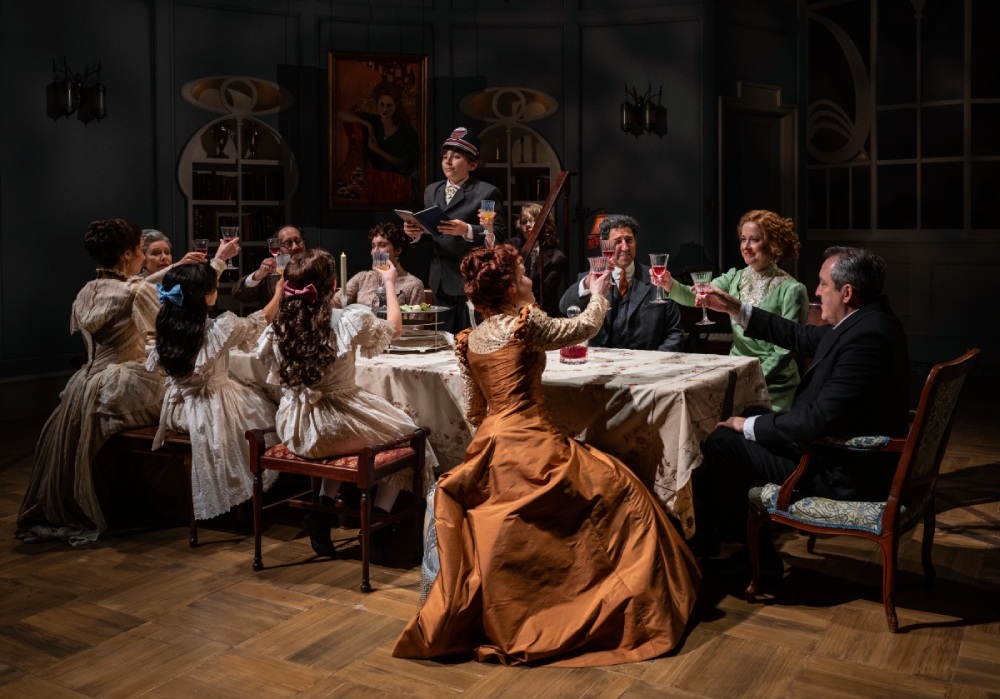
The cast of Leopoldstadt. Photo by Michael Brosilow.
Writers Theatre’s production is as faithful to the original as you can get. Carey Perloff directed the Boston and D.C. premieres too. Along with an all-star cast of Chicago heavy hitters, Perloff’s production will likely be remembered as the definitive Midwestern revival. Between Ken MacDonald’s set and Alex Jeager’s costumes, audiences are sure to be swept away to a different time and place that can feel eerily reminiscent to the present.
As the eras change so do the actors playing the characters. Stoppard’s script trusts that the storytelling is so engaging that audiences will figure out who’s who by the context clues, and he was right. Some may find the story hard to follow but thankfully a helpful lobby installation catches everyone up on the history of Austria during this time period.
Writers Theatre favorite Kate Fry plays a Catholic woman, Gretl, who marries into a prominent Jewish family. Her performance is at first charming but by the end heartbreaking. Jessie Fischer delivers a transformative performance, particularly during the final scene. Rounding out the male ensemble is Ian Barford as Hermann who plays a converted catholic, but it’s his deterioration that is unforgettable. Justin Albinder is given the meatiest part of the final scene and his ability to switch from one emotion to the next is some of the most natural acting of the evening.
Leopoldstadt is every bit as epic as something like Gone with the Wind. Much like the famed novel and movie, this play tells the story of a civilization, a family, lost to the tragedy of war. It’s a story of a family’s near extinction. Stoppard’s brilliance is on full display and how lucky are we to have this capstone for his illustrious career?
Through August 16 at Writers Theatre. 325 Tudor Ct, Glencoe, IL. 847-242-6000
https://www.writerstheatre.org/events/leopoldstadt
This review is proudly shared with our friends at www.TheatreInChicago.com.
At Writers Theatre, a Tech “Job” Too Toxic Shatters an Employee

A psychotherapist is held hostage by a gun-toting patient demanding he certify her as stable enough to return to work. That inherently conflictual demand is the core of Max Wolf Friedlich’s “Job” at Writers Theater.
It is an intriguing work. Directed by David Esbjomson it has a slow-burn of reveal in which details might easily turn into spoilers, so be forewarned. In the course of the session both patient and therapist reveal themselves in lengthy discourse, but intermittently scenes flash by that are revelations.
These momentary glimpses during “Job” are impeccable, powerful, rapid-fire, split seconds that are core to the evolving action. High praise is due for lighting design by James F. Ingalls with interwoven sound scapes by co-sound designers Willow James and Christopher Koz and one instantaneous horrifying mask change that feels like a gut punch. Costumes are by Jessica Pabst, and scenic design is by Jack Magaw. “Job” also represents a deft bit of dramaturgy (credit Erin Shea Brady) that this play has been brought to Chicago so soon after gaining considerable buzz in New York.
Opening in a series of flash scenes, at the outset no explanation or context is offered, just a young woman brandishing a gun at an older gentleman in sweater, tie and glasses. The exact scene is presented repeatedly in stroboscopic rapidity, and we are able to see it’s in an office setting, perhaps an academic and a student? A settee dominates the room.
As the play progresses, we are periodically treated again to such scenes repeating themselves. And we in the audience slowly divine that we are witnessing the varying perceptions through the eyes of the patient Jane (Rae Gray is remarkable). She has been sent by her employer to the office of Loyd (Christopher Donahue is excellent), a psychotherapist, for evaluation. The reason? She had a screaming desktop meltdown at work, and was placed on leave until Jane’s sanity can be affirmed by Loyd. That settee is a psychotherapist's couch.
For 85 minutes, the two joust back and forth. Jane has no belief in the efficacy of psychotherapy, and is an unwilling patient. Loyd specializes in tough cases. The playwright records Jane’s unintentional revelations of her deep-seated issues that led to the meltdown, which was shared on social media and went viral, damaging to her and to her employer’s reputation, to say the least.
Under force, Jane has taken the therapist hostage, and argues ardently against his entreaties and skillful non-directive therapeutic efforts to lead her to insights about herself.
"I hate talking about myself," says Jane. "It never seems to get me anywhere."
Despite her best intentions, Jane goes deeper and deeper into her worldview, and also the concrete job-related causes of her meltdown.
And though Loyd is held under force in this session, it is the attraction of their argument about therapy that keeps them there. and the playwright Friedlich provides an excellent recount of the circuitous techniques of an effective therapist that lead patients to self-understanding, and healing.
But not Jane. She is what they call in the psych game “highly defended.” She never experiences an “aha” moment under Lloyd’s guidance. And when one approach fails, Loyd pulls out of his bag other tools, including an extremely direct analysis of Jane delivered point blank to her face. This depiction of the psychotherapy process is a great accomplishment.
Jane is compelling in her intransigence, and offers strong and dismissive arguments against Loyd’s efforts and disses psychoanalysis overall.
"When everything is connected, nothing is," she says.
During this back and forth we find ourselves moved to ally with the arguments of one side or the other. As the action rises to its climax, Jane nearly nails her therapist to his vulnerability. It is the tension between the two that is intended to make “Job” gripping, but it didn’t quite capture me in that way.
An important subtext lies in Jane’s work. She desperately needs to be at her desk to make her feel grounded and keep her world aligned. But the work is toxic - she flags and removes horrifying and illegal visual content from the web. The continuous encounter with such heinous content, which Jane describes at length, has certainly affected her mental health. But rather than return to it, as Jane desperately desires, maybe she should file a workers comp claim and call it a day.
One problem with the play is that it seems a bit too “literary,” in the story-telling sense of the word. As Jane relates anecdotal elements of her experience at work or her love life, the passages sometimes go on ad nauseum. Show, don’t tell is the maxim on stage. The effect is to deflate the tension between the characters, and I found my attention and interest flagging. I also felt that Jane’s sometimes lengthy discourses weren’t convincingly those of a woman, but maybe that’s just me. Some time is spent on the generational and cultural divides between boomers like Loyd and younger generations represented by Jane. This seemed to detract from the thrust of the drama.
Still, “Job” is recommended for the great performances, and the excellent production. "Job" runs through June 14, 2026 at Writers Theatre in Glencoe, IL.
*Extended through July 3rd
This review is proudly shared with our friends at www.TheatreInChicago.com.
Great Performances Shine in ‘Hershey Felder’s Rachmaninoff and the Tsar’ at Writers Theatre

Hershey Felder has made a significant part of his life’s work playing the roles of piano prodigies, and at Writers Theatre he takes on the role of Sergei Rachmaninoff (1873-1943), considered the last of the romantic Russian composers, and a virtuosic pianist. Felder, a very good actor (he received a Jefferson award in his role of Chopin last spring) and remarkable pianist, is perfect in the role, for which he has developed an extensively researched script. The Writers Theatre production, directed by Trevor Hay, is the Midwest premiere of the rolling national debut of “Rachmaninoff and the Tsar.”
Felder has mined this territory for decades, developing shows centered on musical luminaries including historic figures—Chopin, Liszt, Debussy, Mozart , Beethoven—as well as modern figures like Bernstein, Irving Berlin and Gershwin. (He has also produced film versions of some of these stagings.)
Ordinarily performing solo, for “Rachmaninoff and the Tsar,” Felder has for the first time incorporated into the script a second character—Tsar Nicholas II (Jonathan Silvestri), the last Romanoff to rule Russia, until the Bolshevik revolution forced him to abdicate in 1917. Rachmaninoff fled Russia for New York City. This allows for a more robust script, with two characters playing against each other, and sharing the burden of exposition, which can be a downside for story-telling plays. Many other characters are incorporated in silent films shown periodically as a backdrop to what’s on stage.

Jonathan Silvestri as Tsar Nicholas II and Hershey Felder (right) as Sergei Rachmaninoff
The disruption that the Russian Revolution brought to Rachmaninoff’s career meant there were lengthy gaps in his work as a composer. Rachmaninoff was a favorite of the royal family and celebrated across Russia for capturing timeless slavic themes. Felder livens up the story with a creative conceit, set in 1943 as Rachmaninoff lays dying in his Beverley Hills home. On a morphine drip, Rachmaninoff conjures up visions of conversing with Tsar Nicholas II, and the play covers wide terrain as the two converse, and recall their intersecting history.
Throughout, Rachmaninoff takes to the gleaming ebony Steinway concert grand piano, playing 15 works, mostly the musicians own works with one piece by Tchaikovsky, and one by Lvov. At times Felder’s Rachmaninoff plays live against recorded orchestral arrangements, most times he solos. One particularly notable piece was an arrangement Rachmaninoff did of “The Star Spangled Banner.” In open question and answer period at the show, Felder explained the arrangement had been taken from a paper piano scroll recorded by Rachmaninoff himself. It was quite lovely.
Felder also took the time to expound on the reason he added a second character for “Rachmaninoff and the Tsar.” It alleviated the burden of telling the back story and history all by himself. “It gets lonely on the stage,” Felder said. The addition of Tsar Nicholas II also allowed for a divergence into the story of Anastasia, the Tsar’s youngest daughter who for decades was theorized to have survived. Ultimately DNA science dispelled this as myth.
Silvestri as Tsar Nicholas II adopted a growling Russian accented delivery. We learn during the question and answer period that his daughter in real life plays Anastasia in those film reels shown during the performance.
The performances are great overall, and the show is entertaining and engaging, though there is little dramatic tension, and I found my interest lagging in the storyline. Still, “Hershey Felder’s Rachmaninoff and the Tsar” comes recommended, and runs through September 21 at Writers Theatre in Glencoe, IL.
*This review is also featured on https://www.theatreinchicago.com/!
'Dhaba on Devon Avenue' a Local Story with Universal Meaning

In its world premiere at Writers Theatre in Glencoe, “Dhaba on Devon Avenue” is a strong play, from a promising writer, Madhuri Shekar, winner in 2020 of the Lanford Wilson Playwriting Award. A TimeLine Theatre production, it is directed by Chay Yew.
Another of Shekar’s plays, “A Nice Indian Boy,” produced by Chicago’s Rasaka Theater Company in 2015, was adapted to a 2024 film released theatrically (now streaming) —a kind of “Guess Who’s Coming to Dinner” crossed with “My Big Fat Greek Wedding” set in India and with a gay white American boy as the surprise fiance.
“Dhaba on Devon Avenue” is in that vein, but a more serious drama: the widower Neeraj (Anish Jethmalani), patriarch of the struggling Dhaba Canteen, a South Asian restaurant on Chicago’s Devon Avenue, is coaching his sous chef daughter Rita (Tina Muñoz Pandya) on the eve of the restaurant’s 30th anniversary banquet. As Neeraj reveals his secrets of Sindhi cooking (Sind is a region of what is now Pakistan) we move into “The Bear” territory—a bit of demanding “Yes Chef” performance as Rita never seems to get the sauce up to Neeraj’s expectation—despite having made it for years.
We suspect Neeraj is tasting with his emotions rather than his palate, and indeed this proves to be the case. Neeraj is one of those old timers that thinks if we can just get things back to exactly where they were in the old days, the problems will go away. But that’s complicated by a diagnosis of Parkinson’s, with early symptoms just beginning to show.
Though she is frustrated by her father’s demands - Rita has been successfully making these dishes for years - she submits to Neeraj’s demands, starting dishes over multiple times to get the flavors just right. The pressure for this “Big Night” banquet is seasoned with urgent calls between Neeraj and his bank, with a deadline for satisfying his loan closing in. When Rita suggests forestalling foreclosure may be more important than perfecting the meal, Neeraj is dismissive. “We always have money problems,” but we can’t serve “substandard food,” in a cruel slight to his daughter Rita.
While the dramatic force plays between father Nareej and daughter Rita, it is the supporting roles that provide color and flair to “Dhaba on Devon Avenue.” Enter Neeraj’s daughter Sindhu (Arja Daire is terrific), an emancipated married professional living the upper middle class life in Seattle. She tries to connect with her dad, and could advise him well, if Neeraj would only give her the chance. He won’t.
Enter brother-in-law Adil (Muheen Jahan, in an excellent comedic performance), who is inspired to invest in Dhaba Canteen. Reluctant to admit his impending failure, Neeraj responds with a wall of “No,” even as the pressure builds. To add more fuel to the dramatic fire, Rita has struck up a romantic tryst with the line cook, Luc Fuentes (Ina Arcinegas in a solid performance), the one non-South Asian character.
All these components add a lot of baggage to the core of the drama - Neeraj’s resistance to the changes necessary for the business to survive. Or more broadly, a man facing the end of the road by doubling down on the past, and with little grace.
How all this gets resolved is nicely packaged in a 90-minute, no-intermission show. But I couldn’t help feeling that keeping the focus on the patriarch, making it more like Lear or Death of a Salesman, might have made for better drama.
The set (Lauren M. Nichols) with a fully equipped kitchen—commercial range, stainless work surfaces, under counter coolers, even tiled floors—was spot on, but props seemed scant for a truly working kitchen. Transition music between scenes was rather too loud. And in certain scenes—such as Rita rummaging around in a file box for a long lost recipe book—she finds it in seconds. It should have taken longer, perhaps, with more stuff in that box.
Definitely worth seeing, if only to get on the track to follow Madhuri Shekar’s next work, “Dhaba on Devon Avenue” runs through July 27, 2025 at Writers Theatre in Glencoe, IL.
*This review is also featured on https://www.theatreinchicago.com/!
Writers Theater Excels in Brian Friel's Funny, Complicated 'Translations'

Brian Friel’s “Translations,” now playing at Writers Theatre in Glencoe, IL, shows off the renowned Irish playwright’s signature skill in creating a stage full of memorable characters, 10 in this case, each with depth sufficient to fuel their dramatic paths.
“Translations” as Friel tells us, “has to do with language and only language.” Though written and played almost entirely in English, the Irish speak with brogues to “represent” that they are actually speaking in Irish; the British speak in a more formal King’s English. On stage, under the accomplished direction of Braden Abraham and dialect coach Eva Breneman, it becomes clear that Irish is being spoken, and when the few English speakers appear, that the two groups do not understand each other.
Friel treats us to a compelling story line—a love triangle—against a backdrop of an overwhelming British culture, bulldozing its way across the neighboring emerald isle. Set in 1833 in the mythical town of Baile Beag (Anglicized as “Ballybeg”), the action takes place in a “hedge school,” a form of resistance to this British cultural hegemony.
Hedge schools were illegal underground tutoring centers where the Irish adults would go to study ancient Greek and Roman classics, translating them and discussing them in their native Irish tongue.
Indeed, the play is very much about translated language. At the hedge school, we hear Hugh (Kevin Gudahl), a teacher at the hedge school and student Jimmy Jack (Jonathan Weir) reading Homer and Virgil and discussing comparative renderings in Irish. The only English word Jimmy Jack has bothered to learn is “bosom.”
English military cartographers have arrived in Baile Beag to map out the area, and set about developing Anglicized versions of the Irish names for the notable geographic features, rivers, valleys, streams, hills, etc. One character, Owen (Casey Hoekstra) who was born in Baile Beag but left years ago, has returned on retainer to the British as a translator whenever the British want to make themselves understood, or to hear from the locals. Owen also helps Lieutenant Yolland (Erik Hellman), known as “George” for most of the play, in the Anglicizing process.
In one incisive scene Owen explains to George the etymology of a place name for a crossroads:
“We call that crossroads Tobair Vree. And why do we call it Tobair Vree? I’ll tell you why. Tobair means ‘a well.’ But what does Vree mean? It’s a corruption of Brian—an erosion of Tobair Bhriain. Because a hundred-and-fifty years ago there used to be a well there, not at the crossroads, mind you—that would be too simple—but in a field close to the crossroads. And an old man called Brian, whose face was disfigured by an enormous growth, got it into his head that the water in that well was blessed; and every day for seven months he went there and bathed his face in it. But the growth didn’t go away; and one morning Brian was found drowned in that well . And ever since that crossroads is known as Tobair Vree—even though that well has long since dried up.”
With the weightiness of its backstory, though, “Translations” is primarily entertaining and very funny. “Honest to God,” says one of the hedge school students, Maire (Julia Rowley), “some people aren’t happy unless they are miserable.” The characters are witty, and concerned with the life at hand, not the downside of British dominance.
In the course of the play, our British cartographer, George, falls for Maire, but neither can understand each other at first. We watch them learning bits of each other's languages. This relationship is also complicated by the presence of another hedge school teacher, Manus (Andrew Mueller), who expects Maire to marry him.
The scenes in which George expresses his ardor for Maire in language unintelligible to her are priceless. Over several meetings, they gradually learn some of each other’s language. It’s also notable that Maire abandons the hedge schoo, seeing her future in speaking English and emigrating to England. For Maire, George is her ticket to another life. George, on the other hand, has fallen for Ireland, and sees his future there, with Maire. Neither understands the other's motivation.
At one point, we hear Owen translating an address by Captain Landry (Gregory Linington) to the gathered hedge school students. Since Owen’s “Irish” translation is rendered in English by the playwright’s design, we see a complete disconnect between what Captain Landry states, and the way Owen delivers to the students.
Ultimately there are clashes borne of the magisterial power of the English over the Irish, and this forms a fiery underlay to the human drama playing out.
Set by Andrew Boyce and costumes by James Pytal are excellent. Kudos to dramaturg Bobby Kennedy for his work in identifying this lesser known Friel script. (The playwright’s best known work is probably “Dancing at Lughnasa,” brought to film with Meryl Streep in 1998.) A shout-out for the work of casting director Katie Galetti, CSA, who cast a wide net for the talent on stage. Performances by Andrew Mueller as Manus and Casey Hoekstra as Owen (the two are brothers) are particularly noteworthy, as was Julia Rowley as Sarah, a student with a speech impediment. I have to say I loved watching the angry student Bridget (Chloe Baldwin).
“Translations runs through May 4, 2025 at Writers Theater in Glenco, and comes highly recommended.
Moving, Engaging 'Every Brilliant Thing' Shines at Writers Theatre

“Every Brilliant Thing,” places unusual demands on its lead character, Narrator. Jessie Fisher delivers a carefully calibrated performance from a comedic script that is deceivingly simple, but deeply emotional and upon reading it afterward, I saw that it is beautifully structured, as well.
Fisher is the center of our attention in this 70 minute monologue that evokes the gamut of emotions—at times poignant and tearful, at others boisterously funny. She relates a sampling of thoughts of people, places and things intended to capture life’s happy and satisfying moments. This was Narrator's lifelong quest, begun in childhood, to stave off her mother’s suicidal tendencies by coaxing her to dwell on the brighter side of things.
In this demanding role, Fisher must be onstage 30 minutes before the “curtain” rises formally, welcoming each audience member with numbered slips of paper, each bearing a charming thought evoking joy: 1. Ice Cream. 2. Water fights. 3. Staying up past your bedtime and being allowed to watch TV. In the course of the performance, we are each called upon to read aloud the item we received. (My companion had #1654: "Christopher Walken's voice." mine was #1655: "Christopher Walken's hair.")
Fisher also eyes the incoming ticket holders as potential stagemates, and several will be called from their seats to play an array of characters from her life: a school counselor, a lecturer, a veterinarian, her father, her spouse, even herself, at one point. As the formal show begins, Fisher narrates the story of her life, and calls on these individuals and others, and all of us eventually, to voice items from the list, or to play the bigger roles. She becomes both actor, and director, and we are transformed from spectators to players, the fourth wall continuously dissolved in this unusual play.
So reliant on the audience is “Every Brilliant Thing,” that each performance varies significantly—yet reading the script afterward, things that I imagined must have been spontaneous or ad libbed, are in fact detailed by the British playwright Duncan Macmillan (with comedian Jonny Donahoe, who played Narrator in the original productions in London and New York). Director Kimberly Senior has guided Fisher to a remarkable performance that is deceivingly natural and immensely convincing. I had a chance to see “Every Brilliant Thing” a couple years ago at WIndy City Playhouse, and this production, in Writers Theatre's more intimate Gillian space is every bit as good as that one.
We see Narrator through stages of her life, in college, getting engaged, married, divorced—all the while growing and maintaining this list of “brilliant things” that make life worth living. In her earlier life, she shared it with her mother, but it made little impact on her. The audience members are cued to read their assigned thoughts by number. As she courses through life, Narrator’s list grows into the tens of thousands, and hundreds of thousands, deepening in complexity. The pace of Narrator's recitation of brilliant things hastens, and she recites many of them herself.
We see that ultimately, this list is for the Narrator, a lifeline to which she clings as a vision of a happier life.
“Every Brilliant Thing” runs through January 5, 2025 at Writers Theatre in Glencoe, IL, and comes highly recommended.
*Extended through January 12th
Review: Natasha, Pierre & the Great Comet of 1812 at Writers Theatre

“Gonna have to study up a little bit if you wanna keep up with the plot ‘cause it’s a complicated Russian novel,” so says the prologue in Writers Theatre’s Chicago premiere of ‘Natasha, Pierre & the Great Comet of 1812’. Don’t let the complicated Russian novel part scare you off because Dave Malloy’s unique take on Leo Tolstoy’s classic ‘War & Peace’ is anything but a living book report. It’s a serious breath of fresh air for musical theatre as a genre.
Nominated for an impressive amount of Tony Awards in 2017, including Best Musical and Best Musical Score, ‘The Great Comet’ was a smash hit to say the least. It’s not often you see a line queued up for a musical adaptation of a very long book, the other most notable being ‘Les Miserables’ in the 1980s. And just like ‘Les Miz’, the playwright has done a lot of trimming to ensure a normal two and a half hour running time. Instead of utmost faithfulness to the source material (as is the case with ‘Les Miz’), Malloy turns the period piece musical on its head.
‘The Great Comet’ is a chamber opera, in that every line of dialogue is sung-through and the songs further the plot, hence the prologue. What’s really interesting about this particular adaptation is that for one, you do not need to have any familiarity with Tolstoy’s behemoth novel in order to be dropped into the middle of the book. ‘The Great Comet’ is but a small section of the book, but it is arguably one of the most interesting parts of the novel. Dripping with juicy soap opera subplots as well as the richly drawn interior lives of the characters, something Tolstoy was quite adept at. This show also wouldn’t spoil the overall plot of the novel as it leaves some plot points open-ended that are later solved in the novel.
Natasha (Aurora Penepacker) is engaged to Andrey (Matthew C. Yee) who is at the front fighting in the Napoleonic war. For safety’s sake she’s living with her soon-to-be in-laws in Moscow and for the first time in her life seeing the big world and all its temptations. When she meets dashing, but wicked Anatole (Joseph Anthony Byrd), she begins a risky affair that could threaten her future.
Writer’s Theatre’s production is one of the first major revivals since the original Broadway production and under Katie Spelman’s direction, it’s an absolute delight from beginning to end. When the curtain comes down on the first act, you’ll be immediately craving more. More of the music, more of the incredible voices and more of the heartrending music that cuts to the core of what it means to love.
This production culls together some of Chicago’s most formidable singers and actors including Bethany Thomas in the role of Marya (Natasha’s guardian) who gives one of the most electrifying performances of the evening. Not to be outdone, playing Nathasha’s best friend Sonya, Maya Rowe has likely the evening’s best solo with the song ‘Sonya Alone’. Aurora Penepacker does Tolstoy’s vision of the innocent Natasha more than justice, her song ‘No One Else’ provides the first pang of emotion. Though, don’t count Bri Sudia out as Pierre’s philandering wife Helen. She’s delivering pure musical theater magic all night.
Spelman’s aesthetic for this production moves this musical from the black box to the opera house. Grand in scale, but still intimate. There’s a certain Baz Luhrmann quality to the costumes and the staging, and along with the modern pop soundtrack creates a very satisfying product. It just feels cool.
What will make this niche show continue to prosper in revivals is the music itself. Sophia Copola might be the godmother of putting modern music into period pieces, but Dave Malloy is doing more than just borrowing familiar tunes from his youth. The soundtrack feels like the first truly relistenable soundtrack in decades. Not a bit of the saccharine jukebox music with throw-away lyrics here. And though there is a musical through-line, what this show really benefits from is the unexpected diversity of unique sounding songs. Each song becomes its own world in a way that most modern musicals fail at. It feels like a harken back to the Sondheim era of musical theatre.
‘The Great Comet’ is the perfect musical for people who say they hate musical theatre. At the risk of saying “steampunk”, it’s a refreshing take on both musicals and adaptation. The creativity of both the cast and direction at Writers Theatre makes for an enchanting night at the opera.
Through October 27 at Writers Theatre. 325 Tudor Court, Glencoe, IL. 847-242-6000
*Extended through November 3rd




Latest Articles
-
 Standing Room Only Crowd for Chicago’s Leading Theater Artistic Directors
Written by Bill EslerIt must have been heavenly for the creative leaders of Goodman, Steppenwolf, Chicago Shakespeare and Court, Chicago’s top regional theaters, to be greeted by a standing room only crowd. But there they were, on a panel moderated by the eminent…
Standing Room Only Crowd for Chicago’s Leading Theater Artistic Directors
Written by Bill EslerIt must have been heavenly for the creative leaders of Goodman, Steppenwolf, Chicago Shakespeare and Court, Chicago’s top regional theaters, to be greeted by a standing room only crowd. But there they were, on a panel moderated by the eminent… -
 The Best of Us: Marriott Theatre’s Come From Away
Written by Kimberly KatzCome From Away begins from a place of deep uncertainty, yet what emerges is a story grounded in the steady, everyday kindness people offer when they have nothing else to give. Rather than revisiting the events of September 11 themselves,…
The Best of Us: Marriott Theatre’s Come From Away
Written by Kimberly KatzCome From Away begins from a place of deep uncertainty, yet what emerges is a story grounded in the steady, everyday kindness people offer when they have nothing else to give. Rather than revisiting the events of September 11 themselves,… -
 Steppenwolf Theatre Presents Revival of TOPDOG/UNDERDOG September 17 – November 1 / Rehearsals Underway
Written by Buzz Center StageSteppenwolf Theatre Company, the nation's premier ensemble theater company, is pleased to launch its 51st Season with Suzan-Lori Parks' Pulitzer Prize-winning drama Topdog/Underdog, helmed by Tony Award-winning director Kenny Leon, who returns to Steppenwolf following his hit production of King James. Ensemble members Glenn Davis (Windfall, Purpose–Chicago/Broadway, King James) and Namir Smallwood (Windfall, The Book of…
Steppenwolf Theatre Presents Revival of TOPDOG/UNDERDOG September 17 – November 1 / Rehearsals Underway
Written by Buzz Center StageSteppenwolf Theatre Company, the nation's premier ensemble theater company, is pleased to launch its 51st Season with Suzan-Lori Parks' Pulitzer Prize-winning drama Topdog/Underdog, helmed by Tony Award-winning director Kenny Leon, who returns to Steppenwolf following his hit production of King James. Ensemble members Glenn Davis (Windfall, Purpose–Chicago/Broadway, King James) and Namir Smallwood (Windfall, The Book of… -
 Chicago Black Dance Legacy Project Gala: Radiant & Sumptuous at the Harris
Written by Mitchell OldhamThe first thing you notice about the meticulously curated Black dance performance held at the Harris Theater over the weekend is language. The eloquence and weight of the words used to explain why the Chicago Black Dance Legacy Project (CBDLP)…
Chicago Black Dance Legacy Project Gala: Radiant & Sumptuous at the Harris
Written by Mitchell OldhamThe first thing you notice about the meticulously curated Black dance performance held at the Harris Theater over the weekend is language. The eloquence and weight of the words used to explain why the Chicago Black Dance Legacy Project (CBDLP)…
Does your theatre company want to connect with Buzz Center Stage or would you like to reach out and say "hello"? Message us through facebook or shoot us an email at This email address is being protected from spambots. You need JavaScript enabled to view it..
*This disclaimer informs readers that the views, thoughts, and opinions expressed in the text belong solely to the author, and not necessarily to Buzz Center Stage. Buzz Center Stage is a non-profit, volunteer-based platform that enables, and encourages, staff members to post their own honest thoughts on a particular production.