
Displaying items by tag: plays Chicago
At Steppenwolf, Windfall Doesn’t Cash In on Its Promise

Steppenwolf Theatre Company’s, Windfall arrives with all the promise its pedigree suggests. Written by Academy Award–winning ensemble member Tarell Alvin McCraney and directed by Awoye Timpo, the production aspires to be a pulsing, lyrical meditation on grief, justice, and the uneasy intersection of activism and capitalism. What unfolds instead is a work rich in intention but frustratingly elusive in execution.
The play centers on a protest encampment that erupts into violence, culminating in the shooting of Eli, a member of Never Wrestle Justice - a group of activists unafraid to raise their voices. In the aftermath, Marcus (Glenn Davis), who has transitioned, lingers alongside his aging adoptive father, Mr. Mano (Michael Potts). Mano is left reeling, unable to fully accept the reported death of his child, Eli (Esco Jouléy). It’s a potent premise: a father who refuses to confirm his child’s death, a government eager to offer a financial settlement, and a moral dilemma that questions whether survival can - or should - be measured in dollars. Tarell Alvin McCraney frames the story as a “chosen family” drama, but the emotional foundation never fully coheres.
Marcus urges Mano to identify Eli’s body and accept the settlement, arguing that “blood money is still money.” Yet Mano resists, clinging to the unbearable ambiguity of loss. The arrival of various state representatives - played with dynamic range by Alana Arenas as First Lady, Miss Second, and The Last One - pushes the narrative into increasingly surreal territory. These figures, along with Jon Michael Hill and Namir Smallwood in multiple roles, embody a bureaucratic machine that is at once apologetic, predatory, and opaque.
There are flashes of McCraney’s signature lyricism, particularly in the spectral appearances of Eli. Whether ghost, memory, or manifestation of guilt, Eli’s presence should anchor the play’s emotional core. Instead, it muddies the stakes. When Eli ultimately reappears - alive, defiant, and ready to fight - the revelation feels less like a cathartic turn and more like a narrative sleight of hand that the play hasn’t earned.
This points to the central issue: the characters are too thinly drawn to sustain the weight of the play’s ideas. We see Mano’s grief, Marcus’s urgency to settle, and Eli’s activism, but we rarely feel them. The stakes, which should be life-altering, register as curiously low. Even the moral dilemma - to take the money or resist the system - never fully ignites because the emotional investment isn’t there.
Timpo’s direction leans into the play’s abstraction, emphasizing its communal and ritualistic elements. At times, this works; the staging has a fluidity that suggests a world where reality and memory bleed into one another. But the lack of clarity ultimately undermines the experience. Confusion becomes less a deliberate aesthetic choice and more a barrier to engagement.
There is also the question of place. Though the play is set in Chicago, it rarely feels rooted there. References to Rainbow Beach or Pequod’s Pizza read as surface-level markers rather than lived-in details. For a story so deeply tied to protest, policing, and community, the absence of a tangible sense of Chicago is a missed opportunity.
Still, the performances strive to elevate the material. Arenas is the undeniable standout, bringing vitality and nuance to each of her roles. Whenever she takes the stage, the play briefly finds its pulse. Potts lends dignity to Mano, though the script gives him limited room to build a fully realized arc.
McCraney has proven himself to be a playwright of profound depth and clarity. Windfall gestures toward that brilliance but never quite achieves it. It is a communal experience, yes - but one that leaves you searching for emotional and narrative footing long after the final moment fades.
Somewhat Recommended
When: Through May 31
Where: Steppenwolf Theatre, 1650 N. Halsted
Tickets: $20 - $148.50
Box Office: 312-335-1650
This review is proudly shared with our friends at www.TheatreInChicago.com.
Porchlight Music Theatre Announces its 2026 - 2027 Season

|
|
|
|
|
|
|
|
|
|
|
|
|
|
|
|
|
|
Northlight’s Angel Offers Charm, Even Without Full Lift‑Off

Screwball comedy went the way of the dinosaur after the 1940s, but Northlight Theatre attempts to revive it with The Angel Next Door.
For those unfamiliar, screwball was a film subgenre that mixed romance, slapstick, and banter, like Mentos and Coke, and watched them explode to great effect. Stars like Cary Grant, Katharine Hepburn, William Powell, and Barbara Stanwyck delivered punchlines like a punch to the gut and made the over-the-top plotlines land with ease. A modern-day screwball comedy is a welcome idea. Unfortunately, The Angel Next Door doesn’t quite fly to its predecessors’ heights.
Written by Paul Slade Smith, this comedy was adapted from Ferenc Molnar’s Play at the Castle. It follows Oliver Adams, played by Garrett Lutz, who just finished his first novel. It’s set to be adapted for the stage by married playwrights, Arthur and Charlotte Sanders (Sean Fortunato and Katy Sullivan). They desperately need a hit after their last venture flopped, and their only hope is Oliver’s book.
Unfortunately, things don’t go as planned, and the bright-eyed, innocent author discovers that the beautiful Margot Bell (Aja Alcazar), his love and the novel’s inspiration, has been intimate with Victor Pratt (Andres Enriquez), Broadway’s favorite baritone. It’s then up to Charlotte to bring the two together before Oliver flushes his dreams – and everyone else’s – down the drain.
The Angel Next Door is a love letter to theatre, poking fun at stage tropes, breaking the fourth wall, and preaching about the importance of laughter and escapism in today’s world. In fact, by the end, an unbeliever, Olga (Erin Noel Grennan), the maid, is converted. Unfortunately, the script is so saturated with inside jokes, that the plot is only as deep as a puddle. The first act feels like one long set-up for a mediocre pay-off in the second. Much of the time is spent in exposition or watching characters react to scenes the audience watched happen moments ago.
The cast is the saving grace. The entire troupe, with the exception of Sullivan, actually performed their same parts in Peninsula Players Theatre’s 2024 production. Linda Fortunato, Peninsula’s Artistic Director, directed those performances and also directs Northlight’s version, guiding the production with confidence and clarity even though this particular script doesn’t quite rise to meet her.
Sean Fortunato and Katy Sullivan work wonderfully together as the veteran playwrights who have been through it all. Alcazar balances Margot’s ego and grace well, making it easy to understand why it was love at first sight for Oliver. Enriquez is hilarious as the dumb Victor, who is always ten steps behind everyone else and gets lost in his own reflection. Alcazar and Enriquez also have great physicality, and it was fun to watch the flair they added to simple movements, like sitting down with style or stomping their foot. Erin Noel Grennan steals every scene as the grim Olga. Her comedic timing and presence make this kooky character pop.
Ultimately, The Angel Next Door has all of the parts of a solid comedy but in the wrong proportions. For example, Olga is a crowd-favorite, but scenes would occasionally stall to give her joke after joke. Too much of a good thing is a bad thing, especially when the audience got very few interactions between Oliver and Margot, despite everyone’s future hinging on their romance.
Still, The Angel Next Door delivers an enjoyable experience, lifted by a strong cast, even if it doesn’t linger long after the curtain falls.
For more information, visit https://northlight.org/series/the-angel-next-door/.
This review is proudly shared with our friends at www.TheatreInChicago.com.
WAITRESS & THE BOOK OF MORMON return to Broadway In Chicago by Popular Demand

|
Broadway In Chicago is excited to announce two fan-favorite shows are returning to our stages this year: WAITRESS and THE BOOK OF MORMON. Current subscribers can add these to their season package when renewing by clicking here or calling (312) 977-1717. Group tickets of 10 or more are now available for both productions by emailing This email address is being protected from spambots. You need JavaScript enabled to view it. or calling (312) 977-1710. Individual tickets will go on sale at a later date. For more information, see below or visit www.BroadwayInChicago.com. |
|
|
Eggs Pie.” When a baking contest in a nearby county — and a satisfying encounter with someone new — show Jenna a chance at a fresh start, she must find the courage to seize it. Change is on the menu, as long as Jenna can write her own perfectly personal recipe for happiness. |
|
|
|
|
Show calls it "Genius. Brilliant. Phenomenal." It’s THE BOOK OF MORMON, the nine-time Tony Award® winning Best Musical. |
|
|
|
ABOUT BROADWAY IN CHICAGO |
Drury Lane’s Father of the Bride Charms with Effortless Fun

The 1950s is easy to idealize. Men styled tailored suits, women dazzled in pleated dresses, and everything glimmered like it was in a commercial. Life’s troubles were solved with a talk from pop or a hug from mom – or that’s how it seemed. Drury Lane Theatre’s Father of the Bride transports audiences to that romanticized time, and it’s a welcome trip!
Published in 1949, Father of the Bride was adapted for the stage and screen, including two beloved movies starring Hollywood heavy-weights Elizabeth Taylor, Spencer Tracy, and, later, Steve Martin in 1991. While a wedding-gone-wrong may be a familiar story, director Michael Heitzman infused Drury Lane’s rendition with charm, laughter, and sincerity, making it feel fresh.
The play follows Stanley Banks, whose one-and-only daughter prepares for her big day, but she just wants a simple ceremony. Then again, she does want to invite all of her friends… and wants a beautiful dress… and well, by the time everything adds up, the small affair balloons into a whopping headache for dad.
Joe Dempsey’s portrayal of Banks, the set-in-his-ways father, is spot on, and his ad-libbed groans and physical comedy can’t help but make you laugh and empathize with poor, ol’ dad. He balances his old‑school bravado with the teddy-bear-interior so well, creating the heart of the story and avoiding the tired “dumb dad” troupes.

Aurora Penepacker and Jake DiMaggio Lopez in Father of the Bride. Photo by Justin Barbin.
Also making up the family is Rachel Sullivan, who plays the mother, Ellie Banks, with a gentle, confident air, and sons Ben and Tommy are portrayed by Kyle Ringley and Charlie Long, who bring charismatic Leave It to Beaver energy.
Aurora Penepacker plays Kay Banks, the soon-to-be bride with all of the charm of Elizabeth Taylor, and Jake DiMaggio Lopez is her moonstruck, in-over-his-head fiancée, Buckley Dunstan. Their chemistry is fun to watch as every emotion ping-pongs around as their nuptials draw near.
The ensemble also includes some fantastic performances. Michele Vazaquez portrays the tightly wound secretary, Miss Bellamy, who delivers a hilarious meltdown when every member of the family sabotages her efforts to finalize a guest list. Ed Kross brings quirky comedy as the caterer, Mr. Missoula, who steamrolls the Banks (and jumps like Super Mario), and Maya Hlava as Peggy Swift is an overzealous girl-next-door who plots to catch the bouquet.
The original compositions composed by Curtis Moore also deserve a shout-out. They serve as the perfect soundtrack during sequences which showed seasons changing or wedding gifts flooding in and add that extra something that makes you feel like you’re watching your favorite black-and-white sitcom.
Comedy can be tricky to tackle, but Father of the Bride makes ever beat work. It’s whimsical, playful, and a reminder that when things go awry, those you love will always be there. Father of the Bride is an invitation to a pure, wholesome evening, and it’s an invite you should not pass up.
Father of the Bride runs through May 31 at Drury Lane Theater. Click here for tickets and more information.
This review is proudly shared with our friends at www.TheatreInChicago.com.
Poor Behavior at Oil Lamp Theatre: When Good Company Goes Bad

Theresa Rebeck’s Poor Behavior at Oil Lamp Theatre, directed by Lauren Katz, opens with the easy warmth of old friends reconnecting - only to reveal how quickly a shared history can curdle. Within minutes, the play exposes the messy, magnetic dynamics that will drive the evening off the rails.
Peter and his wife, Ella (Jack Morsovillo and Ksa Curry), have welcomed their longtime friends, Ian and Maureen (Sam Fain and Lauren Paige), to their getaway country home for what’s meant to be an easy, wine‑soaked weekend. At first, everything feels harmless enough: the four drift around the kitchen and dining area, chatting, teasing, negotiating snacks - Peter is fixated on getting ice cream, Maureen keeps the small talk humming - the kind of casual domestic bustle that suggests comfort and history. But the mood shifts quickly when Ella and Ian slip into a heated exchange. Their rhythm is so practiced, so charged, that it feels less like a friendly debate and more like a well‑worn battleground. The familiarity between them is startling; before the play has even fully settled, you can’t help but wonder whether these two are circling an old intimacy the others aren’t acknowledging.
Ella insists - almost with a kind of moral urgency - that there is still goodness in the world, that people are capable of generosity and grace if you’re willing to look for it. Ian, however, has no patience for her optimism. Once enamored with America when he first arrived from Ireland, he now sees the country through a far bleaker lens. Every example Ella offers is batted away; to Ian, America is a place that devours resources, exploits the planet, and disguises greed as virtue. His cynicism isn’t casual - it’s sharpened, almost weaponized - and the more Ella pushes, the more he digs in. The argument escalates until the air in the room feels charged and brittle, the kind of tension that makes everyone else freeze. And then, just as it threatens to tip into something truly damaging, they both pull back. Cooler heads prevail, apologies surface, and the group collectively pretends they haven’t just witnessed a fault line crack open beneath the weekend – for the moment.
Peter has known Maureen since childhood - his brother even dated her for a time - and that shared history lends their friendship an instinctive ease. Neither couple has children, a fact they use, somewhat conveniently, to justify how tightly they cling to one another’s company. But do they actually like each other as much as they claim? As the evening unfolds, small cracks begin to show. The conversation among the foursome is lively enough on the surface, yet it quickly becomes clear that each marriage carries its own quiet fractures. Then, when Maureen misinterprets a moment of consolation between Ella and Ian - whose father has just died, or so he says - the weekend tilts sharply off its axis. Accusations fly, lies multiply, manipulation takes root, and before long the polite veneer between these two couples is stripped away entirely.

(L to R) Sam Fain, Ksa Curry, Jack Morsovillo and Lauren Paige in POOR BEHAVIOR from Oil Lamp Theater. Photos by Gosia Matuszewska - GosiaPhotography.com.
At first, the “poor behavior” can be dismissed as simple drunkenness - after all, Ian has plowed through four bottles of wine on his own. But as the night wears on, it becomes clear that alcohol is only the accelerant, not the cause. Rebeck gradually peels back the layers on all four characters: Maureen, whose anxiety and emotional fragility leave her grasping for reassurance; Ian, who seems to relish stoking doubt and discomfort whenever the opportunity presents itself; Ella is idealistic but is clearly withholding something; it’s subtle, but the undercurrent of it hums beneath everything she does; and mild-mannered Peter, who defaults to denial, choosing avoidance over confrontation and clinging to the hope that he can simply walk away from the weekend as though nothing has happened. What begins as sloppy, alcohol-fueled bickering soon exposes the fault lines that have been waiting for the slightest spark to rupture.
Sam Fain and Ksa Curry deliver two of the evening’s most arresting performances, their scenes pulsing with an undeniable, almost disarming connection from the get-go. Fain’s Ian commands the room with a dangerous charm, twisting conversations to his advantage while letting flashes of buried desire slip through the cracks, while Curry’s Ella meets him with a grounded emotional intelligence that reveals the deeper currents Rebeck threads beneath their exchanges. Lauren Paige brings a raw, aching vulnerability to Maureen, charting her spirals of insecurity with precision and empathy, and Jack Morsovillo anchors the chaos as Peter, his quiet restraint and mounting frustration giving the play its moral center.
The arguing is relentless, and the tension feels startlingly real. Under Lauren Katz’s direction, the world of Poor Behavior becomes a room primed to combust with every glance, pause, and interruption calibrated to reveal the messy, volatile dynamics between these four characters. Katz cultivates a realism so precise that the uncomfortable moments become genuinely unsettling, keeping us on our toes as we anticipate what might unfold next - good or bad. And though we may root for these couples to find their way back to solid ground, the production holds us captive with the stark authenticity of their unraveling, a truthfulness that makes the prospect of reconciliation feel increasingly remote. Rebeck’s script raises thorny questions about the strength of relationships, the dangers of complacency (or not – for some), the limits of tolerance, and the moment when “enough” finally becomes enough - and Katz ensures those questions echo long after the final scene.
The thoughtfully crafted set serves this play perfectly, which strengthens the production’s overall effectiveness. Trenton Jones shapes a kitchen‑and‑dining‑room layout that feels like a genuinely lived‑in countryside home. A staircase rises toward the suggested upstairs bedrooms, while just beyond the kitchen refrigerator sits the entrance to a ground‑floor guest room. The result is a spacious‑looking design that expands the world of the play and works remarkably well on Oil Lamp’s intimate stage.
Oil Lamp Theater’s well-paced Poor Behavior succeeds because every element - Rebeck’s incisive writing, Katz’s sharply attuned direction, and a quartet of deeply committed performances - works together to illuminate the muddled, contradictory ways people love, wound, and misread one another. The staging embraces discomfort without sacrificing its humanity, inviting us to recognize uncomfortable truths about ourselves in the chaos onstage. By the time the lights fade, we’re left with the uneasy understanding that relationships don’t always resolve neatly, yet the effort to navigate them is what makes us unmistakably human. It’s the kind of play that stays with you long after you’ve left the theater.
Poor Behavior is being performed at Oil Lamp Theatre through May 10th. For tickets and/or more show information, click here.
Highly recommended.
This review is proudly shared with our friends at www.TheatreInChicago.com.
Merry Mischief in Windsor: Chicago Shakespeare’s Fast, Funny Triumph

Shakespeare’s comedies share a familiar architecture: mistaken identity, disguises, intersecting plotlines, a generous helping of prose, and language that delights in wordplay and double entendre. They are also, crucially, driven by sharp, intelligent women who often see more clearly than the men around them. With that foundation in mind, Chicago Shakespeare Theater’s production of The Merry Wives of Windsor leans confidently into these conventions - and then accelerates them - resulting in a delightfully mischievous evening.
Directed with precision and pace by Phillip Breen, the production wastes no time settling in. It moves briskly, almost breathlessly at times. Breen understands that comedy, especially Shakespearean comedy, thrives on rhythm. Doors must slam at just the right moment, disguises must be revealed a beat too late, and jokes must land before the audience has time to anticipate them. Here, the timing is razor-sharp, aided immeasurably by a cast of 22 actors who navigate the text with clarity and ease.
Max Jones’ set design cleverly situates Windsor in a contemporary world of affluence and quiet excess. This is a town where privilege is not just visible - it is assumed. Children attend private school, men play rugby, and women occupy a social sphere of lunches and shopping that doubles as a kind of informal power network. The Garter Inn, rendered as a dimly lit bar with a billiards table anchoring the space, becomes a playground for Falstaff’s schemes. In contrast, Dr. Caius’ sterile office reception area offers a clinical absurdity, while the Ford household gleams with white carpeting, glass, and sweeping staircases - its opulence undercut by the chaos unfolding within. A particularly fluid set change transforms the space with near-magic, reinforcing the play’s obsession with illusion and transformation. The final forest scene, textured with dirt mounds and trees, grounds the production just enough before it tips fully into theatrical fantasy.
What emerges most clearly in this production is the idea that Windsor is a world turned slightly askew. No one is quite what they claim to be. The knight, Sir John Falstaff, is anything but noble - he is vain, opportunistic, and gloriously ridiculous. The doctor, Caius, is less healer than hot-headed rival, perpetually threatening violence. The clergyman’s thick accent renders him a subject of humor rather than authority. Even the Justice of the Peace seems more eager for confrontation than civility. It is a community in which status is worn like a costume—and just as easily discarded.

Photo by Kyle Flubacker.
At the center of it all are the “merry wives,” who prove themselves to be the most grounded and perceptive figures on stage. Ora Jones’ Mistress Page and Issy Van Randwyck’s Mistress Ford anchor the production with wit and composure. They are never merely reactive; they orchestrate the action, turning Falstaff’s attempted manipulation into a series of escalating humiliations. Their intelligence drives the comedy, ensuring that the laughter always has a point of view.
The supporting cast is equally strong. Chike Johnson’s Master Page exudes an easy confidence, while Timothy Edward Kane’s Master Ford leans fully into the character’s jealousy, finding both humor and unease in his suspicion. Nate Burger’s Dr. Caius is a comic standout, his bluster and indignation landing with delightful force. Nancy Voigts brings a bustling energy to Mistress Quickly, threading together the play’s many schemes, while Paul Oakley Stovall’s Justice Shallow captures the absurdity of self-importance.
And then there is Jason Simon’s Falstaff - a performance that embraces the character’s excess without apology. Legend has it that Queen Elizabeth I so adored Falstaff that she demanded to see him in love. Here, however, Falstaff is in love with nothing so much as himself. Simon leans into that vanity, crafting a figure who is both despicable and irresistibly watchable. His repeated downfalls never diminish him; instead, they reveal the elasticity of his ego.
Ultimately, this production succeeds because it trusts the mechanics of Shakespearean comedy while fully committing to its world. Disguises are embraced, identities are blurred, and language sparkles with innuendo. Yet beneath the laughter lies a sharper observation: that power, status, and even identity itself are often performances. In Windsor, everyone is playing a role - some just play it better than others.
Highly Recommended
When: Through May 3
Where: Chicago Shakespeare Theater 800 East Grand Avenue in Chicago
Tickets: $60 - $120
Box Office: 312-595-5600
Info: www.chicagoshakes.com
This review is proudly shared with our friends at www.TheatreInChicago.com.
At Chicago Shakespeare Theater, Mrs. Krishnan’s Party Feeds the Soul

As I entered the black box studio at Chicago Shakespeare Theater, I’ll admit - I wasn’t in the best frame of mind. Before leaving home, I’d watched the news: the endless cycle of violence, bombings, and that tired “us versus them” narrative that seems to define our moment. My spirit felt worn down. On top of that, I had spent the day finishing a review from earlier in the week, so I arrived more drained than inspired. Theatre, on this night, felt like an obligation.
Then Mrs. Krishnan’s Party happened - and everything shifted.
Instead of the usual routine of being guided to my seat by The Saints, I was greeted at the door by James (Justin Rogers), dressed in an outfit that immediately caught my attention. He asked my name. We talked. It wasn’t forced or performative - it was genuinely human. By the time he led me to my seat, the invisible barrier between audience and performer had already begun to dissolve. He introduced me to the people around me: to my left, a well-traveled gentleman from Ohio by way of India; to my right, a mother and daughter who helped identify James’s attire as a South Indian costume, rich with cultural specificity. Already, I wasn’t just watching a show - I was part of a group.
That’s when I realized we were not simply audience members, but guests of James, who was hosting a surprise party for his landlady. The occasion is Onam - a vibrant harvest celebration rooted in the southern Indian state of Kerala. What unfolds is not just theatre, but an act of radical hospitality. Music pulses. Conversations bloom. Strangers become co-conspirators in joy. This show is more than immersive - it is enveloping, dissolving the line between performer and audience until you’re no longer watching a story, you’re living inside it.
This approach is the hallmark of Indian Ink Theatre Company, the New Zealand-based ensemble behind the production. Founded by Justin Lewis and Jacob Rajan in the late 1990s, the company has earned an international reputation for creating intimate, actor-driven works that blend South Asian storytelling traditions with contemporary theatre. Their work explores identity, migration, and cultural hybridity through a deeply human - and often humorous - lens. More than anything, they prioritize connection: their productions don’t just tell stories; they build shared experiences.
And that’s what undid me.

Photo courtesy of Indian Ink Theatre Company.
When Mrs. Krishnan (Kalyani Nagarajan) finally arrives, she is startled to find the back of her small shop filled with strangers. There’s hesitation - this wasn’t her plan - and beneath it, something heavier lingers. As the evening unfolds, we begin to feel the weight she carries: the loss of her husband, the quiet ache of a son - an architect - now gone. These moments settle into the space with a tender gravity, reminding us that her warmth is hard-earned.
And yet, just as the story begins to lean into that sorrow, the play grabs and lifts us again. Laughter breaks through, balloons appear. Music returns. The room brightens. What begins as disruption transforms into delight as she embraces the gathering and, in a gesture both intimate and communal, decides to cook daal for all of us. In that moment, grief and joy exist side by side—each making space for the other.
Somewhere between the laughter, the dancing, and the smell of daal, the heaviness I carried into the theatre dissolved. Not in a naïve or escapist way, but in a way that felt necessary. Soundly directed by Justin Lewis, the show doesn’t ignore the fractured world outside; it quietly insists on another possibility within it: community, warmth, shared humanity.
By the end of the evening, I realized I hadn’t just watched a play - I had been in community with people different than me, yet deeply the same. In a time when division dominates the headlines, Mrs. Krishnan’s Party offers something deceptively simple and profoundly radical: a room full of strangers choosing, for a moment, to be together.
And that, right now, feels like everything.
Recommended
When: Through May 3rd
Where: Chicago Shakespeare Theatre 800 East Grand Avenue in Chicago.
Tickets: $74 - $90
Box Office: 312.595.5600
Info: www.chicagoshakespeare.com
This review is proudly shared with our friends at www.TheatreInChicago.com.
Goodman’s Ma Rainey’s Black Bottom Delivers a Powerful Revival

Goodman Theatre’s production of Ma Rainey's Black Bottom arrives with the weight of expectation - and under the dual direction of Chuck Smith and Harry Lennix, it does not merely meet that weight, it reshapes it. This is not a revival of August Wilson’s searing text; it is a precise, muscular excavation of its tensions, its music, and its truths.
From the outset, the production leans into what makes Ma Rainey distinct within Wilson’s canon: its compression. There is no sprawling Hill District, no generational sweep - only a room, a day, and a reckoning. Smith and Lennix understand this pressure-cooker structure and allows it to simmer deliberately. The pacing is patient but never indulgent, each pause and eruption calibrated to expose the fractures between the woman, the men and the system that contains them.
At the center stands E. Faye Butler’s Ma Rainey, and “center” is not metaphorical - it is gravitational. Butler embodies what makes Ma singular among Wilson’s women: she is not surviving the system, she is making the system bend to her will. Where characters like Rose in Fences or Bertha in Joe Turner’s Come and Gone endure with moral resilience, Ma operates with economic and performative authority. Butler’s Ma is unapologetically self-possessed, openly sensual in her relationship with Dussie Mae, and fiercely aware of her value. Every demand - a Coca-Cola, a delay, a correction - is less eccentricity than strategy. She dictates the terms, and the room adjusts.
Surrounding her is a cast that functions both as ensemble and as volatile elements in a dramatic equation. Al’Jaleel McGhee’s Levee is electric, restless, and dangerously unmoored. He captures the tragic duality of the character: brilliance tethered to illusion. His performance builds like a slow burn until it detonates, revealing the unresolved trauma and misplaced faith in a system that will never reward him. In contrast, David Alan Anderson’s Cutler is grounded, pragmatic, a man who has learned the cost of survival. Kelvin Roston, Jr.’s Toledo brings intellectual weight, his reflections on Black identity landing with quiet force, while Cedric Young’s Slow Drag occupies the margins with understated authenticity.
The white power structure—embodied by Matt DeCaro’s Sturdyvant and Marc Grapey’s Irvin - is rendered with chilling subtlety. There is no overt villainy here, only the smooth machinery of exploitation. Irvin’s politeness is the point; it is the veneer that makes the system function.

Ma Rainey’s Black Bottom at Goodman Theatre. (L-R) Jabari Khaliq, E. Faye Butler, Kelvin Roston Jr.
Visually, the production is nothing short of exquisite. Linda Buchanan’s set design transforms the stage into a 1920s Chicago recording studio that feels both expansive and suffocating. The inclusion of distinct spaces - the recording area, control room, rehearsal room, even a suggestion of the street - creates a dynamic environment while maintaining the play’s essential confinement. This is a world built for observation and control.
Jared Gooding’s lighting design elevates this world into something almost cinematic. The suggestion of the Chicago Loop’s overhead train is particularly striking, its presence looming like an industrial heartbeat. Gooding uses light not just for visibility but for composition - creating tableaus, isolating tensions, and guiding the audience’s eye with precision.
And then there are Evelyn M. Danner’s costumes, which operate as visual dramaturgy. The color palette tells its own story: Irvin and Sturdyvant in stark black and white, embodiments of rigid power; the band in various shades of brown, signaling labor, reliability, and earthbound existence; and Ma Rainey in a commanding money-green dress, a walking declaration of her worth. Dussie Mae’s yellow flapper dress, accented with green, subtly marks her proximity to that wealth and power. Even Sylvester’s patterned brown attire hints at his connection to Ma’s orbit. Every choice is intentional, every color a statement.
What ultimately distinguishes this production is its understanding of language - not just Wilson’s text, but the music within it. The scenes among the band members crackle with rhythm and lyricism, their banter and arguments forming a kind of blues composition. It is beautiful, but volatile - a powder keg of masculinity, frustration, and deferred dreams.
What Chuck Smith and Harry Lennix achieve is extraordinary. They do not merely stage Ma Rainey's Black Bottom; they orchestrate it, allowing every performance, every design element, every silence to resonate with intention. Nowhere is that more evident than in Levee’s arc, where Al’Jaleel McGhee delivers a performance that simmers with ambition and barely contained rage, his volatility carefully shaped into a slow, inevitable unraveling.
This is direction of the highest order - precise, unflinching, and deeply attuned to the rhythms of Wilson’s language and the weight of his themes. What emerges is not just unforgettable theatre, but necessary theatre: a production that insists we listen more closely, look more deeply, and reckon more honestly with the truths it lays before us.
HIGHLY RECOMMENDED
When: Through May 3
Where: Goodman Theatre, 170 N. Dearborn St.
Tickets: $44-$84
Info: www.goodmantheatre.org
Box Office: 312-443-3800
This review is proudly shared with our friends at www.TheatreInChicago.com.
Eos Turns Ancient Anguish Electric in a Blazing Trojan Women

I’m going to start with a bit of backstory. In high school we all read (more or less voluntarily) The Iliad, Homer’s poetic exploration of a war that occurred during the Bronze Age yet continues to resonate with twenty-first century significance. Homer focuses (naturally!) on the guys: heroic Greek Achilles and his lover Patroclus; Hector, prince and hero of Troy; Greek King Menelaus vs. Paris, Prince of Troy. The women are pretty much either pawns or plunder. The Iliad begins with Hector’s baby bro Paris swiping Helen, wife of Menelaus. Menelaus and Paris duel, intending Helen to be the prize, but when Paris is defeated, Aphrodite delivers him to Helen’s bed before Menelaus has a chance to kill him – a good example of the ambivalent outcomes when the gods and goddesses mix it up with mortals. THE TROJAN WOMEN actually begins with an introduction by Poseidon (Brian Weddington), god of the sea, and Rachel Sledd as Athena, goddess of war.
THE TROJAN WOMEN analyzes the costs of war through the trauma and grief of the Trojan women after their city has been sacked, their husbands killed, and their remaining families taken away as slaves. It’s set in a present-day hospital maternity ward that’s serving as confinement for troublesome females. The Chorus (Morgan Lavenstein), that hallmark of ancient Greek drama who provides insight into events both on- and offstage, appears as a woman vastly pregnant and chained to the bed. She’s not best pleased at any of this, and no more tickled about rooming with Hecuba (Ashway Lawver), queen of vanquished Troy and vehemently unreconciled to its overthrow.
Ben Page is Talthybius, a Greek herald who pops in and out with news bulletins, each more hideous than the last. His is the task to reveal to the women their destinies: Hecuba will be given to the Greek king Odysseus, the widowed princess Andromache (Jazmine Mazique) is to be the concubine of Achilles’ son, and Cassandra (Liliana Mastroianni) is destined to become the conquering king Agamemnon’s doxy. Cassandra is clairvoyant, which one might assume to be an asset, but her mother has always dismissed her revelations as hysterical attention-seeking, especially as in such grievous times the future may not be something you really want to hear about. Andromache, Princess of Troy, has just borne a son to her ex-husband ex-Prince Hector, and Talthybius must also break the news that her baby must die, as the Greeks fear he will grow up to avenge his father Hector. And Helen (Morgan Burkey), whose beauty launched a thousand playwrights, ends up back with her husband Menelaus (Marcus Castillo). There’s lots of babies around – we’re in a maternity ward, remember? – and babies are a natural outcome of the unbridled rape that is ubiquitous in wartime; in fact, it appears that the primary position of women in conquered Troy is prone. Plus, ça change, plus c'est la même chose.
OK, are you more or less caught up on characters and setting? cos I need to tell you about Eos Theatre Company. Their stated mission is ‘to shine light into the darkness of the human condition and to amplify women’s voices and stories’, and they’ve chosen THE TROJAN WOMEN as their inaugural presentation because it does both brilliantly. The four co-founders of Eos united at the first table read of The Trojan Women in February 2025. That production was not only fabulous but propagative as well: the four decided to remount the show and simultaneously create a brand-new, all-woman company, named EOS in honor of the Greek Goddess of the dawn who flies her chariot across the sky, pulling back the curtain of night to usher in the light of the sun.
Rachel Sledd is a born-and-bred Chicagoan who lived and acted between New York and Los Angeles until 2006, when she returned to her hometown. Ashway Lawver grew up in Los Angeles. Her passion for the art and study of Acting led her to Chicago to attend The School at Steppenwolf and she found in Chicago her true theatrical home. Morgan Lavenstein began acting in Baltimore at the ripe old age of 8. She attended The School at Steppenwolf and Chicago became her forever home. Morgan Burkey is originally from Texas. In 2017 she was accepted into School at Steppenwolf, where she met fellow co-founders Morgan Lavenstein and Ashway Lawver. Amazing, innit, how extraordinary people from far-flung origins are drawn together? Call it destiny, fate, or kismet, in this case it’s providential.
The production team was as superb as the cast. Co-founder Rachel Sledd was Director and Michael Lesko Stage Manager. Shayna Patel’s Set Design portrayed the ambience before the actors took the stage. The story was encompassed by Mason Absher’s Sound; his choices of music interlocked perfectly and toward the end the impassioned sound pulled the storyline together, as did Garrett Bell’s breathtaking lighting effects.
Seeing THE TROJAN WOMEN was thrilling not only for the splendid play itself, but for the chance to witness the emergence of Eos, a feminist company whose development is sure to beguile and invigorate Chicago for years to come.
Running through April 18th at Bramble Arts Loft
RECOMMENDED
This review is proudly shared with our friends at www.TheatreInChicago.com.

Standing Room Only Crowd for Chicago’s Leading Theater Artistic Directors
04 September 2026 in Theatre BuzzIt must have been heavenly for the creative leaders of Goodman, Steppenwolf, Chicago Shakespeare and Court, Chicago’s top regional theaters,…

The Best of Us: Marriott Theatre’s Come From Away
03 September 2026 in Theatre in ReviewCome From Away begins from a place of deep uncertainty, yet what emerges is a story grounded in the steady,…

Steppenwolf Theatre Presents Revival of TOPDOG/UNDERDOG September 17 – November 1 / Rehearsals Underway
02 September 2026 in Upcoming TheatreSteppenwolf Theatre Company, the nation's premier ensemble theater company, is pleased to launch its 51st Season with Suzan-Lori Parks' Pulitzer Prize-winning drama Topdog/Underdog, helmed by Tony Award-winning…

Chicago Black Dance Legacy Project Gala: Radiant & Sumptuous at the Harris
01 September 2026 in Dance in ReviewThe first thing you notice about the meticulously curated Black dance performance held at the Harris Theater over the weekend…

Vape! The Grease Parody Is High-Energy Fluff
01 September 2026 in Theatre in ReviewVape! The Grease Parody, currently running at Chicago’s Apollo Theater through January, takes a satirical swing at the iconic 1978…

BrightSide Theatre Announces "Monte Carlo Night" 15th Anniversary Gala and Fundraiser on September 25
01 September 2026 in Theatre BuzzBrightSide Theatre will celebrate its 15th anniversary with "Monte Carlo Night," a gala and fundraiser, on Friday, September 25, 2026,…

GDC Hosts 19th Anniversary “Dancing With The Giordano Stars” Ballroom Dance Competition October 8th
01 September 2026 in Upcoming DanceGiordano Dance Chicago (GDC) hosts its highly anticipated 19th Anniversary "Dancing With The Giordano Stars" ballroom dance competition 7-11 p.m. Thursday, Oct. 8…
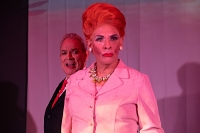
A Loving, Delight‑Packed Celebration: Joan Crawford Goes to Hell Marks 25 Years of Handbag
31 August 2026 in Theatre in ReviewHell in a Handbag Productions celebrates its 25th year with a revival of Joan Crawford Goes to Hell, a sharp,…

An Immersive Sunday in the Park with George at Kokandy Productions
31 August 2026 in Theatre in ReviewComposition, tension, balance, light, and harmony come together seamlessly in Kokandy Productions’ revival of Sondheim’s opus, ‘Sunday in the Park…

Robert Falls to Direct the World Premiere of FLYING MONKEYS, by L.C. Bernadine, at Redtwist Theatre, Dec 6 - Jan 17
31 August 2026 in Upcoming TheatreAward-winning Redtwist Theatre, launching its 22nd season with Prayer Circle, September 17 - November 8, by Erik Gernand and directed by Executive Artistic Director Dusty Brown, announces today…

Buffalo Theatre Ensemble Names Daniel Millhouse as New Managing Artistic Director
31 August 2026 in Theatre BuzzBuffalo Theatre Ensemble (BTE), the professional theater company in residence at the McAninch Arts Center (MAC), is pleased to announce that, in keeping…

Promethean Theatre Ensemble to offer talkbacks after selected performances BLOOD OF THE LAMB, opening September 5 and 6
31 August 2026 in Upcoming TheatrePromethean Theatre Ensemble announced today it will offer post-show audience talkbacks following two performances of their Chicago premiere of BLOOD OF…

City Lit’s Shane Saddles Up a Classic Western With Fresh Heart
30 August 2026 in Theatre in ReviewCity Lit Theatre’s world premiere of Shane, adapted for the stage and directed by Mark Pracht, brings a fresh, nostalgic…
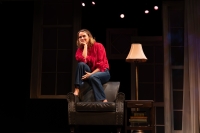
In Sisters, Barrie Turns an AI Fable into an Impressive Character Study
29 August 2026 in Theatre in ReviewThe rise of artificial intelligence raises many questions about its effect on humanity. What does it mean if we become…

Buddy Holly’s Brilliance, Reawakened on the Drury Lane Stage
27 August 2026 in Theatre in ReviewDrury Lane Theatre opens its latest musical with a warm jolt of rock ’n’ roll energy as Buddy – The…
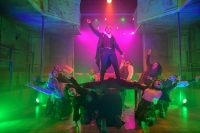
Kokandy's JEKYLL & HYDE Extended by Popular Demand
26 August 2026 in Upcoming TheatreBroadway In Chicago is pleased to announce a darkly delicious Halloween surprise: Kokandy Productions’ critically acclaimed revival of JEKYLL & HYDE will be extended…

Following Obama Center premiere, Manual Cinema's acclaimed productions return to Chicago's Studebaker Theater
26 August 2026 in Upcoming TheatreChicago-based Emmy Award-winning performance collective and film/video production company Manual Cinema premiered two new hand-animated films at the Obama Presidential Center Museum…

Playmakers Lab’s That’s Weird Grandma’s 25th Birthday is a fine place to giggle
25 August 2026 in Theatre in ReviewIf you need an energy boost, skip the can of Monster and get yourself, plus loved ones of any age,…

Victory Gardens Theater presents the World Premiere of Zayd Ayers Dohrn's The Humanities September 10 through October 4
25 August 2026 in Upcoming TheatreVictory Gardens Theater (2433 N. Lincoln Avenue), an historic incubator for new play development, proudly announces the World Premiere staging of The…
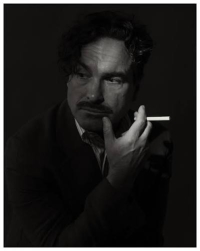
Lookingglass Kowalski starring Johnny Galecki and Jacob Moskovitz September 15 through October 25
25 August 2026 in Upcoming TheatreJoining the previously announced stars of Kowalski Johnny Galecki ("The Big Bang Theory," "The Little Dog Laughed") as Tennessee Williams and Jacob Moskovitz ("Elle") as Marlon…

Shattered Globe Theatre Opens 36th Season with Midwest Premiere of VLADIMIR October 2 – November 14 at Theater Wit
25 August 2026 in Upcoming TheatreShattered Globe Theatre is pleased to open its 36th Season with the Midwest premiere of Erika Sheffer's Vladimir, an unflinching drama of resistance directed by Ensemble Member Lou Contey*,…

TICKETS FOR A 20 RETURNS WITH SPECIALLY PRICED $20 TICKETS FROM HOT TIX AUGUST 27-SEPTEMBER 14, 2026
24 August 2026 in Theatre BuzzThe League of Chicago Theatres announces the return of Tickets for a 20. From Thursday, August 27 through Monday, September 14, 2026, theatregoers can…

Babes With Blades's announces William Shakespeare's KING LEAR, October 15 - November 21
24 August 2026 in Upcoming TheatreBabes With Blades Theatre Company’s (BWBTC), now presenting the world premiere of yo ho. through August 29 at The Edge Off-Broadway, shares the…

BrightSide Theatre announces THE ADDAMS FAMILY MUSICAL, to play October 2 - 18
24 August 2026 in Upcoming TheatreBrightSide Theatre has announced cast and crew for THE ADDAMS FAMILY MUSICAL - the kickoff production of BrightSide's 15th Anniversary season.…

35th Annual Dance for Life Saturated with Excellence
23 August 2026 in Dance in ReviewFrom its beginning in 1992 on the tiny stage of a modest theater, Dance for Life (DFL) has grown and…

Chicago Shakespeare Theater announces Two Shakespeare Productions in Repertory beginning October 13 - January 3
21 August 2026 in Upcoming TheatreChicago Shakespeare Theater (CST) announces the cast and creative team for the company's fall Shakespeare Repertory productions, an unforgettable theatrical event at the heart…
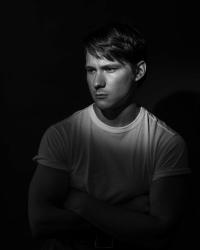
Rising star Jacob Moskovitz to play Marlon Brando in the Chicago presentation of Kowalski at Lookingglass Theatre
20 August 2026 in Theatre in ReviewRising star Jacob Moskovitz ("Elle") has joined the cast of Kowalski as Marlon Brando, alongside previously announced Chicago theater veteran Johnny Galecki ("The Big Bang Theory," "The Little…

McHenry Outdoor Theater: Nostalgia With a Modern Heartbeat
20 August 2026 in Theatre BuzzThere was a particular kind of magic to seeing a movie outside when I was a kid in 1970s Chicago…

‘Anatomy of a Suicide’ Is Hard to Watch, But Not Because of the Subject
18 August 2026 in Theatre in ReviewPerhaps surprisingly, Anatomy of a Suicide is not an overwhelmingly emotionally gripping play, nor is it horrifying. Instead, it vividly…

Gwydion Theatre Company presents The Chicago Premiere of Por’ Knockers at the Greenhouse Theater’s Studio 44 September 10 - October 4
18 August 2026 in Upcoming TheatreThis narrative tracks five individuals within the "People’s Diasporatic Party"—outfitted in corporate attire—as they take refuge in a desolate East…





Latest Articles
-
 Standing Room Only Crowd for Chicago’s Leading Theater Artistic Directors
Written by Bill EslerIt must have been heavenly for the creative leaders of Goodman, Steppenwolf, Chicago Shakespeare and Court, Chicago’s top regional theaters, to be greeted by a standing room only crowd. But there they were, on a panel moderated by the eminent…
Standing Room Only Crowd for Chicago’s Leading Theater Artistic Directors
Written by Bill EslerIt must have been heavenly for the creative leaders of Goodman, Steppenwolf, Chicago Shakespeare and Court, Chicago’s top regional theaters, to be greeted by a standing room only crowd. But there they were, on a panel moderated by the eminent… -
 The Best of Us: Marriott Theatre’s Come From Away
Written by Kimberly KatzCome From Away begins from a place of deep uncertainty, yet what emerges is a story grounded in the steady, everyday kindness people offer when they have nothing else to give. Rather than revisiting the events of September 11 themselves,…
The Best of Us: Marriott Theatre’s Come From Away
Written by Kimberly KatzCome From Away begins from a place of deep uncertainty, yet what emerges is a story grounded in the steady, everyday kindness people offer when they have nothing else to give. Rather than revisiting the events of September 11 themselves,… -
 Steppenwolf Theatre Presents Revival of TOPDOG/UNDERDOG September 17 – November 1 / Rehearsals Underway
Written by Buzz Center StageSteppenwolf Theatre Company, the nation's premier ensemble theater company, is pleased to launch its 51st Season with Suzan-Lori Parks' Pulitzer Prize-winning drama Topdog/Underdog, helmed by Tony Award-winning director Kenny Leon, who returns to Steppenwolf following his hit production of King James. Ensemble members Glenn Davis (Windfall, Purpose–Chicago/Broadway, King James) and Namir Smallwood (Windfall, The Book of…
Steppenwolf Theatre Presents Revival of TOPDOG/UNDERDOG September 17 – November 1 / Rehearsals Underway
Written by Buzz Center StageSteppenwolf Theatre Company, the nation's premier ensemble theater company, is pleased to launch its 51st Season with Suzan-Lori Parks' Pulitzer Prize-winning drama Topdog/Underdog, helmed by Tony Award-winning director Kenny Leon, who returns to Steppenwolf following his hit production of King James. Ensemble members Glenn Davis (Windfall, Purpose–Chicago/Broadway, King James) and Namir Smallwood (Windfall, The Book of… -
 Chicago Black Dance Legacy Project Gala: Radiant & Sumptuous at the Harris
Written by Mitchell OldhamThe first thing you notice about the meticulously curated Black dance performance held at the Harris Theater over the weekend is language. The eloquence and weight of the words used to explain why the Chicago Black Dance Legacy Project (CBDLP)…
Chicago Black Dance Legacy Project Gala: Radiant & Sumptuous at the Harris
Written by Mitchell OldhamThe first thing you notice about the meticulously curated Black dance performance held at the Harris Theater over the weekend is language. The eloquence and weight of the words used to explain why the Chicago Black Dance Legacy Project (CBDLP)…


Does your theatre company want to connect with Buzz Center Stage or would you like to reach out and say "hello"? Message us through facebook or shoot us an email at This email address is being protected from spambots. You need JavaScript enabled to view it..
*This disclaimer informs readers that the views, thoughts, and opinions expressed in the text belong solely to the author, and not necessarily to Buzz Center Stage. Buzz Center Stage is a non-profit, volunteer-based platform that enables, and encourages, staff members to post their own honest thoughts on a particular production.