
Displaying items by tag: live theatre
A Red Orchid Theatre Announces Remount of Hit Production BIRDS OF NORTH AMERICA September 10 – October 4, 2026

A Red Orchid Theatre is thrilled to announce a remount of its critically-acclaimed, father-daughter drama Birds of North America, returning for a limited engagement September 10 – October 4, 2026 at 1531 N. Wells St. in Chicago's Old Town neighborhood. Written by Anna Ouyang Moench and directed by Artistic Director Kirsten Fitzgerald*, the remount will feature the full original cast and creative team. Single tickets go on sale Tuesday, August 4, 2026 at 12 pm at aredorchidtheatre.org or by calling (312) 943-8722.
Reprising their original roles in Birds of North America are Ensemble Member John Judd* with Cassidy Slaughter-Mason. Understudies include Sahar Dika and Guy Wicke.
About the Production:
John and his daughter Caitlyn are birders. As they scan the skies over their backyard in suburban Maryland looking for elusive birds, years go by. Relationships begin and end. Children grow up and parents age. The climate and the world change in small and vast ways. Birds of North America takes a close look at the relationship of a father and daughter over the course of a decade as they struggle to understand the parts of one another that defy understanding.
Birds of North America received critical acclaim during its sell-out Chicago premiere:
★★★★
"A gorgeous little 90-minute two-hander, a beautifully acted and directed
father-daughter play capable of transporting you away... I was transported"
"[John] Judd, one of the Chicago theater's most remarkable actors [is] a perfect fit for this role...
a really beautiful performance and one of Judd's best. (I've seen many.)"
–Chris Jones, Chicago Tribune
★★★½
"A gripping generational dialogue... Slaughter-Mason's performance in this production is moving."
–Mike Davis, Chicago Sun-Times/WBEZ Chicago
RECOMMENDED! "A tender portrait that walks the taut line
between pain and sentimentality with the vivid humor of recognition."
–Irene Hsiao, Chicago Reader
The production team includes Morgan Laszlo (Scenic Designer), Ben Argenta Kress (Costume Designer), Seojung Jang (Lighting Designer), Ethan Korvne (Composer & Sound Designer), Spencer Diaz Tootle (Props Designer and Set Dressing), Jojo Brown (Dramaturg), Amy Carpenter (Assistant Director), Kyle Stoffers (Casting Director), Tom Daniel (Technical Director). Alivia Arizaga (Stage Manager) and Faith Locke (Assistant Stage Manager).
Subscribers for A Red Orchid's soon-to-be-announced 2026-2027 Season may add Birds of North America to their package as at a discounted rate. Season subscriptions will be available in July 2026.
*Denotes A Red Orchid Theatre Ensemble Member
PRODUCTION DETAILS:
Title: Birds of North America
Playwright: Anna Ouyang Moench
Director: Artistic Director Kirsten Fitzgerald*
Cast: Ensemble Member John Judd* (John) with Cassidy Slaughter-Mason (Caitlyn)
Understudies: Sahar Dika and Guy Wicke
Location: A Red Orchid Theatre, 1531 N. Wells St., Chicago
Dates: Opening: Thursday September 10, 2026 at 7 pm
Regular run: Friday, September 11 – Sunday, October 4, 2026 Curtain Times: Thursdays and Fridays at 7 pm; Saturdays 3 pm & 7 pm; and Sundays at 3 pm.
Tickets: $61*. Access, student, senior and group discounts available. Single tickets go on sale Tuesday, August 4, 2026 at 12 pm at aredorchidtheatre.org or by calling (312) 943-8722. *Ticket prices include a processing fee.
About the Artists:
Anna Ouyang Moench (Playwright, she/her) is an award-winning playwright and screenwriter. Her plays include Your Local Theater Presents: A Christmas Carol, by Charles Dickens, Again, Man of God, Birds of North America, Mothers and Sin Eaters. Anna's work has been produced at the La Jolla Playhouse, Williamstown Theatre Festival, the Geffen Playhouse, East West Players, the Playwrights Realm, NAATCO at the Public Theater, A Red Orchid Theater Company, The Gift Theatre, and many others. She is a former Jerome Fellow at the Playwrights' Center, Van Lier fellow at the Lark and Page One fellow at the Playwrights Realm. Awards include two 2023 WGA Awards for her work on Severance (Apple TV+), the 2020 Steinberg Playwright Award, the Gerbode Special Award in the Arts, the Paul Stephen Lim Playwriting Award from the Kennedy Center, and the NYFA Award in Playwriting/Screenwriting. Anna received her MFA in Playwriting from UCSD and now lives
in Los Angeles with her family.
Kirsten Fitzgerald (Director, she/her) is a proud member of the Ensemble at A Red Orchid Theatre and has served as the Artistic Director since 2008. Recent directing credits include the world premiere of Gorgeous by Keiko Green at Raven Theatre, The Moors at A Red Orchid (Jeff Award for Best Production and Best Director of a Play-Midsize) and Dance Nation at Northwestern University's Wirtz Center. As an actor Kirsten has originated roles in the world premieres of The Cave, Grey House, Traitor, Pilgrim's Progress, Weapon of Mass Impact, and more (A Red Orchid); Swing State, I hate It Here (Goodman); Lettie, Appropriate (Victory Gardens); Mary Page Marlow, The Qualms (Steppenwolf). TV: Dark Matter, Shining Girls, Somebody Somewhere, The Exorcist, Sirens, The Big Leap, Chicago Med/Fire/Justice, Underemployed, ER. Film: Widows, Working Man. Kirsten is represented by Grossman & Jack Talent.
John Judd (John, he/him) last appeared on the A Red Orchid Theatre stage in Six Men Dressed Like Joseph Stalin, and was previously seen in The Cave, The Malignant Ampersand, and Gagarin Way, as well as the McCarter Theatre's presentation of Simpatico. A Chicago based actor for forty years, John has acted at The Goodman, Steppenwolf, Chicago Shakespeare Theater, Writer's Theatre, Court Theatre, Drury Lane, Northlight, Shattered Globe, Lookingglass, Victory Gardens and Next, as well as numerous regional, international and Off-Broadway venues.
Cassidy Slaughter-Mason (Caitlyn, she/her) is a Chicago based actor and writer. Recent theater credits include: Brooklyn Laundry (Northlight Theatre), The Luckiest (Raven Theatre, Equity Jeff Award for Best Performer in a Principal Role), How a Boy Falls (Northlight Theatre), Kiss (Haven Theatre), Significant Other (Theatre Wit/About Face) and Rapture Blister Burn (Goodman Theatre, Equity Jeff nomination for Performer in a Supporting Role). Film and TV credits include: All Happy Families, Ultra-City Smiths, Chicago Fire and Easy. Her short film Rabbit Rabbit (co-written with Poppy Golland) will stream this spring on OpenTV. Cassidy is represented by Paonessa Talent Agency.
About A Red Orchid Theatre:
A Red Orchid Theatre has served as an artistic focal point in the heart of the Old Town community of Chicago since 1993 and was honored with a 2016 MacArthur Award for Creative and Effective Institutions. Over the past 32 years, its Resident Ensemble has welcomed into its fold an impressive array of award-winning actors, playwrights and theatre artists with the firm belief that live theatre is the greatest sustenance for the human spirit. A Red Orchid is well known and highly acclaimed for its fearless approach to performance and design in the service of unflinchingly intimate stories.
A Red Orchid Theatre is: Karen Aldridge, Lance Baker, Kamal Angelo Bolden, Esteban Andres Cruz, Dado, Mike Durst, Sherman Edwards, Myron Elliott, Jennifer Engstrom, Kirsten Fitzgerald, Joseph Fosco, Steve Haggard, Levi Holloway, Mierka Girten, Larry Grimm, John Judd, Karen Kawa, Karen Kessler, Travis A. Knight, Danny McCarthy, Shade Murray, Brett Neveu, Sadieh Rifai, Grant Sabin, Michael Shannon, Guy Van Swearingen, Doug Vickers and Natalie West.
Where Identity Slides: Steppenwolf’s Mesmerizing Catch as Catch Can

Mia Chung’s Catch as Catch Can, which premiered with Page 73 in New York in 2018, arrives at Steppenwolf Theatre - one of Chicago’s most dynamic and daring artistic institutions - with a production that immediately embraces the play’s slippery, shape-shifting nature. Chung’s script thrives on emotional volatility and fractured identity, and Steppenwolf’s staging taps into that energy from the outset, preparing the audience for a world where the familiar can tilt, distort, and reassemble without warning.
Catch as Catch Can begins with the familiar comfort of kitchen-table talk between two New England mothers, Roberta Lavecchia and Theresa Phelan. Under Amy Morton’s direction, those early scenes feel lived-in and deceptively ordinary - two longtime friends trading stories, worries, and family updates with the shorthand of people who have known each other for decades. But as the play unfolds, that everyday warmth becomes the launching point for a story that veers into far more disorienting territory. The return of Tim Phelan unsettles the delicate balance between the Lavecchias and the Phelans, stirring up old assumptions, unspoken resentments, and long-dormant family myths. What begins as a simple homecoming slowly reveals itself as a catalyst for emotional slippage, where memories blur, loyalties shift, and the characters’ sense of who they are - and who they have been to each other - starts to fracture. Morton guides this progression from domestic realism to psychological unraveling with remarkable control, allowing the play’s humor, tension, and creeping dread to coexist in the same breath.
The production’s boldest device - three actors portraying all six characters - becomes the heartbeat of the evening. Gary Cole (as Roberta and Robbie Lavecchia), Audrey Francis (as Lon and Daniela Lavecchia), and Tim Hopper (as Theresa Phelan and Tim Phelan) deliver performances that are nothing short of remarkable. Morton directs them with a sculptor’s precision, shaping each transformation through voice, posture, and energy rather than costume changes or props. The actors rarely add so much as an apron, a pair of glasses, or a purse to differentiate roles; instead, they rely on the smallest shifts in breath, cadence, or physical weight. Even the simplest physical actions - threading a needle, folding laundry, lifting a heavy picture onto a wall, or a mother rolling out her famous meatballs - become character markers, subtle cues that signal who is speaking without ever breaking the flow of the scene. At times, it feels as though six fully realized people are occupying the room, even though only three bodies ever stand onstage.
After the opening scene, it took me a few minutes to recalibrate to the production’s rhythm, especially as the actors began switching characters with such speed and minimal visual cues. But that adjustment period is brief. Before long, the doubling feels not only natural but essential, a kind of theatrical language the production teaches you how to read. Once you settle into its cadence, the transformations become thrilling rather than disorienting, sharpening the play’s emotional stakes and deepening its sense of unease.
The rapid-fire switching becomes its own kind of theatrical whiplash. An actor may leap from one character to another every other sentence, often without a single visual clue, and Morton ensures each pivot lands cleanly without losing an ounce of emotional clarity. The play becomes a fault line in constant motion, where identities slide, collide, and splinter beneath the surface.

Gary Cole, Tim Hopper and Audrey Francis (L-R) in Steppenwolf Theatre's Catch As Catch Can. Photo by Michael Brosilow.
All three performers - Gary Cole, Audrey Francis, and Tim Hopper - are longtime Steppenwolf ensemble members, bringing a shared artistic vocabulary that sharpens every transformation onstage.
Cole toggles between Roberta’s brittle warmth and Robbie’s restless bravado with astonishing finesse. This production marks his first return to a Chicago stage in more than 25 years, and it is a triumphant homecoming. He is known to many for Office Space, Talladega Nights, HBO’s Veep, NCIS, and one of my favorite roles - Mike Brady in The Brady Bunch Movie and its sequel. Cole reminds audiences that his stage roots run deep. As Roberta, he carries a soft, fluttering concern that sits right behind the eyes; as Robbie, that same gaze sharpens into something quicker, hotter, and more impulsive. His ability to pivot between those energies with nothing more than a shift in breath or a recalibrated stance makes each transition feel both seamless and startling. It is a performance built on precision, but it never feels mechanical.
Francis brings an equally impressive duality to Lon and Daniela. In addition to being a Steppenwolf ensemble member, she now serves as the company’s artistic director alongside Glenn Davis, a role that underscores her influence on Chicago’s theatrical landscape. Known for standout performances in The Herd, Dance Nation, her work on Chicago Med, and directorial skill in You Will Get Sick, she grounds Lon with a quiet, blue-collar steadiness, a man who absorbs the world before reacting to it. Daniela, by contrast, is all edges and alertness, her movements tighter and her voice pitched with a nervous brightness that hints at deeper cracks. Francis masterfully switches entire gravitational centers. The clarity of her physical vocabulary makes each character instantly legible without a single costume change.
Hopper’s pairing may be the most haunting of the three. With Steppenwolf credits that include The Crucible, The Flick, and Buried Child, he brings a raw, unsettling honesty to both Theresa and Tim. His Theresa is a portrait of unraveling vulnerability, a woman whose emotional seams are beginning to split in ways she can barely articulate. His Tim, meanwhile, carries the quiet desperation of someone trying to hold himself together even as the ground shifts beneath him. Hopper plays both roles with a volatility that feels almost dangerous. The characters mirror and distort one another, creating an emotional echo that deepens the play’s sense of unease. Watching him slip between them is like watching a reflection break apart and reassemble in real time.
Together, these performances form the core of the production’s power. With Morton’s direction guiding every pivot, the trio creates the uncanny sensation that the stage is populated by twice as many people as are physically present. Their transformations are so quick and so clean that the audience must stay alert, tracking identities as they slide, collide, and reform. It is a feat of acting that is both technically dazzling and emotionally resonant, and it is the reason the play’s unstable world feels so alive.
As the story darkens - touching on mental health, racism, cultural tension, and the fragile scaffolding that holds families together - the doubling amplifies the instability. Chung threads moments of racial bias and coded language into the fabric of these families’ interactions, revealing how prejudice can hide inside the most casual exchanges and how easily it can rupture long-standing bonds. Morton understands that the play’s power lies in this slippage, and she allows the actors to push into the unsteady terrain without ever losing emotional truth. The result is a production that feels intimate yet vertiginous, a domestic drama that slowly cracks open into a haunting exploration of identity and the roles we inherit, perform, and sometimes cannot escape.

Andrew Boyce’s scenic design is a quiet marvel, giving the production a sense of dimensionality that feels both naturalistic and subtly disorienting. The main playing space is an open living room, flanked on one side by an entryway and a partial view into the kitchen, and on the other by a long hallway that suggests the deeper interior of the house. Just beyond the living room, another room is visible past a second hallway, creating the impression of a home that extends well beyond the edges of the stage. Boyce’s layout allows the audience to feel as though they’re peering into a fully lived-in environment, one with corners, thresholds, and unseen rooms that hold their own histories. Yuki Nakase Link’s lighting deepens this effect, subtly sculpting each corridor and doorway so the house seems to breathe with possibility - sometimes warm and inviting, sometimes shadowed with tension. It is a multidimensional design that grounds the play’s domestic realism while subtly reinforcing the sense that something inside this home - and inside these families - is evolving.
In their Artistic Director note, Glenn Davis and Audrey Francis frame Catch as Catch Can as a rare convergence of timing, artistry, and ensemble history - a production long delayed, now finally realized with the team that first set out to make it in 2020. They speak to the play’s uncanny pull, describing how Chung’s story has embedded itself in the company’s imagination, refusing to loosen its grip. For them, the doubling is not just a theatrical device but a test of the ensemble’s virtuosity, a chance for Steppenwolf to stretch its actors toward the edges of what performance can hold. And at the heart of their message is the idea that the play’s exploration of identity, home, and the selves we construct makes it a fitting capstone to the theatre’s 50th anniversary season - a reminder of how Steppenwolf’s long-standing commitment to family drama, artistic risk, and shared storytelling continues to shape its legacy.
Catch as Catch Can ultimately lands with the force of a quiet detonation, its emotional aftershocks lingering long after the final blackout. Morton and her trio of actors craft a world that feels both intimate and treacherous, a place where identity slips, refracts, and reforms in ways that are as unsettling as they are compelling. It is the kind of production that rewards close attention and invites conversation long after you’ve left the theatre - about family, perception, and the narratives we inherit without realizing it. Catch as Catch Can runs at Steppenwolf through July 12, with performances throughout the week, and it is very highly recommended for anyone who craves theatre that challenges, unsettles, and stays with you.
For tickets and/ or more show information, click here.
This review is proudly shared with our friends at www.TheatreInChicago.com.
Factory Theater’s Two Out of Three Falls is a Theatrical Event

Those familiar with the Factory Theater space might feel themselves do a double take upon entering the theater for Two Out of Three Falls. Scenic Designer Manuel Ortiz completely transforms the space. The three-quarter thrust stage that has been there for years is gone – replaced by a wrestling ring that consumes an entire side of the theater. The ring is detailed, complete with lockers and wall decoration that completely transform that side of the space into a wrestling gym. To say that Ortiz outdoes himself in this endeavor is an understatement, because you might just find that the design is highly effective in drawing you into the thrilling vibe of the event.
Written by Bill Daniel, Two Out of Three Falls follows Johanna Goodish (Brittany Ellis), a wrestler struggling to step out of the shadow of wrestling legend King Kong Bruiser, also known as her father. Haunted by his literal ghost (Eric Frederickson), Goodish commits to the one act that she feels can set her free – challenging her father’s killer, Eduardo Quinones “El Moreton” (Sam Ramirez), to a wrestling match on live TV. If all goes according to plan, Quinones won’t live to see another day.
Directed by Ashley Yates, much of the production feels like a live wrestling match. As Goodish and her various opponents throughout the play take the ring, audience members at this Opening Night performance screamed and hollered. The design invites audiences to choose their opponent of choice, and you might just find that the intimate feel of the theater makes you feel like you are a part of the action. The work of Fight Designer Kate Lass and Wrestling Consultant Axel Rico shines in these scenes and certainly makes for an entertaining and lively evening.
The high-energy wrestling scenes act as a helpful contrast to some of the more intimate moments of the play – particularly within the relationship of Goodish and her manager, Meg Bishop (SaniaFaith). For so much of the story, Ellis brings a strong, confident character to Goodish. She is unafraid to fight back against her opponents, and she ensures that she is the last one standing at all costs. However, with Meg Bishop, we see a different side of Goodish. Ellis brings a quieter, more grounded character to these scenes. There is a vulnerability between Bishop and Goodish that you might just find helps us believe in this duo win. SaniaFaith and Ellis play off each other beautifully, bringing a genuine humor to the relationship that pushes it over the top.
The hype of the wrestling matches alone makes Two Out of Three Falls worth a watch. The stellar scenic design and strong ensemble make it a night of intrigue and fun.
Two Out of Three Falls runs through July 18 at the Factory Theater – 1623 W. Howard Street. For tickets and information, see the Factory Theater website.
RECOMMENDED
This review is proudly shared with our friends at www.TheatreInChicago.com.
Bargatze’s Big Dumb Eyes Tour Lands in Rosemont With Subtle Force

Nate Bargatze’s Big Dumb Eyes tour made its stop at the Allstate Arena in Rosemont with the steady, understated presence that has become central to his appeal. Bargatze continues to draw humor from the small missteps and everyday confusions that shape his storytelling, easing the audience into his rhythm rather than pushing for big moments. His unhurried delivery works surprisingly well in a venue of this size, creating a sense of shared focus that settles over the room as he builds each joke with quiet precision.
This powerhouse comedy tour is anchored by host Julian McCullough, whose easygoing charm and quick-hit crowd work set the tone for the night before the headliner ever steps onstage. He’s joined by a sharp trio of comics - Greg Warren, Gary Vider, and Jonnie W - each bringing a distinct comedic style that keeps the momentum building from set to set. Warren’s dry, story-driven humor, Vider’s understated oddball delivery, and Jonnie W’s musical-comedy flair create a well-balanced undercard that feels like a full evening of stand-up on its own. Together, they form a tightly assembled lineup that primes the audience perfectly for the main event.
Julian McCullough, Greg Warren, Gary Vider, and Jonnie W will all be making upcoming appearances at Zanies Rosemont, giving Chicago-area comedy fans several chances to catch them live. McCullough returns to the club on June 5–7, while Greg Warren is scheduled for a special event weekend on May 22–23. Jonnie W will headline Zanies Rosemont on July 26, and Gary Vider’s next Chicago-area dates are at Zanies Chicago on March 27–28, offering multiple showtimes across both nights.
Bargatze has been performing in arenas for some time now, and the format suits him more naturally than one might expect. The in-the-round staging keeps him accessible from every direction, while the large video screens ensure that even the most subtle expressions read clearly throughout the space. It is an effective setup for a comedian whose style relies on nuance rather than volume. In a venue as large as Allstate, laughter does not always erupt all at once - it spreads gradually, section by section, until the entire arena is moving with the same steady momentum.
A significant portion of Bargatze’s material continues to revolve around his family, with stories about parenting, marriage, and the everyday negotiations that come with trying to make sense of the world alongside the people closest to you. But he also branches into the absurdities of modern life, touching on everything from AI to self-driving cars to couples therapy - and even the baffling challenge of buying a horse, because, as he points out, who actually knows the price of a horse? These moments are not exaggerated or heightened for effect. Instead, he treats them with the same calm, observational tone that defines his work. The humor comes from the honesty of the situations and the quiet recognition they spark, especially for audiences who see their own households and daily frustrations reflected in his.
His Rosemont appearance is one stop in a long stretch of dates as the Big Dumb Eyes tour continues across major arenas nationwide. The upcoming schedule includes cities throughout the Midwest, East Coast, and South, each offering a chance for audiences to experience how his understated approach translates to rooms of this scale. At this point, Bargatze stands among the strongest stand-ups touring at the arena level, not because he relies on spectacle, but because his material remains consistent, grounded, and effective no matter the size of the venue.
In the end, the Allstate Arena stop underscored why Bargatze’s rise has felt so steady and assured. His comedy does not demand attention - it earns it through clarity, timing, and a genuine connection to the everyday experiences he describes. For a comedian whose style is built on understatement, filling an arena might seem counterintuitive, yet he makes the space feel surprisingly intimate. It is a testament to his craft and a clear sign that his place on the arena circuit is well deserved.
BrightSide’s intimate staging of The Producers shines with Broadway-sized power

BrightSide Theatre’s The Producers storms into Meiley Swallow Hall with the kind of swagger only Mel Brooks can inspire: brash, brazen, and blissfully unconcerned with good taste. From the moment the lights rise, the show charges ahead with a manic momentum that feels both affectionately old school and sharply self-aware. It knows exactly what it’s here to do: go big, go bold, and never apologize for the mayhem.
Under the confident direction of Artistic Director Jeffrey Cass, this staging taps directly into Brooks’ outrageous, boundary-poking sensibility and never loosens its grip. Cass understands that The Producers thrives when its humor teeters on the edge, and he captures that gleeful imbalance with remarkable control. The original film premiered in 1967, the musical exploded onto Broadway in 2001, and if anyone wonders whether that brand of audacity still lands in 2026, the answer is an unequivocal yes. The Naperville audience laughed steadily from the first scene to the curtain call, proving that Brooks’ anarchic wit remains timeless.
BrightSide’s version brings the show’s wild premise to life with full comic force: washed-up Broadway producer Max Bialystock (Scott Kelley) and anxious accountant Leo Bloom (Michael Metcalf) concoct a get-rich-quick scheme to stage the biggest flop in theatre history. If the show collapses on opening night, they can pocket the investors’ money and disappear. Their hunt for guaranteed failure leads them to the worst script imaginable, the most misguided director in town, and a cast so spectacularly wrong that success seems impossible. But in classic Brooks fashion, the plan detonates in the most unexpected way, turning their surefire disaster into an accidental triumph and leaving the pair scrambling to survive the fallout.
That spirit of intentional ruin pulses through the musical numbers, each one another attempt to engineer catastrophe. “Springtime for Hitler,” the show-within-the-show’s notorious centerpiece, is crafted as an overblown, tasteless pageantry meant to repel audiences instantly. “Der Guten Tag Hop Clop” and “Haben Sie gehört das Deutsche Band?” push the absurdity even further, spotlighting a playwright and director whose delusions should have doomed the project. Even “Keep It Gay,” with its flamboyant insistence on excess, is part of Max and Leo’s strategy to stack the deck with choices so misguided they can’t possibly succeed. Ironically, the songs are so bold, so shamelessly theatrical, and so cleanly executed that the very elements meant to sink the show end up turning it into the hit they never wanted.
Scott Kelley’s Max Bialystock and Michael Metcalf’s Leo Bloom make a terrific duo, striking a lively balance between showmanship and panic. Kelley barrels through the role with larger-than-life bravado, while Metcalf’s tightly coiled nervousness plays off him beautifully. Their timing is crisp, their rapport effortless, and together they elevate every scheme, meltdown, and misstep.

Max Bialystock (Scott Kelley) and Company.
Amelia Tam is outstanding as Ulla, the blonde bombshell Max hopes to lure to his “casting couch”. She is an amazing dancer with an equally outstanding voice, commanding attention the moment she steps onstage with a blend of radiant charm and razor-sharp comedic instinct. Her Ulla rises far above the familiar Swedish ditzy-blonde trope, becoming a spark of vitality who shifts the temperature of every scene she enters. Tam mixes wide-eyed innocence with sly intelligence, making each line land with extra bite. Whether stretching a vowel for comedic payoff or launching into “When You Got It, Flaunt It” with fearless gusto, she turns Ulla into a character who is not only irresistible but essential to the show’s rhythm.
The supporting cast is uniformly strong, powered by an ensemble that moves with clarity (credit to choreographer Mary Grace Martens), hits its jokes cleanly, and fills the stage with infectious confidence. Cheryl Newman shines as one of Max’s elderly ‘investors,’ delivering sharp comedic work while also contributing behind the scenes as costume designer - a pair of responsibilities she handles with impressive finesse. Michael John Lynch brings delicious flair to Carmen Ghia, the impeccably mannered yet cutting assistant whose every gesture blends elegance and threat. Myles Mattsey is memorable as Franz Liebkind, the unhinged playwright whose patriotic fervor is both alarming and hilarious, while John B. Boss transforms director Roger DeBris into a gleaming spectacle of theatrical excess. Together, they form a gallery of eccentrics who keep the show’s momentum high and its humor constant.
All the while, Phil Videkis provides excellent musical leadership, guiding the orchestra with crisp pacing and keeping the score bright, tight, and perfectly attuned to the show’s comic sensibility while supporting Thomas Meehan’s book with well-judged musical choices.
The staging makes clever use of an economical but highly effective set designed by Ariel Mozes, shifting smoothly from location to location without ever feeling limited. What the physical scenery lacks in large-scale opulence, it compensates for with smart configuration and adaptability, allowing the story to move quickly while keeping the focus on the performers. Enhancing that versatility is a programmable LED backdrop that becomes one of the production’s most dynamic tools, transforming into windows, rainbows, bursts of color, or even spelled-out words that heighten key moments. Together, Mozes’ resourceful design and the vivid LED wall create a surprisingly rich visual world that expands far beyond the modest footprint.
BrightSide Theatre once again demonstrates a sharp eye for material, adding The Producers to its growing list of savvy, crowd-pleasing selections. This staging delivers everything a Mel Brooks musical should: big laughs, confident performances, and a joyful sense of mischief that never lets up. It’s a lively, high-spirited evening that embraces the show’s outrageous personality while still finding its own clever touches along the way. This musical comedy is highly recommended, playing through June 28th at the Theater at Meiley Swallow Hall, an ideal summer outing for anyone craving a night of bright, unapologetic fun.
For tickets and/or more show information, visit https://brightsidetheatre.com/producers/.
Guest’s New Andy Warhol Play A Study in Primo Theater

When Terry Guest left Atlanta and arrived in Chicago ten years or so ago, a bracing reality check caused the young actor to make a bold pivot. Three years of auditions and zero bites on the acting front, he turned himself into a playwright and used a deceased uncle as his inspirational muse. At the Wake of a Dead Drag Queen was born, with Guest placing himself in the starring role. Rave reviews, real recognition and an impressive collection of Jeff Awards followed. As they used to say during the dawn of space exploration, “Houston, we have liftoff.”
That was in 2019 and since then the actor and playwright has been exploring other opportunities to extend his keenly astute vision about life and people into the theatrical ecosphere. More plays were written, last year At the Wake of a Dead Drag Queen was reprised and a brand spanking new dazzler by Guest just launched its world premiere at Jackalope Theatre in Edgewater a few days ago. If there’s any logic in the universe, it’ll enjoy a very similar reception to his inaugural tour de force.
Because it’s so creatively extravagant, Andy Warhol Presents: The Cocaine Play lives in a universe all its own. There’s enough drama and suspense to be slightly Hitchcockian, but it’s also unrelentingly funny. It’s arguably biographical, but not in any way you’d expect. Because it indulges in the supernatural, you can say it possesses strong elements of mystical realism. Nothing about it is predictable. And it has two endings. Both killer.
If you had to name one thing that forms its nucleus, it would be fame. The single name variety. Blinding individual glory. Guest probes into what it’s like to have it and what it means to crave it.
We get a sample of the first right at the opening when Marilyn Monroe appears resplendently before us and gives a little run down on what it’s like to be her. The instant recognition, the automatic smiles, the rapturous attention, the sheer adoration. But she isn’t “that” Marilyn. And she’s not really an avatar. You could say she’s a concept of the blond bombshell turned into flesh. Played with decadent deliciousness by Alexis Ward, she’s the psychological stand-in for the mega-star from Hollywood’s past.
A quick shift and we’re suddenly in a New York apartment with a woman, Edie Sedgwick, complaining to a friend about her inattentive, I-don’t-understand-him-at-all-anymore, husband. We’ve already learned from the friend she’s talking to, Andy Warhol, that we’ve gone back in time to the 1960s. And even though he’s a painter too and wears a bushy white wig, he’s not that Andy Warhol. Like Marilyn, Andy and Edie are facsimiles of the people we think they are. And like every other member of the four-member cast, everyone’s Black.

(L to R) David Michael Dowd, Jasmine “Jazzy” Cheri Rush and William Anthony Sebastian Rose II in ANDY WARHOL PRESENTS: THE COCAINE PLAY.
William Anthony Sebastian Rose II occupies the role of Andy, and a more droll, brilliantly glib performance will likely not be seen on another stage anytime soon. He and Edie’s husband Michael (David Dowd) are having a very hot little affair on the side. Regardless of how trivial or momentous, all interactions are laced with coke. Indulging in cocaine hits is so pervasive it’s like watching piranha in a constant feeding frenzy.
They’re all in the creative arts. Edie (Jasmine “Jazzy” Cheri Rush) is an actress married a painter. She and Michael are flat out rabidly ambitious, and both invest the sweat and tears to make it in their crafts. Unfortunately, their striving just doesn’t end up going anywhere. Andy’s less driven or sure of himself. Much more reticent. When an opportunity arises for him and Michael to catch some limelight, it’s Andy, after being pushed by his lover/friend, who prevails. His portrait of the late Marilyn Monroe catapults him to fortune and fame.
Guest not only wrote the Andy Warhol script; he also directs this three-act marvel that moves like a bullet train on freshly greased tracks. This production shows too that he’s a master at shaping performances. All four glow with a blindingly high gloss.
The play spans three decades. Sydney Lynne’s scenic design stamps all of them with genuine uniqueness and style. Dress transforms with the times too and, in this case, only Edie’s wardrobe changes noticeably as the years roll by. As costume designer, Maddy Shows makes sure they sync perfectly with the period and sing with class. Much the same can be said for Ayanna Bakari and that cavalcade of wigs she presents. Stellar.
Cohesive and boppin’ original music binds the play together from the very beginning to the absolute end, yielding what can only be called yet another delectable surprise bonus.
Fame, we later find, isn’t sitting all that well with Andy. Something about it is oppressive and Marilyn keeps showing up like a specter he’d really like to leave him alone for a while. Still treading water, Edie and Michael aren’t faring much better. She left for LA to try and make it in the movies since NY never ignited. Micheal continues to paint in the Big Apple and remains mired in the same obscurity. The chance at a long shot makes him desperate, brings his resentment regarding Andy’s success to the fore and sets him to scheming. After all, he rationalizes, Andy would never be where he is if it weren’t for him. Things then turn very dark and get just as hot. Hence the first ending that’s so intense there should be a way to one day to enshrine it in the National Archives.
It’s the second closing that comes out of nowhere that will blast your other sock off.
Andy Warhol Presents: The Cocaine Play
Through July 6, 2026
Jackalope Theatre
Broadway Armory Park
5917 N. Broadway Street
Chicago, IL 60660
For more information and tickets: https://www.jackalopetheatre.org/
Highly Recommended
Intimate and Unflinching: The Last Five Years at Oil Lamp Theater

When Jason Robert Brown’s The Last Five Years premiered at Chicago’s Northlight Theatre in 2001, it flipped the traditional rom-com musical blueprint on its head. Off came the rose-colored glasses, and what was presented was an intimate, searing, and structurally unique take on the modern relationship, inspired by Brown’s own love and loss. Now, twenty-five years later, this piece, directed by Christina Ramirez, returns to Chicagoland at Oil Lamp Theater in Glenview. The Last Five Years presents the entire course of a relationship between Jamie, a rising author, and Cathy, a struggling actress – from the first hello to the final goodbye – performed by only two actors, who take turns singing their hearts out in this vocally demanding score.
Structure is everything in this show. Jamie’s timeline starts from the high of their first date and moves chronologically, while Cathy’s story begins at the end and moves backward. They meet only once, in the middle, for their wedding, and then move in opposite directions.
Lili Galluzzo, playing Cathy, is an absolute powerhouse. She commands the stage with a voice that can belt to the rafters, packing an emotional punch with every note. Whether she is navigating the comedic neuroses of “A Summer in Ohio” or the crushing vulnerability of “I'm Still Hurting,” she conveys unvarnished emotion that anchors the production's vocal stakes.
As Jamie, Abraham Deitz-Green has an effortless, magnetic charm. From his opening number, he is clearly having fun, schmoozing the crowd and winning the audience over with ease. He infuses the ambitious young novelist with infectious likability. In fact, it makes it hard for the audience to decipher who is at fault more in this relationship, forcing them to question everything, just as the leads do.
Perhaps Cathy is too pessimistic? Years of career letdowns have tainted her perspective on life, and misery loves – needs – company. Maybe she can’t be happy unless Jamie is unhappy too. Or perhaps Jamie was always emotionally unavailable? As his career takes off, does he want to give himself sacrificially to another person, or does he want to be the new, shiny toy on the scene? Maybe he only wants to reap the benefits of love without caring for it. These are the questions the audience is wrestling with thanks to their strong performances.

Lili Galluzzo in THE LAST FIVE YEARS from Oil Lamp Theater.
But while individually the leads command the stage, their chemistry together left something to be desired. The musical’s structure itself doesn’t help much. After all, the majority of the time, they sing alone, interacting only with props. So, the anticipation of them finally being in the same timeline, sharing space, perhaps places an undue burden on the moment. Still, their big song together, which is also their wedding song, felt flat. The same charm that Jamie had when he landed his big break was gone, and the fire that Cathy had joking about Ohio was missing. Given that this was opening night, the chemistry may well evolve as the actors settle into each other’s timing, but in this performance it was noticeably absent. Since that crucial piece wasn’t there, it felt a little as if these characters never truly understood each other from the start. Were they truly lovers or just lines intersecting at a point?
Oil Lamp’s space is the perfect venue for this intimate show. The set really doesn’t need much; the songs are the main course. But the set was a bit of a distraction. Flat panels slid on and off stage to delineate different locations or the passage of time, but they were rather clunky when they were moved, like a stubborn shower door. At other times, Jamie entered from behind the audience, stepping directly in from the street. The sudden opening of the door and the outside light coming in pulled one out of the moment. The scenes that worked best were those which used lighting to direct your focus and shine on Jamie or Cathy as they untangled their vulnerabilities or drew you in with bursts of emotion.
The Last Five Years is a unique art piece, and its story is not for everyone. Can love and ambition mix, or are they oil and water? This untraditional, somber look at relationships offers unflinching moments, lush and playful songs, and questions you have to wrestle with – no doubt why it has found its way into the hearts of many musical theatergoers. Whether you're "Team Jamie" or "Team Cathy," fans of this modern musical will certainly fall in love with Oil Lamp’s rendition, thanks to the dynamic performances of its leads. They perform this high-wire act with skill and vocal precision, bringing this complex story to life with incredible emotional depth.
The Last Five Years plays at Oil Lamp Theater now through July 19th.
This review is proudly shared with our friends at www.TheatreInChicago.com.
Chicago Shakespeare's Brokeback Mountain Soars

Some stories refuse to fade with time, and Brokeback Mountain is one of them. What began as a modest short story by Annie Proulx in The New Yorker in 1997 grew into an award-winning literary work, an acclaimed film, and now a deeply moving stage adaptation by Ashley Robinson at Chicago Shakespeare Theater. Under the assured direction of Jonathan Butterell, this production achieves something rare: it honors the source material while creating an emotionally overwhelming theatrical experience that stands on its own merits.
Proulx's story unfolds in 1963, in a world where homophobia was not merely accepted but embedded within the culture. In rural America, far removed from urban centers and decades before meaningful LGBTQ+ rights protections, Ennis Del Mar and Jack Twist find themselves trapped between the lives they are expected to live and the love they cannot deny. Although the story concludes in 1983, its themes remain startlingly relevant. The prejudice that shaped their lives has not disappeared; it has simply changed forms.
Butterell's direction is masterful. He understands that the power of Brokeback Mountain lies not in grand declarations but in silences, glances, and opportunities missed. Every scene is infused with aching restraint, allowing the audience to feel the enormous weight of what remains unspoken. The result is a production that slowly tightens its grip on the audience.
Harrison Ball delivers a remarkable performance as Ennis Del Mar, capturing the character's stoicism, fear, and buried longing with heartbreaking precision. Opposite him, Jack Cameron Kay gives Jack Twist an irresistible warmth and optimism, making his refusal to surrender to a life of secrecy all the more poignant. Together, the two actors create a chemistry so natural and compelling that the audience becomes deeply invested in every stolen moment they share.
The supporting cast is equally extraordinary. Cordelia Dewdney's Alma Del Mar is nothing short of revelatory. Dewdney charts Alma's transformation from a hopeful young wife into a woman forced to confront painful truths with astonishing emotional depth. Her performance is so finely calibrated, so emotionally authentic, that it feels destined for award recognition. Every look, every hesitation, every moment of heartbreak lands with devastating force. It is one of the finest performances currently on a Chicago stage.
Thomas Cox and Kat Eggleston excel in multiple roles, helping populate the world around Ennis and Jack with richly drawn characters. Eggleston's work as the Balladeer provides a haunting thread that runs through the production, giving voice to emotions the characters themselves cannot express.
Tom Pye's scenic and costume design is stunning in its simplicity. With minimal elements, he evokes the sweeping grandeur of Wyoming's mountains and the claustrophobic domestic spaces that confine the characters for much of their lives. The contrast is striking. On Brokeback Mountain, Ennis and Jack briefly experience freedom. Everywhere else, they are hemmed in by expectations, obligations, and fear. Sammi Grant's dialect coaching enriches the production, lending authenticity to the Wyoming accents and further immersing the audience in the world of the play.
What makes this production particularly resonant is its willingness to confront the societal forces that shaped Ennis and Jack's tragedy. The play never becomes didactic, yet it clearly illustrates how homophobia was reinforced by cultural institutions, including religious traditions and biblical interpretations that were frequently used to condemn same-sex relationships and enforce rigid definitions of masculinity. Whether through family expectations, community pressure, or appeals to religious authority, the message was clear: people like Ennis and Jack were expected to deny who they were. The production allows audiences to witness the devastating human cost of those beliefs without reducing its characters to symbols or political arguments.
Although Brokeback Mountain is not a musical, musical elements are woven seamlessly into the storytelling, becoming an emotional landscape of their own. Rather than interrupting the narrative, the ballads deepen it, expressing feelings that the characters are unable to articulate. Combined with the breathtaking visual and emotional scope of the production, the music helps transform the story into something more.
What is most impressive is how contemporary the play feels. Nearly forty years after the events depicted, Brokeback Mountain remains a cautionary tale about the consequences of intolerance and the lives damaged when love is forced into secrecy. Yet it is also a story of resilience, desire, and the human need for connection.
Chicago Shakespeare Theater has delivered one of the most powerful productions of the season. Under Jonathan Butterell's direction, every artistic element works in harmony to create an evening of theater that is both intimate and epic. It would not be surprising to see this production enjoy a future life beyond Chicago. The quality of the staging, the strength of the performances, and the universal appeal of the material suggest a production that could fare exceptionally well in New York and beyond.
Brokeback Mountain is theater at its finest—beautifully acted, exquisitely directed, emotionally devastating, and utterly unforgettable. It is not merely a revival of a story; it is a production that reminds us why stories like this continue to matter. And in Jonathan Butterell's hands, it soars.
Highly Recommended
Running Time: 90 minutes
When: Through June 28
Where: Chicago Shakespeare Theater 800 East Grand Avenue in Chicago
Tickets: $65 - $125
Box Office: 312-595-5600
Info: www.chicagoshakes.com
This review is proudly shared with our friends at www.TheatreInChicago.com.
keerah - Lost Between Myth and Reality

Definition Theatre's Amplify New Play Program exists to elevate emerging voices, and Netta Walker's keerah certainly arrives with ambition. Loosely inspired by the mythological lovers Orpheus and Eurydice, the play explores race, identity, love, and memory through the relationship between Ciara and Cormac. While the production benefits from strong performances and excellent design work, the script ultimately struggles to transform its compelling ideas into equally compelling drama.
The cast features Netta Walker as Ciara, Cat Christmas as Lucy, Beck Nolan as Cormac, and Jacob Coggeshall as Finn. Under the direction of McKenzie Chinn, the actors work tirelessly to bring depth and authenticity to the material. Walker and Nolan, in particular, share a natural chemistry that anchors the evening. Their relationship serves as a constant reminder of the play's potential. Even when the script falters, both actors remain committed to finding emotional truth in their characters.
The first act unfolds as something of a meandering exploration of youthful angst and attraction. While it establishes the emotional stakes, it often feels unfocused. The second act finds greater urgency but also becomes increasingly forced, pushing emotional revelations rather than allowing them to emerge organically. Although Walker draws inspiration from the story of Orpheus and Eurydice, these characters never achieve the mythic resonance suggested by that source material. In fact, despite the strong acting, Ciara and Cormac never fully emerge as people who exist beyond the play's thematic framework.
The central relationship also bears the weight of a nearly two-hour running time. Scene after scene dissects emotional wounds without revealing enough new dimensions to sustain the audience's investment. The result is a play that feels longer than it is, with the stakes remaining surprisingly low considering the intensity with which they are discussed.
More problematic is the play's handling of race and identity. At one point Cormac declares, "I'm not white, I'm Irish," a statement that hints at a potentially fascinating conversation about ethnicity and cultural identity. Unfortunately, the play never meaningfully explores the implications of that claim. Even more troubling is a scene in which Ciara opens a bottle of Hennessy and mutters a racial slur. Rather than illuminating character or advancing the narrative, the moment feels gratuitous and awkwardly inserted for shock value.
Fortunately, the production's design elements are consistently strong. Scenic Designer Isa Noe creates realistic environments that are immediately recognizable and lived-in. The restaurant where the women work, the city streets, and the bedroom scenes all feel authentic. Garrett Bell's lighting design beautifully supports the shifting moods of the play, while Costume Designer Janelle Smith outfits the characters in clothing that feels both realistic and specific. Sound Designer Aaron Harris Woodstein further enriches the atmosphere.
One leaves keerah admiring the effort more than the result. Definition Theatre has repeatedly demonstrated its ability to produce work of the highest caliber, and its commitment to developing new plays remains invaluable. While keerah contains moments of promise and is bolstered by a talented cast and creative team, it remains a work still searching for the emotional and thematic clarity that would allow its ideas to truly resonate.
Somewhat Recommended
When: Through June 28
Where: Definition Theatre @1160 E. 55th Street Chicago
Running Time 2 hours with a 15-minute intermission
Tickets: Start at $25
312-469-0390
https://www.definitiontheatre.org/shows/keerah
This review is proudly shared with our friends at www.TheatreInChicago.com.
SUNDAY IN THE PARK WITH GEORGE - The Chopin Theatre - Through November 1

Following is critically acclaimed productions of Sweeney Todd and Into the Woods, Kokandy Productions once again celebrates the great Stephen Sondheim with a revival of his stunning masterpiece Sunday in the Park with George, the first Chicago storefront production in over 15 years! This beloved musical will play August 13 – November 1, 2026 in the intimate Chopin Downstairs Studio, 1543 W. Division St. in Chicago. Tickets are on sale now at kokandyproductions.com or bit.ly/SundayChicago.
Directed and choreographed by Producing Artistic Director Derek Van Barham with music direction by Nick Sula, Sunday in the Park with George features a book by James Lapine with music and lyrics by Stephen Sondheim. Casting will be announced shortly.
About the Production
Inspired by the painting, "A Sunday Afternoon on the Island of La Grande Jatte" by Georges Seurat, Sunday in the Park with George merges past and present into beautiful, poignant truths about life, love and the creation of art. One of the most acclaimed musicals of our time, this moving study of the enigmatic painter, Georges Seurat, won a Pulitzer Prize and was nominated for an astounding ten Tony Awards, including Best Musical.
"Sunday in the Park with George was one of the first shows I pitched to direct when interviewing to join the company back in 2018," says Producing Artistic Director Derek Van Barham. "It's almost a decade later and we're finally visiting this astonishing masterpiece. It feels like the right time. The show offers us a chance to reflect on what we've been creating and to look forward at what we still hope to achieve – both as a company and as individual artists. Sunday reminds us not to linger too much on the future or the past, but to focus on the present moment, to connect with each other in real space and time. What a gift that will be. What a gift it is to be together in a room, taking in a piece of art, having communal and singular experiences at the same time."
The production team includes Rachel Sypniewski (Costume Design), G "Max" Maxin IV (Lighting Design), Matt Reich (Sound Design), Syd Genco (Makeup Design), Keith Ryan (Wig and Hair Design), Shane Roberie (Casting Director), Nicholas Reinhart (Production Manager), Kendyl Meyer (Stage Manager), Ethan Colish (Assistant Stage Manager), Michael Coppola (Stage Management Intern), Scot Kokandy (Executive Producer) and Derek Van Barham (Producing Artistic Director).
PRODUCTION DETAILS:
Title: Sunday in the Park with George
Book: James Lapine
Music & Lyrics: Stephen Sondheim
Director and Choreographer: Producing Artistic Director Derek Van Barham
Music Director: Nick Sula
Location: Chopin Downstairs Studio, 1543 W. Division St., Chicago
Dates: Previews: Thursday, August 13 – Friday, August 28, 2026
Regular run: Sunday, August 30 – Sunday, November 1, 2026
Curtain Times: Thursdays, Fridays and Saturdays at 7 pm; Sundays at 5 pm.
Tickets: Previews $28.52* general admission, $39.19* reserved seating. Regular run $55.20* general admission, $65.87* reserved seating. Students/seniors $44.52*. There will be a limited number of lower-priced tickets (with code ARTIST) available to artists for each performance. Tickets are on sale now at kokandyproductions.com or bit.ly/SundayChicago. *Ticket prices include processing fees
Sunday in the Park with George is presented through
special arrangement with Music Theatre International (MTI).
About the Artists
Derek Van Barham (Director and Choreographer) is the Producing Artistic Director of Kokandy Productions. Directing credits include Children of Eden in Concert (Broadway In Chicago), Jekyll & Hyde (BIC/Kokandy), Amélie, Into the Woods, Alice by Heart, Sweeney Todd, American Psycho, Head Over Heels (4 Jeff Awards and 3 Jeff nominations, Kokandy); Spring Awakening (Flint Rep); Rock of Ages (Metropolis); The View Upstairs (Circle Theatre); Miracle by Dan Savage, Poseidon (Hell in a Handbag) Natasha Pierre and the Great Comet of 1812, Carrie, Bat Boy, Merrily We Roll Along (CCPA/Roosevelt University). Choreography credits include Evil Dead (Jeff nomination), Coraline the Musical, Ghost Quartet and Shockheaded Peter (Black Button Eyes). He was previously named one of Windy City Times' 30 Under 30, and one of Newcity Magazine's 50 Players 2024 and 2026. MFA: CCPA/Roosevelt University. IG: @dvbarham
Nick Sula (Music Director) is an award-winning pianist and music director, proud to return to Kokandy Productions and the Chopin Theatre where he served as music director for the Jeff Award-winning productions of Jekyll & Hyde (Jeff Award for Outstanding Music Direction), Sweeney Todd (Jeff Award for Outstanding Music Direction), Into the Woods (Jeff Awards for Outstanding Music Direction and Orchestrations) and the Chicago Musical Theatre Festival. Other Chicago theatre music direction credits include: Octet (Raven Theatre); Anything Goes (Porchlight Music Theatre); Ghost Quartet (Black Button Eyes Productions). As a professor of musical theatre he serves as a music director, instructor and vocal coach at the Chicago College of Performing Arts at Roosevelt University.
About Kokandy Productions
Founded in 2010, Kokandy Productions seeks to leverage the heightened reality of musical theatre to tell complex and challenging stories, with a focus on contributing to the development of Chicago-based musical theatre artists, and raising the profile of Chicago's non-Equity musical theatre community.
The company's artistic staff is comprised of Derek Van Barham (Producing Artistic Director), Scot Kokandy (Executive Producer) and Adrian Abel Azevedo & Leda Hoffman (Artistic Associates). The Board of Directors includes Preston Cropp, Scot T. Kokandy, Danielle Sparklin and Katie Svaicer.
For additional information, visit kokandyproductions.com.
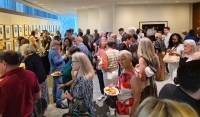
Standing Room Only Crowd for Chicago’s Leading Theater Artistic Directors
04 September 2026 in Theatre BuzzIt must have been heavenly for the creative leaders of Goodman, Steppenwolf, Chicago Shakespeare and Court, Chicago’s top regional theaters,…
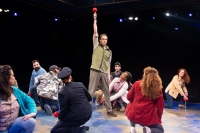
The Best of Us: Marriott Theatre’s Come From Away
03 September 2026 in Theatre in ReviewCome From Away begins from a place of deep uncertainty, yet what emerges is a story grounded in the steady,…

Steppenwolf Theatre Presents Revival of TOPDOG/UNDERDOG September 17 – November 1 / Rehearsals Underway
02 September 2026 in Upcoming TheatreSteppenwolf Theatre Company, the nation's premier ensemble theater company, is pleased to launch its 51st Season with Suzan-Lori Parks' Pulitzer Prize-winning drama Topdog/Underdog, helmed by Tony Award-winning…
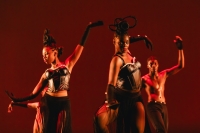
Chicago Black Dance Legacy Project Gala: Radiant & Sumptuous at the Harris
01 September 2026 in Dance in ReviewThe first thing you notice about the meticulously curated Black dance performance held at the Harris Theater over the weekend…

Vape! The Grease Parody Is High-Energy Fluff
01 September 2026 in Theatre in ReviewVape! The Grease Parody, currently running at Chicago’s Apollo Theater through January, takes a satirical swing at the iconic 1978…

BrightSide Theatre Announces "Monte Carlo Night" 15th Anniversary Gala and Fundraiser on September 25
01 September 2026 in Theatre BuzzBrightSide Theatre will celebrate its 15th anniversary with "Monte Carlo Night," a gala and fundraiser, on Friday, September 25, 2026,…
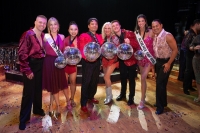
GDC Hosts 19th Anniversary “Dancing With The Giordano Stars” Ballroom Dance Competition October 8th
01 September 2026 in Upcoming DanceGiordano Dance Chicago (GDC) hosts its highly anticipated 19th Anniversary "Dancing With The Giordano Stars" ballroom dance competition 7-11 p.m. Thursday, Oct. 8…
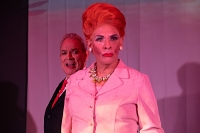
A Loving, Delight‑Packed Celebration: Joan Crawford Goes to Hell Marks 25 Years of Handbag
31 August 2026 in Theatre in ReviewHell in a Handbag Productions celebrates its 25th year with a revival of Joan Crawford Goes to Hell, a sharp,…
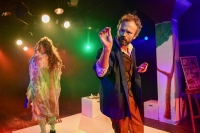
An Immersive Sunday in the Park with George at Kokandy Productions
31 August 2026 in Theatre in ReviewComposition, tension, balance, light, and harmony come together seamlessly in Kokandy Productions’ revival of Sondheim’s opus, ‘Sunday in the Park…

Robert Falls to Direct the World Premiere of FLYING MONKEYS, by L.C. Bernadine, at Redtwist Theatre, Dec 6 - Jan 17
31 August 2026 in Upcoming TheatreAward-winning Redtwist Theatre, launching its 22nd season with Prayer Circle, September 17 - November 8, by Erik Gernand and directed by Executive Artistic Director Dusty Brown, announces today…
Buffalo Theatre Ensemble Names Daniel Millhouse as New Managing Artistic Director
31 August 2026 in Theatre BuzzBuffalo Theatre Ensemble (BTE), the professional theater company in residence at the McAninch Arts Center (MAC), is pleased to announce that, in keeping…
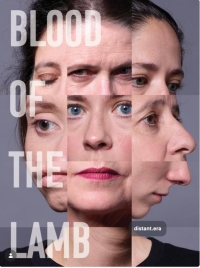
Promethean Theatre Ensemble to offer talkbacks after selected performances BLOOD OF THE LAMB, opening September 5 and 6
31 August 2026 in Upcoming TheatrePromethean Theatre Ensemble announced today it will offer post-show audience talkbacks following two performances of their Chicago premiere of BLOOD OF…
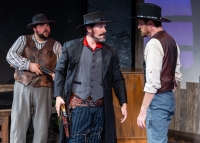
City Lit’s Shane Saddles Up a Classic Western With Fresh Heart
30 August 2026 in Theatre in ReviewCity Lit Theatre’s world premiere of Shane, adapted for the stage and directed by Mark Pracht, brings a fresh, nostalgic…
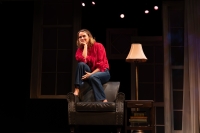
In Sisters, Barrie Turns an AI Fable into an Impressive Character Study
29 August 2026 in Theatre in ReviewThe rise of artificial intelligence raises many questions about its effect on humanity. What does it mean if we become…
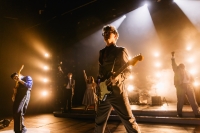
Buddy Holly’s Brilliance, Reawakened on the Drury Lane Stage
27 August 2026 in Theatre in ReviewDrury Lane Theatre opens its latest musical with a warm jolt of rock ’n’ roll energy as Buddy – The…
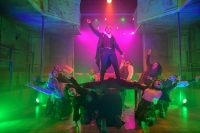
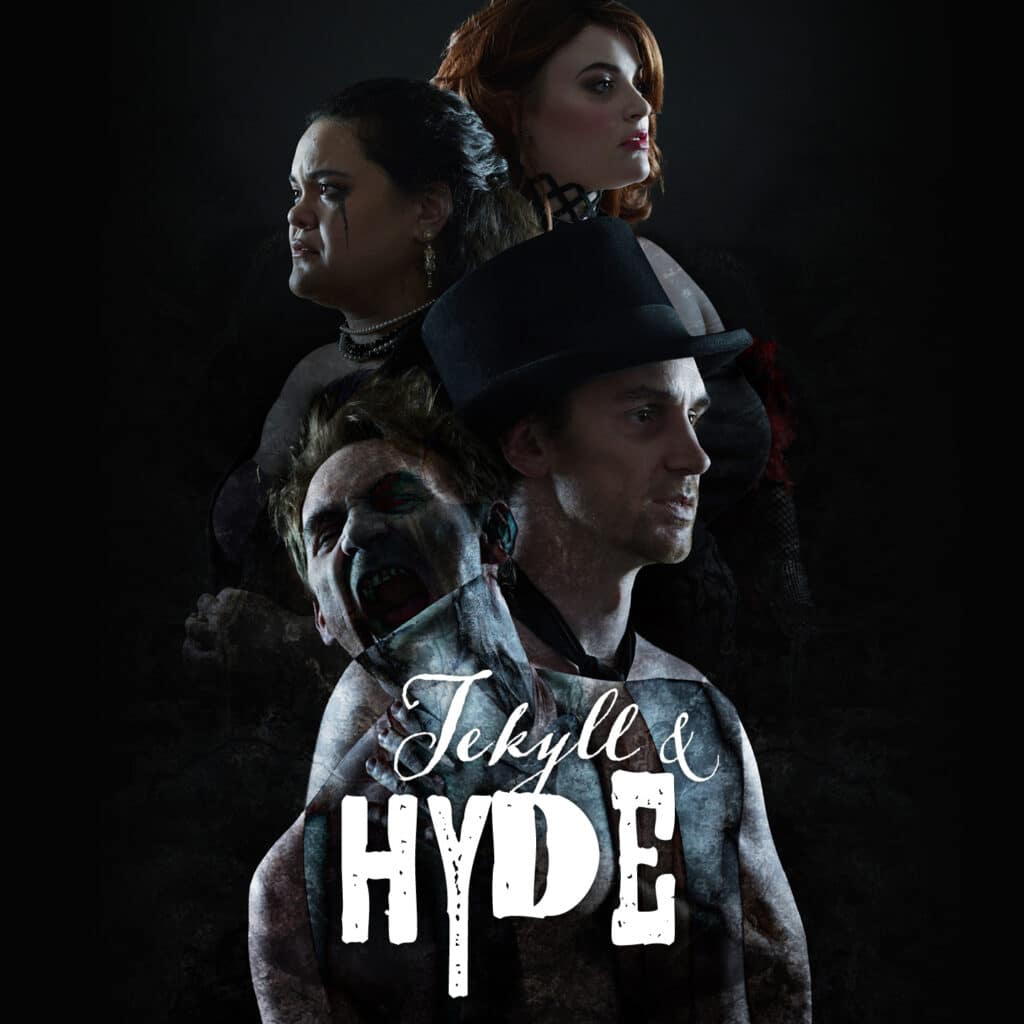
Kokandy's JEKYLL & HYDE Extended by Popular Demand
26 August 2026 in Upcoming TheatreBroadway In Chicago is pleased to announce a darkly delicious Halloween surprise: Kokandy Productions’ critically acclaimed revival of JEKYLL & HYDE will be extended…
Following Obama Center premiere, Manual Cinema's acclaimed productions return to Chicago's Studebaker Theater
26 August 2026 in Upcoming TheatreChicago-based Emmy Award-winning performance collective and film/video production company Manual Cinema premiered two new hand-animated films at the Obama Presidential Center Museum…
Playmakers Lab’s That’s Weird Grandma’s 25th Birthday is a fine place to giggle
25 August 2026 in Theatre in ReviewIf you need an energy boost, skip the can of Monster and get yourself, plus loved ones of any age,…

Victory Gardens Theater presents the World Premiere of Zayd Ayers Dohrn's The Humanities September 10 through October 4
25 August 2026 in Upcoming TheatreVictory Gardens Theater (2433 N. Lincoln Avenue), an historic incubator for new play development, proudly announces the World Premiere staging of The…
Lookingglass Kowalski starring Johnny Galecki and Jacob Moskovitz September 15 through October 25
25 August 2026 in Upcoming TheatreJoining the previously announced stars of Kowalski Johnny Galecki ("The Big Bang Theory," "The Little Dog Laughed") as Tennessee Williams and Jacob Moskovitz ("Elle") as Marlon…

Shattered Globe Theatre Opens 36th Season with Midwest Premiere of VLADIMIR October 2 – November 14 at Theater Wit
25 August 2026 in Upcoming TheatreShattered Globe Theatre is pleased to open its 36th Season with the Midwest premiere of Erika Sheffer's Vladimir, an unflinching drama of resistance directed by Ensemble Member Lou Contey*,…

TICKETS FOR A 20 RETURNS WITH SPECIALLY PRICED $20 TICKETS FROM HOT TIX AUGUST 27-SEPTEMBER 14, 2026
24 August 2026 in Theatre BuzzThe League of Chicago Theatres announces the return of Tickets for a 20. From Thursday, August 27 through Monday, September 14, 2026, theatregoers can…

Babes With Blades's announces William Shakespeare's KING LEAR, October 15 - November 21
24 August 2026 in Upcoming TheatreBabes With Blades Theatre Company’s (BWBTC), now presenting the world premiere of yo ho. through August 29 at The Edge Off-Broadway, shares the…

BrightSide Theatre announces THE ADDAMS FAMILY MUSICAL, to play October 2 - 18
24 August 2026 in Upcoming TheatreBrightSide Theatre has announced cast and crew for THE ADDAMS FAMILY MUSICAL - the kickoff production of BrightSide's 15th Anniversary season.…
35th Annual Dance for Life Saturated with Excellence
23 August 2026 in Dance in ReviewFrom its beginning in 1992 on the tiny stage of a modest theater, Dance for Life (DFL) has grown and…

Chicago Shakespeare Theater announces Two Shakespeare Productions in Repertory beginning October 13 - January 3
21 August 2026 in Upcoming TheatreChicago Shakespeare Theater (CST) announces the cast and creative team for the company's fall Shakespeare Repertory productions, an unforgettable theatrical event at the heart…
Rising star Jacob Moskovitz to play Marlon Brando in the Chicago presentation of Kowalski at Lookingglass Theatre
20 August 2026 in Theatre in ReviewRising star Jacob Moskovitz ("Elle") has joined the cast of Kowalski as Marlon Brando, alongside previously announced Chicago theater veteran Johnny Galecki ("The Big Bang Theory," "The Little…

McHenry Outdoor Theater: Nostalgia With a Modern Heartbeat
20 August 2026 in Theatre BuzzThere was a particular kind of magic to seeing a movie outside when I was a kid in 1970s Chicago…
‘Anatomy of a Suicide’ Is Hard to Watch, But Not Because of the Subject
18 August 2026 in Theatre in ReviewPerhaps surprisingly, Anatomy of a Suicide is not an overwhelmingly emotionally gripping play, nor is it horrifying. Instead, it vividly…
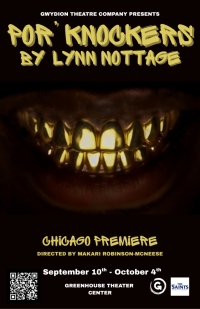
Gwydion Theatre Company presents The Chicago Premiere of Por’ Knockers at the Greenhouse Theater’s Studio 44 September 10 - October 4
18 August 2026 in Upcoming TheatreThis narrative tracks five individuals within the "People’s Diasporatic Party"—outfitted in corporate attire—as they take refuge in a desolate East…




Latest Articles
-
 Standing Room Only Crowd for Chicago’s Leading Theater Artistic Directors
Written by Bill EslerIt must have been heavenly for the creative leaders of Goodman, Steppenwolf, Chicago Shakespeare and Court, Chicago’s top regional theaters, to be greeted by a standing room only crowd. But there they were, on a panel moderated by the eminent…
Standing Room Only Crowd for Chicago’s Leading Theater Artistic Directors
Written by Bill EslerIt must have been heavenly for the creative leaders of Goodman, Steppenwolf, Chicago Shakespeare and Court, Chicago’s top regional theaters, to be greeted by a standing room only crowd. But there they were, on a panel moderated by the eminent… -
 The Best of Us: Marriott Theatre’s Come From Away
Written by Kimberly KatzCome From Away begins from a place of deep uncertainty, yet what emerges is a story grounded in the steady, everyday kindness people offer when they have nothing else to give. Rather than revisiting the events of September 11 themselves,…
The Best of Us: Marriott Theatre’s Come From Away
Written by Kimberly KatzCome From Away begins from a place of deep uncertainty, yet what emerges is a story grounded in the steady, everyday kindness people offer when they have nothing else to give. Rather than revisiting the events of September 11 themselves,… -
 Steppenwolf Theatre Presents Revival of TOPDOG/UNDERDOG September 17 – November 1 / Rehearsals Underway
Written by Buzz Center StageSteppenwolf Theatre Company, the nation's premier ensemble theater company, is pleased to launch its 51st Season with Suzan-Lori Parks' Pulitzer Prize-winning drama Topdog/Underdog, helmed by Tony Award-winning director Kenny Leon, who returns to Steppenwolf following his hit production of King James. Ensemble members Glenn Davis (Windfall, Purpose–Chicago/Broadway, King James) and Namir Smallwood (Windfall, The Book of…
Steppenwolf Theatre Presents Revival of TOPDOG/UNDERDOG September 17 – November 1 / Rehearsals Underway
Written by Buzz Center StageSteppenwolf Theatre Company, the nation's premier ensemble theater company, is pleased to launch its 51st Season with Suzan-Lori Parks' Pulitzer Prize-winning drama Topdog/Underdog, helmed by Tony Award-winning director Kenny Leon, who returns to Steppenwolf following his hit production of King James. Ensemble members Glenn Davis (Windfall, Purpose–Chicago/Broadway, King James) and Namir Smallwood (Windfall, The Book of… -
 Chicago Black Dance Legacy Project Gala: Radiant & Sumptuous at the Harris
Written by Mitchell OldhamThe first thing you notice about the meticulously curated Black dance performance held at the Harris Theater over the weekend is language. The eloquence and weight of the words used to explain why the Chicago Black Dance Legacy Project (CBDLP)…
Chicago Black Dance Legacy Project Gala: Radiant & Sumptuous at the Harris
Written by Mitchell OldhamThe first thing you notice about the meticulously curated Black dance performance held at the Harris Theater over the weekend is language. The eloquence and weight of the words used to explain why the Chicago Black Dance Legacy Project (CBDLP)…


Does your theatre company want to connect with Buzz Center Stage or would you like to reach out and say "hello"? Message us through facebook or shoot us an email at This email address is being protected from spambots. You need JavaScript enabled to view it..
*This disclaimer informs readers that the views, thoughts, and opinions expressed in the text belong solely to the author, and not necessarily to Buzz Center Stage. Buzz Center Stage is a non-profit, volunteer-based platform that enables, and encourages, staff members to post their own honest thoughts on a particular production.