
Displaying items by tag: Siegfried
A Storybook Siegfried Or James Earl Jones Takes Charlie Brown and Corporal Klinger on an Excellent Adventure to Where the Wild Things Are to slay a Dragon and Find the St. Pauli Girl

Siegfried, the third installment of Richard Wagner’s monumental cycle, The Ring of the Niebelungen, opened in a comic-book fairy tale, if not quite mythical version this past Saturday evening to an enthusiastic full house at the Lyric Opera of Chicago. In the preceding two seasons, the prologue, Das Rheingold and then Die Walküre were presented in this production directed by David Pountney. The final opera, Die Götterdämmerung will be mounted next year, and all four will be performed in the 2020 season. It will sell out quickly to an international audience of Wagnerites who fly all over the world to see the complete Ring, so buy your tickets as soon as you can!
Richard Wagner was a flawed human being. His music is not. It is the very pinnacle of 19th century German romantic opera, from which later, great composers went this way or that, but never higher. Bad people can write good music, just as good people can write bad music. I would never vote for the man if he were running dog catcher (apologies to dogs), but you should never miss any opportunity to hear his magnificent music dramas performed live in a major opera house. With Sir Andrew Davis expertly leading the outstanding Lyric Opera Orchestra, which is the true star of the show, Siegfried is a “must see”. Especially magnificent were the low brass, complete with Wagner tubas, invented just for the Ring. But this is Chicago, and the ghost of Georg Solti lives!
The very first thing that Wagner Newbies instinctively worry about is the seemingly daunting length of Wagner’s operas. DON’T! Think of it as an evening spent binge watching three or four episodes of Game of Thrones, with time to go get a beer and a snack after each episode. If you allow yourself to be carried along by the current of the glorious music, as a leaf floats on a rushing stream, there is little awareness of the passing time. We’ve been to a lot of shorter operas that have felt far longer. There aren’t many better ways to spend a few hours of your life.
Since the pivotal Jahrhundertring production of The Ring celebrating its centenary in 1976, directors and designers have almost religiously eschewed the traditional, and often caricatured, horned helmets and breastplates, letting their imaginations run wild and leaving us at the mercy of regietheater. This production of Siegfried is much more watchable than the one last presented by the Lyric over a dozen years ago, but some over-the-top and over-done business took away from an otherwise workable, if lightweight version. The scenery, originally designed by Johan Engels and now in the hands of Robert Innes Hopkins, is creative and fanciful on a large fairy-tale, rather than legendary, scale. The tall, movable scaffolds on either side of the stage, which mimic imagined stage machinery from ancient Greek drama, serve a multitude of useful and imaginative purposes. The production elements, including the inflatable oversized giants in Das Rheingold, and the dragon Fafner in this opera, take the work out of the realm of profound allegory and make it whimsical – too whimsical perhaps, along the lines of Sendack’s Where the Wild Things Are. We thought on more than one occasion “you should bring the grand-kids to see this!” And maybe you should, so that one day they will return to see a grown-up production.
The story picks up about 18 years after Wotan (king of the gods) left his favorite daughter, Brünhilde, sleeping on a rock surrounded by fire. He did this as punishment for disobeying her father by trying to help Wotan’s bastard son, Siegmund who was conceived with a mortal human, in battle against Hunding, the abusive husband of Siegmund’s twin sister, #metoo, Sieglinde. Siegmund was then killed, as Wotan’s wife and the Goddess of Marriage, Fricka commanded. Siegmund’s magic sword, Notung, was broken to be repaired only by a hero who does not know fear. Sieglinde died giving birth to the son that she and Siegmund conceived in an adulterous and incestuous moment of passion. That son, little Siegfried (remember him?), was raised by the dwarf Mime, not out of the kindness of his heart, as he would have Siegfried believe, but knowing that one day the orphan would grow up to be the great hero that will recover the stolen magic ring (yes, the Ring) which is guarded by the dragon Fafner (who used to be a giant), allowing Mime to rule the world, instead of his brother Alberich, who had the ring made from a lump of gold found in the Rhein river. Are you keeping up? If it seems a little confusing, no worries; in these operas someone will say what has happened before, what is going to happen, then it will happen, and then someone will say what has just happened because of what happened before. The projected titles in English by Colin Ure distilled Wagner’s sometimes dense prose into understandable, if somewhat prosaic dialogue, making it easy to follow the story.
The opening scene is set in the secluded hut where Siegfried, now grown, lives alone with Mime. Yet, as conceived by David Pountney and Johann Engels, this strangely takes the form of a nursery or day care classroom. Children’s drawings cover the wall, oversized table, chairs and a play pen filled with toys relentlessly remind us that Siegfried is young, naïve and ignorant of the world outside of this little abode and the surrounding forest. In answer to Siegfried’s questions about his parentage, Mime answers that he himself has been both father and mother to the boy, which probably explains why Mime is sporting a ladies negligee over his pants and boots. In this get-up, with his strong arms bared, images of Corporal Klinger from MASH were hard to dispel. Nevertheless, while Mime has taught him much, Siegfried has never learned what fear is.
Sigmund’s broken sword, Nothung, able to be repaired only by a hero who has never learned to fear (see above) is now in the possession of Mime. The dwarf’s familiarity with fear renders him manically frustrated in his inability to re-forge Nothung. However, since Siegfried has never known fear, he is able to repair his father’s sword, aided by a white-board easel of step by step instructions and a shipment of necessary equipment intended to look like it came from Amazon Prime (you know the label), and carried in by Mime’s mimes. We’re not making that up. They actually had mimes. Seventeen of ‘em. They were good mimes. Giant bellows high in the scaffold fan the flames, and the water tub to cool the hot steel even comes with a little rubber ducky. If you think that sounds a little silly, it actually did work in that fairy tale, if not grand mythical, way.
Siegfried was sung by Burkhart Fritz, making his American operatic stage debut. His burnished voice has a welcome sweetness, unusual in a dramatic tenor voice. Yet, Fritz is a little underpowered for a house the size of the Lyric, demonstrating just how hard it is to find singers capable of modern Wagnerian demands. He sang exquisitely in Act Two in “Dass der mein Vater nicht ist” and in the exchanges with the bird during the “Forest Murmurs” scene. However, the “Forging Song” in Act One lacked the budding virility and exuberance of a young man ready to slay a dragon and fall in love for the first time. Fritz is a fine actor and he played his role with energy, sincerity and integrity. Unfortunately, he was costumed in a way that made him look anything but heroic, and much more like Charlie Brown just before Lucy pulls the football away. Every time he left the stage we silently implored, “Please, oh please, change your costume and come back looking like a hero!”
Matthias Klink, Opernwelt magazine’s 2017 Singer of the Year and in his Lyric Opera debut, brought great physicality and commitment to the insidiously creepy role of Mime. He used his clarion and multi-colored voice fearlessly to bring out the grotesqueness and depraved disingenuousness of the sly, evil character, singing beautifully at times, yet with moments of such intentional, albeit appropriate ugliness, that we feared for his vocal health. That kind of singing is very exciting, in a Roman Circus live-or-die sort of way.
Wotan, incognito as “The Wanderer” is nobly and sympathetically sung by Eric Owens. His rich, deeply hued voice conveys the universal majesty of the king of the gods, the intimate sadness of a father who has lost two of his favorite children and is estranged from a third, and the crushing pathos of a great leader who knows his reign is coming to an end. (It’s hard being a god in opera.) His instrument does not possess the overwhelmingly booming power of notable Wotans of the past, such as Hans Hotter, but it is more beautiful and moving. Mr. Owens is splendid in the role and eminently capable of filling the shoes of the great James Morris, even as Morris’ commanding Wotan is still vivid in our hearts and minds.
The Act Two forest setting is a simple, but enchanting forest of sail-like conifers which hides the lurking dragon and its lair. The mimes were now bearing large green leaf-like glow-stick sculptures. We’re not sure why, but it was pretty. Alberich reappears from when we last saw him two operas ago in Rheingold, looking like a homeless vagrant with all of his possessions in a modern day shopping cart, along with his severed arm macabrely preserved in a glass case. Alberich hopes that when Mime and Siegfried attempt to kill the dragon, they will both die and he, Alberich, can reclaim the magic treasure. If nothing else, these guys have stamina. The talented bass Samuel Youn returned as Alberich with his strong voice and appropriately disturbing characterization.
Fearless Siegfried now engages Fafner, the giant who has turned himself into a dragon to guard his treasure. Patrick Guetti, a former member of the Ryan Center program, with the help of a little amplification for his off-stage singing, has terrific chops for the part. The fight with the giant inflatable dragon was as exciting as anything you might see at the movies, with massive claws which would at times completely cover the singer and a fearsome maw of gargantuan teeth. Siegfried is able to whack off a piece of the dragon’s tail, which keeps twitching as the hero disappears from sight to make the fatal blow, causing the dragon to deflate. In his death throes, Fafner changes back into a giant, run through by Notung, spilling green blood. Ew. Siegfried tastes a drop and gains the ability to understand the Forest Bird, which first appeared in Act I as a puppet looking like a creature from a Dr. Suess book. In Act II, the Forest Bird was charmingly portrayed by another Ryan Center alumnus Diana Newman. She sang prettily and deserves extra points for bravery, perched as she was on the edge of the railing way up above the stage in Valhalla.
Siegfried, who still hasn’t experienced fear, takes the ring and the magic helmet, Tarnhelm, and having also gained the ability to read Mime’s thoughts, learns the dwarf was planning to drug and kill him. Who knew dragon’s blood had such power? And so, Siegfried must now kill Mime. Who ever said opera is boring? If only opera producers would have the courage to understand that it’s not.
In Act Three, Wotan goes to seek the advice of Erda, the primeval Earth Goddess, to find out how to keep the gods from becoming irrelevant. BTW, Erda is also the mother, with Wotan, of Brünhilde, the girl asleep on the fiery rock. Emerging from her subterranean sleep, Erda can listen to Wotan, but knows that the events already set in motion cannot be altered. Ronnita Miller was absolutely terrific in the short role with a voice of tremendous beauty and an astonishing low register.
So far, so good; one could quibble about this, that or the other thing, in particular the lack of gravitas in the production, but up until that point, the performance was engaging, interesting and told the story. Sadly, the final scene was a terrible disappointment. When Siegfried overcomes the flames surrounding the former Warrior Maiden, Brunhilde, we are in store for some of the most sublime, romantic, and erotically charged music ever written as the young pair discover each other. Killing a dragon was nothing compared to meeting a woman for the first time, and Siegfried finally begins to understand fear. (If you haven’t figured it out for yourselves yet, she’s his aunt.) It started promisingly enough, with their innocent trepidation, in spite of their instant attraction, but then the scaffolds turned to reveal little rooms on opposite sides of the stage, brightly painted, with balloons and a pink kiddie chair for Brünhilde and a little blue kiddie chair for Siegfried. Yes, they are young, innocent, naïve, immature etc. etc. Duh, we get it. But holding hands and swinging them back and forth, they looked more like Hansel and Gretel than the passionate couple destined to change the world forever. When they finally reclined on the grassy knoll in a copulatory embrace, it wasn’t romantic or sexy, it was just awkward. Bear in mind, Siegfried looks like Charlie Brown and Brünhilde looks like the Saint Pauli Girl. We can only hope this will be revised for the 2020 remounting. Soprano Christine Goerke, who was thrilling as Brünhilde in Die Walküre (not to mention the title role in Elektra and as Cassandra in Les Troyen), has the goods; a full dramatic sound, strong stage presence, intelligence and good acting instincts, however, she sounded as if she wasn’t quite warmed up. Could have been just one of those days, could have been having to lie still on a fiery rock for half an hour before she had to sing, no doubt she will be in better form in the future.
The Fat Lady says: Go see Siegfried!
Performances continue through November 16. Only three more performances!
For tickets: www.lyricopera.org or call 312-827-5600.
And save a few days of PTO to see the entire Ring here in 2020.
Review: ‘Siegfried’ at Lyric Opera of Chicago

Five hours is a long time to do anything. A five-hour German opera loosely based on incest can sound even longer when given the choice on a Saturday night. That said, Lyric Opera’s new production of Wagner’s ‘Siegfried’ feels anything but long. ‘Siegfried’ is the third installment in Wagner’s four-opera ‘Ring’ cycle. Beginning in 2016, the Lyric has endeavored to produce the entire cycle with next year being the conclusion. David Pountney returns to direct this exciting production.
‘Siegfried’ is the most mysterious of the four ‘Ring’ operas. For as many people familiar with ‘Die Walkure’, just as many will have never heard of ‘Siegfried’. It is within this opera that the musical tone of the cycle shifts. Wagner took a twelve-year break in his work on the ‘Ring’ cycle and by the time he finished ‘Siegfried’ his style had changed. The music begins playfully in Act I as young Siegfried (Burkhard Fritz) learns to sword fight with his androgynous keeper, Mime (Matthias Klink), who attempts to forge swords strong enough to slay the dragon Fafner. Siegfried proves too strong and each shatter. Mime knows if he can convince naïve Siegfried to kill Fafner, the ring and its power can be his, should he kill Siegfried. A soaring second act takes place in the woods while hunting and killing the dragon. Curiously there isn’t a single female voice until nearly three hours in. It is here where Wagner’s work on the opera takes a break.
Act three Siegfried is introduced to Brunnhilde, who happens to be his aunt. Lyric welcomes back Christine Goerke in the role of Brunnhilde as she previously appeared in ‘Die Walkure’ last season. This is where Wagner picked it back up and the music becomes noticeably darker and more exciting. Burkard Fritz and Christine Goerke give spectacular performances. Their voices blend seamlessly throughout the romantic second half.
Pountney’s vision for the lesser produced ‘Siegfried’ is fascinating. Continuing with his theater-within-a-theater concept, the first scene begins in a psychedelic child’s nursery. While some may see it as absurd staging, it’s vital staging. Juxtaposed with the cinematic Wagner music, the neons in blacklight bring opera into the twenty first century. Staging for that forest in Act II is what makes this a truly memorable experience. The talented Lyric orchestra matched with stunning visuals and lighting effects created by Poutney are quite arresting.
Young people, have no fear, you can go to the opera and actually enjoy it. It may not be everyone’s cup of tea, but for those interested in ‘Lord of the Rings’ or ‘Game of Thrones’ perhaps consider from where those familiar plot lines whence came. The Lyric does an admirable job appealing to young audiences with an outstanding new production of an infrequently produced Wagner classic.
Through November 16th at Lyric Opera. 20 N Wacker. 312-827-5600

“A Strange Loop” Lets the Intrusive Thoughts Win at Raven Theatre in partnership with About Face Theatre
17 October 2026 in Theatre in ReviewA musical, but it’s just the voices in your head. Sounds just crazy enough to win the 2020 Pulitzer for…

Announcing Goodman's 22nd New Stages 2026 Festival Line-Up
15 October 2026 in Upcoming TheatreFrom a "Kung Fu rom-com" to a witchy new musical, The Goodman's popular New Stages Festival in its 22nd year continues…

URBANTHEATER COMPANY ANNOUNCES THE LATINA POWER FALL SERIES
14 October 2026 in Now PlayingPuerto Rico es una Cama Twin by Ana Sophia Colón and Black Latina (The Play) by Crystal Roman run October…

TIMELINE THEATRE’S 100TH PRODUCTION, THE CHICAGO PREMIERE OF LAURA WADE’S HOME, I’M DARLING, DIRECTED BY MECHELLE MOE, SATIRIZES THE SEDUCTIVE FANTASY OF A “SIMPLER PAST,” NOVEMBER 11 - DECEMBER 13
14 October 2026 in Upcoming TheatreTimeLine Theatre’s 30th Anniversary Season at its new home in Uptown rolls merrily along in November with the company’s 100th…

Court Theatre announces America@250 - Now is the Time: Artists Go to Work
14 October 2026 in Theatre BuzzUnder the leadership of Marilyn F. Vitale Artistic Director Avery Willis Hoffman and Executive Director Angel Ysaguirre, Court Theatre proudly…
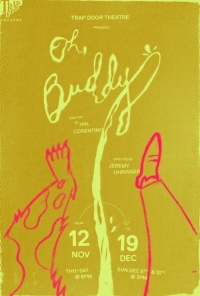
Trap Door Theatre Presents the World Premiere of OH, BUDDY, by Hal Cosentino. Opening November 12th, 2026
14 October 2026 in Upcoming TheatreTrap Door Theatre is thrilled to continue its 33rd season with a Chicago Premiere of Oh, Buddy, written by Hal…

Announcing the Cast of the 49th A CHRISTMAS CAROL
14 October 2026 in Upcoming TheatreTis the season, in spite of today's unseasonable temps, as A Christmas Carol begins rehearsals for The Goodman's 49th annual…

NOVA ENTERTAINMENT CURRENT AND UPCOMING 2026 CIRCA PINTIG UPDATES
14 October 2026 in Now PlayingNova Entertainment is pleased to announce the upcoming performance schedule and updates for CIRCA Pintig, with a visual rebrand and…

Steppenwolf Theatre Announces "ha ha ha ha ha ha ha" January 13 – February 7, 2027
14 October 2026 in Upcoming TheatreThe blurb is: hahahahahahahahahaha hahahahahahaha hihihi hahahahahahaha hoho hahahhahaha hehe hahahahahahahahahaha. Julia Masli's award-winning solo phenomenon ha ha ha ha…

'Sanctuary Stories' Ventures Into Emotional Drama Behind the News on Immigration
13 October 2026 in Theatre in ReviewSanctuary Stories plumbs the line between theater and journalism, and the powerful human dramas both can depict. Funded by a Northwestern…
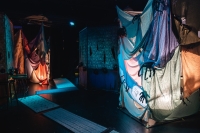
Inside Six Strange Worlds: Exquisite Corpse VI: LULLABIES
13 October 2026 in Theatre in ReviewFor its sixth Halloween season, Rough House Theater Co. has transformed Steppenwolf’s Merle Reskin Garage into a spectacular puppet haunted…
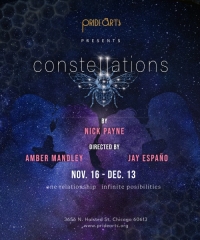
PrideArts announces cast and production teams for Nick Payne's CONSTELLATIONS, performed by alternating same-sex casts, November 13- December 13
12 October 2026 in Upcoming TheatreThursdays – Saturdays at 7:00 pm, Sundays at 3 pm Additional Saturday matinees at 3:00 pm on November 28 and December…
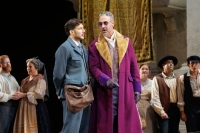
Robert Falls Directs a Sinfully Satisfying Don Giovanni at Lyric Opera of Chicago
11 October 2026 in Theatre in ReviewLet he without sin cast the first stone, Lyric’s “Don Giovanni” seemingly says when they bring up the house lights…

Teatro Vista Productions in collaboration with Audible presents Cafecito & Loops: A Mexodus Listening Tour Headed South Sundays, through November 1st
11 October 2026 in Now PlayingTeatro Vista Productions (TVP), the Midwest's only Latine-led Equity theatre company, in collaboration with Audible, presents Cafecito & Loops: A…
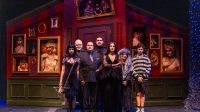
BrightSide’s Addams Family Musical Revives the Wonderfully Weird World of the Addams Clan
10 October 2026 in Theatre in ReviewThey're creepy and they're kooky, Mysterious and spooky, They're altogether ooky, The Addams Family. Yes, ooky. BrightSide Theatre’s production of…
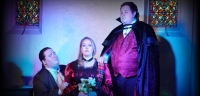
Chicago City Opera Delivers a Rare Operatic Haunting with Der Vampyr
08 October 2026 in Theatre in ReviewWith Halloween creeping closer, there’s something fitting about revisiting one of opera’s earliest flirtations with macabre horror - especially in…

Avalanche Theatre stages the world premiere of They Broke Up by Skyler Tarnas November 6–22, 2026
08 October 2026 in Upcoming TheatreAvalanche Theatre announces the world premiere production of They Broke Up by Chicago playwright Skyler Tarnas, November 6–22, 2026. Opening…

Oil Lamp Theater Announces the cast and creative team for the return of IT'S A WONDERFUL LIFE: A LIVE RADIO PLAY, Nov. 20 - Dec. 27
08 October 2026 in Upcoming TheatreOil Lamp Theater is proud to announce the cast and creative team for its next production and the final production…
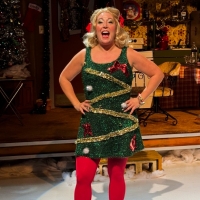
Adults-only holiday fun: Who's Holiday! brings R-rated Cindy-Lou Who back to Theater Wit for her sixth year, Nov. 27-Dec. 27
08 October 2026 in Upcoming TheatreChristmas Day is in our grasp. Why the vodka? Glad you asked! Who's Holiday! brings R-rated Cindy-Lou Who back to…

Two-Time Tony Award-Winning Actress Victoria Clark To Receive the Sarah Siddons Society Award at Annual Benefit on Monday, November 9, 2026
08 October 2026 in Theatre BuzzThe Sarah Siddons Society is pleased to present its 2026 Award to actress and director Victoria Clark, who recently starred…
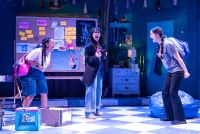
Goodman's Dead Girl’s Quinceañera: When Fifteen Meets the Adult World
07 October 2026 in Theatre in ReviewAt fifteen, the world can feel like a television show you haven't quite figured out how to turn off. For…

Steppenwolf Theatre's ADIRONDACK CHAIR CIRCLE In Rehearsal – Playing October 22 – December 6, 2026 – World Premiere!
07 October 2026 in Upcoming TheatreSteppenwolf Theatre Company, the nation's premier ensemble theater company, is pleased to launch its 51st Season with the world premiere of…

Hell in a Handbag Productions Announces 25th Anniversary Season!
07 October 2026 in Upcoming TheatreHell in a Handbag Productions is thrilled to announce its 25th Anniversary Season, featuring three "camptacular" shows guaranteed to delight lovers of…

Chicago’s Theater Wit introduces new Watchword closed captioning system, dramatically improving access in all three of its theaters
07 October 2026 in Theatre BuzzChicago’s Theater Wit is now offering new, state-of-the-art closed captioning service, marking a dramatic improvement in making live theater more…

Paramount Theatre’s reimagined A Christmas Carol promises to be a dazzling new, all-ages spectacle for Chicago’s holiday theater season, November 11-January 3
07 October 2026 in Upcoming Theatre“God bless us, everyone,” because there’s a fresh, new, reimagined version of Charles Dickens’ classic tale A Christmas Carol debuting…
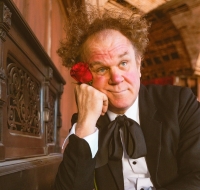
"John C. Reilly is Mister Romantic" Returns to Steppenwolf Theatre - December 10 – 13, 2026
06 October 2026 in Upcoming TheatreFollowing last year's critically acclaimed, sell-out engagement, Steppenwolf Theatre Company is pleased to announce the return of John C. Reilly…

Saint Sebastian Players Open 45th Season With A Murder Is Announced by Agatha Christie Classic Miss Marple Mystery Runs Oct. 23–Nov. 15
06 October 2026 in Upcoming TheatreThe Saint Sebastian Players open their 45th season of travels to different places with A Murder is Announced, a classic Miss Marple mystery…

Announcing "The Goodman, For Good" Campaign
06 October 2026 in Theatre BuzzToday, Goodman Theatre raises the curtain on its future as leadership and artists share a vision for its next century…

Two Edge Theater Company to stage A VIEW FROM THE BRIDGE as its inaugural Chicago production, December 4 through January 10
05 October 2026 in Upcoming TheatreTwo Edge Theater, a reincarnation of the Edge Theater Company that enjoyed eight successful seasons in the Denver, Colorado area,…
Frankenstein at Studebaker Theater adds performances for Halloween run
05 October 2026 in Upcoming TheatreChicago's historic Fine Arts Building and Studebaker Theater are thrilled to announce their Halloween co-production of Manual Cinema's acclaimed Frankenstein…



Latest Articles
-
 “A Strange Loop” Lets the Intrusive Thoughts Win at Raven Theatre in partnership with About Face Theatre
Written by John AccroccoA musical, but it’s just the voices in your head. Sounds just crazy enough to win the 2020 Pulitzer for Drama. “A Strange Loop” by Michael R. Jackson finally makes its Chicago premiere at Raven Theatre in a co-production with…
“A Strange Loop” Lets the Intrusive Thoughts Win at Raven Theatre in partnership with About Face Theatre
Written by John AccroccoA musical, but it’s just the voices in your head. Sounds just crazy enough to win the 2020 Pulitzer for Drama. “A Strange Loop” by Michael R. Jackson finally makes its Chicago premiere at Raven Theatre in a co-production with… -
 Announcing Goodman's 22nd New Stages 2026 Festival Line-Up
Written by Buzz Center StageFrom a "Kung Fu rom-com" to a witchy new musical, The Goodman's popular New Stages Festival in its 22nd year continues to offer a first glimpse at the latest works by a handful of the hottest contemporary playwrights. This year's four-play…
Announcing Goodman's 22nd New Stages 2026 Festival Line-Up
Written by Buzz Center StageFrom a "Kung Fu rom-com" to a witchy new musical, The Goodman's popular New Stages Festival in its 22nd year continues to offer a first glimpse at the latest works by a handful of the hottest contemporary playwrights. This year's four-play… -
URBANTHEATER COMPANY ANNOUNCES THE LATINA POWER FALL SERIES
Written by Buzz Center StagePuerto Rico es una Cama Twin by Ana Sophia Colón and Black Latina (The Play) by Crystal Roman run October 9 through 18 on Paseo Boricua, with pay-what-you-can tickets from $15 and Friday morning matinees for Chicago schools CHICAGO, IL…
-
Chicago Danztheatre Ensemble Announces 2026-2027 Season
Written by Buzz Center StageChicago Danztheatre Ensemble (CDE) is pleased to announce its 2026 - 2027 season. CDE will open this artistic season with Copestic Vibrations: A Music Festival, Friday, Nov. 13 and Saturday, Nov. 14, followed by a fully staged production of For…


Does your theatre company want to connect with Buzz Center Stage or would you like to reach out and say "hello"? Message us through facebook or shoot us an email at This email address is being protected from spambots. You need JavaScript enabled to view it..
*This disclaimer informs readers that the views, thoughts, and opinions expressed in the text belong solely to the author, and not necessarily to Buzz Center Stage. Buzz Center Stage is a non-profit, volunteer-based platform that enables, and encourages, staff members to post their own honest thoughts on a particular production.