
Displaying items by tag: Nilo Cruz
In El último sueño de Frida y Diego, Frida’s Beloved Genius Shines Through Her Pain

El último sueño de Frida y Diego is a love story that outlives the body, outlasts the grave, and keeps burning long after death has done its part.
Frida Kahlo famously said, ‘I’ve had two accidents that changed my life: one when I was hit by a trolley, and the other when I fell in love with Diego Rivera.”
And thus opens the first act of this beautiful dedication to the brilliant fiery artist, so far ahead of her time, the astonishing and disabled Frida Kahlo.
Composed by Gabriela Lena Frank with a libretto by Nilo Cruz, El último sueño de Frida y Diego arrives like a heat‑haze hallucination - lush, uncanny, and thrumming with a love that refuses to stay in the ground. It’s 1957, Día de los Muertos, and the opera drops us into a marigold‑drenched cemetery where the living coax their dead back for one brief visit. Diego Rivera, worn thin by grief and a stalled brush, isn’t there for tradition; he’s there to beg the universe for one more moment with Frida. His plea slices through the veil, catching the ear of an unassuming flower seller who promptly sheds her disguise to reveal Catrina, the regal, razor‑sharp Keeper of the Dead - and the only force powerful enough to answer him.
Deep in the shadowed sweep of Mictlán, Frida pushes back against the summons with the same fierce spark that once lit every brushstroke. Death has finally granted her the relief life never did - no shattered spine, no emotional whiplash, no Diego-shaped storm at her heels - and she has zero interest in reopening the wounds she fought so hard to leave behind.
“So much pain!” she cries again and again, swearing at the start of the production that she will never return to the world of the living - or to her love, Rivera - because of it.
But the underworld is anything but still - teeming with spirits who are playful, meddling, and aching for their own brief return. Among them is Leonardo, a young actor whose flair for drama and easy artistic kinship start to chip away at Frida’s resolve. As Catrina assembles the souls cleared for their 24‑hour crossing, Frida reluctantly lets herself be wrapped once more in the hues, textures, and contradictions of her earthly self. Bound by strict rules - no touching the living, no overstaying the day - she steps toward the world she swore off, setting the stage for a reunion as volatile as it is inevitable.
But she is urged by those on both sides of the afterlife to visit with Diego because spirits on both sides of the veil are ALSO missing her presence, her vibrant, dynamic and powerful personality and essence in a dark landscape of blacks and greys. Rivera and her family and friends on both sides of the veil would give anything to have her back with them to color and ignite their universe - even if only for a day.
And although Frida really does want to see Diego again, she is stopped by the memory of the torment she suffered emotionally in his arms and even more so the pain she suffered in her body from the horrific trolley accident that crippled her.

Ana Maria Martinez as Catrina, Alfredo Daza as Diego and Daniela Mack as Frida.
Many times in the show, Frida sings about her extreme unrelenting physical pain. Kahlo’s paintings - often filled with blood, surgical imagery, and unfiltered grief - also gave voice to the extreme physical agony she endured throughout her chronically ill life. Frida endured surgery after surgery, yet none brought the relief she so desperately needed.
In the end, she chooses to return for her art - to see the colors again, the radiant “colors” she sings of in her paintings and in her lovingly adorned home. Kahlo also descends back into her pain‑ridden earthly body to answer Rivera’s desperate daily pleas - his prayers to her and to God to return and save him from a life emptied of inspiration, a life made unbearably lonely without her.
Kahlo and Diego had a tumultuous relationship marked by marital affairs on both sides, though Diego’s affair with Frida’s own sister caused their divorce. But their love was eternal and they remarried, and we’re together until Frida’s death 10 years later.
This production makes clear that although Diego Rivera was the more famous artist in their lifetime - the towering figure whose reputation often eclipsed Frida Kahlo’s - he relied on her completely, both for artistic inspiration and for the very shape of his life. Rivera even said that his greatest wish was to have his ashes buried with hers.
Finally, a production that honors a female artist not only for her public achievements but for her full humanity - one that is unabashedly in love with Frida herself, not just her legacy.
One of the production’s loveliest moments is a tableau where Kahlo’s most famous paintings step off the canvas and onto the stage. I only found myself wishing for projections - of the actors in their vivid recreations or of the paintings themselves - because the costumes and scenic artistry were so intricate and stunning that not everyone in the house could fully take them in. By then, the audience was aching to see her art come alive.

The company of El último sueño de Frida y Diego.
El último sueño de Frida y Diego is currently running at Lyric Opera House, performed entirely in Spanish with the full vocal score intact. English captions are projected overhead throughout, making the story and its emotional undercurrents easy to follow even if you don’t speak the language.
Directed by Lorena Maza with Roberto Kalb conducting, Lyric’s production fields a powerhouse ensemble, led by mezzo‑soprano Daniela Mack, who returns to the house with a Frida that’s all fire, fragility, and fiercely guarded autonomy. Opposite her, baritone Alfredo Daza makes a striking Lyric debut as Diego - his voice carrying the weight of a man haunted by the art he can’t finish and the woman he can’t release. Countertenor Key’mon W. Murrah, in a radiant Lyric debut, infuses Leonardo with a buoyant theatrical spark that lifts the energy of every scene entered. Meanwhile, Ana María Martínez turns Catrina into a study in imperious grace - her soprano gliding through the score with the kind of effortless authority that makes the boundary between worlds feel like something she can open and close at will.
Musically, the evening’s standout moments come through sweeping duets and emotionally charged arias - Frida’s defiant refusals, Diego’s grief‑soaked pleas, and shimmering ensemble passages that blur the line between the living and the dead. Gabriela Lena Frank’s score leans into lush orchestral colors, letting voices ride waves of percussion, strings, and folkloric textures that feel both ancient and startlingly alive, while the live orchestra - under Roberto Kalb’s precise, fiery baton - does far more than accompany, animating the realm around the singers and giving Mictlán its pulse, the cemetery its glow, and the lovers’ reunion its aching gravity.

Visually, El último sueño de Frida y Diego is a sensory feast - an opera that doesn’t just tell a story but paints one stroke by stroke right in front of you. The stage erupts in the saturated hues of Mexican folklore: cascades of marigolds, candlelit altars, and sweeping bands of cobalt and crimson that echo Rivera’s murals and the raw intimacy of Frida’s self‑portraits. The opening cemetery glows like a living ofrenda, its petals and lanterns shimmering in a soft, uncanny haze that makes the border between worlds feel thin, permeable, almost eager to be crossed.
Once the action plunges into Mictlán, the production morphs into a surreal, shadow‑rich dreamscape - floating fabrics drifting like lost souls or the hem of a woman’s skirt lifted by the wind, skeletal silhouettes stalking the edges of the frame, and sculptural lighting carving the darkness into something at once playful and faintly menacing. Spirits flash in and out like animated brushstrokes, their movement and costuming turning the underworld into a kinetic mural of the afterlife. And when Frida finally steps back into her earthly colors, the entire stage snaps into focus as a living canvas - bold, mythic, and charged with the emotional current of two artists whose love refuses to stay still.
El último sueño de Frida y Diego is being performed at Lyric Opera House through April 4th. For tickets and/or more show information, click here.
Highly Recommended.
Upcoming Performances:
March
- Mar 21 • 7:30 p.m.
- Mar 24 • 7:00 p.m.
- Mar 26 • 7:00 p.m.
- Mar 29 • 2:00 p.m.
April
- Apr 1 • 2:00 p.m.
- Apr 4 • 2:00 p.m.
Running Time: Approx. 2h 15m (one intermission)
This review is proudly shared with our friends at www.TheatreInChicago.com.
Beautifully Produced 'Two Sisters and a Piano,' But Script Misses the Mark

In “Two Sisters and a Piano” written by Nilo Cruz and directed by Lisa Portes, we soon learn these two women have been trapped for years under house arrest in an aging manor in Cuba. One is a writer, the other a musician —and that’s her baby grand piano on stage. Maria, the writer (Andrea San Miguel in a darkly rich performance), awaits news of her husband who escaped to freedom in Sweden five years before, yet his letters never arrive. The musician, Sofia (Neysha Mendoza Castro is a delight) is a free spirit, chafing under the constraints of always being at home.
It is 1991. The sisters home is a decaying Spanish Colonial manor house, with colonnades and columns. A spiral staircase leads to the bedrooms above, and the Caribbean Ocean beyond is visible through the windows (Brian Sidney Bembridge is Scenic Designer.)
The Russian policies of perestroika and increased market openness that led to the collapse of the Soviet Union, causes Russia to withdraw from its Cuban client state. Though this sounds timely given current events, playwright Nilo Cruz (who won a Pulitzer for “Anna in the Tropics”) uses the circumstances only as backdrop for something deeper. The political shift dispenses a sense of tumult and change.
A military officer, Lieutenant Portuondo (Adam Poss), arrives on the scene carrying satchels of correspondence from Maria’s husband from his safe harbor in Sweden. Portuondo appears sinister at first, and we gather that he thinks the letters may be masking plans for Maria’s escape. But we soon learn that is not his game, as he taunts Maria, then whittles away at her strong resistance, exposing her vulnerabilities by reading selections from the pile of sometimes ardent letters.
Her sister Sofia plays that piano at times, mostly reluctantly, but her soul is suffering as she feels cut-off from humanity. Even their radio dies, silencing their only source of news. We learn that neighbors loyal to the government monitor their activities, and no one visits.
Eventually a permissible opportunity allows a piano tuner to be summoned: Victor Emmanuel (Arash Fakhrabadi), an open-hearted and warm fellow whom Sofia charms into returning to visit her again.
Thus we have two parallel relationships which the playwright explores, but to my mind, not effectively. At times we have to do too much work to gather the motivations of the characters. The playwright may think them self-evident. We can see that Lieutenant Portuondo has fallen in love—perhaps because he has read so many of the letters from Maria’s husband? We get rather melodramatic expressions of aspirational longing.
“There is something about you and your sister that’s different,” says Lieutenant Portuondo. “You’re pure.” And yet he keeps these pure beings under arrest. There is much talking about, reminiscing, but not enough action. In one such conversation, Lieutenant Portuondo says “I think people die there from looking at the cows.” To which Sofia replies, “Moo!” Which earns a laugh, but to me it also sounded like an actress trying to save a play.
In fact the most engaging moments are those comic antics that Neysha Mendoza Castro’s Sofia drums up, along with her accomplice Fakhrabadi’s Victor Emmanuel. Nilo Cruz is a skillful playright, the sert-up is intriguing, and the turning points and rising action and resolution show up. But the most interesting parts are the relief provided by the scenes with Victor the piano tuner and Sofia, who finally cracks under the oppressive weight of her seclusion. That piano is not played enough to warrant its billing in the title. And the repetitive arrivals of Lieutenant Portuondo and the continuous voice of alarm in Maria’s complaints offer drama more on the order of soap opera—going not very far, ultimately.
Somewhat recommended, if only for the excellence of the overall production, “Two Sisters and a Piano” runs at Writers Theatre through March 29 in Glencoe, IL.
This review is proudly shared with our friends at www.TheatreInChicago.com.
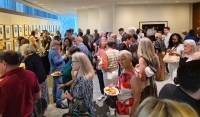
Standing Room Only Crowd for Chicago’s Leading Theater Artistic Directors
04 September 2026 in Theatre BuzzIt must have been heavenly for the creative leaders of Goodman, Steppenwolf, Chicago Shakespeare and Court, Chicago’s top regional theaters,…
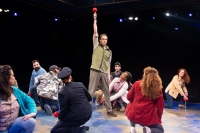
The Best of Us: Marriott Theatre’s Come From Away
03 September 2026 in Theatre in ReviewCome From Away begins from a place of deep uncertainty, yet what emerges is a story grounded in the steady,…

Steppenwolf Theatre Presents Revival of TOPDOG/UNDERDOG September 17 – November 1 / Rehearsals Underway
02 September 2026 in Upcoming TheatreSteppenwolf Theatre Company, the nation's premier ensemble theater company, is pleased to launch its 51st Season with Suzan-Lori Parks' Pulitzer Prize-winning drama Topdog/Underdog, helmed by Tony Award-winning…
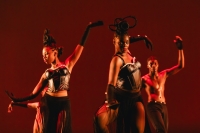
Chicago Black Dance Legacy Project Gala: Radiant & Sumptuous at the Harris
01 September 2026 in Dance in ReviewThe first thing you notice about the meticulously curated Black dance performance held at the Harris Theater over the weekend…

Vape! The Grease Parody Is High-Energy Fluff
01 September 2026 in Theatre in ReviewVape! The Grease Parody, currently running at Chicago’s Apollo Theater through January, takes a satirical swing at the iconic 1978…

BrightSide Theatre Announces "Monte Carlo Night" 15th Anniversary Gala and Fundraiser on September 25
01 September 2026 in Theatre BuzzBrightSide Theatre will celebrate its 15th anniversary with "Monte Carlo Night," a gala and fundraiser, on Friday, September 25, 2026,…

GDC Hosts 19th Anniversary “Dancing With The Giordano Stars” Ballroom Dance Competition October 8th
01 September 2026 in Upcoming DanceGiordano Dance Chicago (GDC) hosts its highly anticipated 19th Anniversary "Dancing With The Giordano Stars" ballroom dance competition 7-11 p.m. Thursday, Oct. 8…
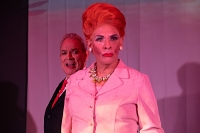
A Loving, Delight‑Packed Celebration: Joan Crawford Goes to Hell Marks 25 Years of Handbag
31 August 2026 in Theatre in ReviewHell in a Handbag Productions celebrates its 25th year with a revival of Joan Crawford Goes to Hell, a sharp,…

An Immersive Sunday in the Park with George at Kokandy Productions
31 August 2026 in Theatre in ReviewComposition, tension, balance, light, and harmony come together seamlessly in Kokandy Productions’ revival of Sondheim’s opus, ‘Sunday in the Park…

Robert Falls to Direct the World Premiere of FLYING MONKEYS, by L.C. Bernadine, at Redtwist Theatre, Dec 6 - Jan 17
31 August 2026 in Upcoming TheatreAward-winning Redtwist Theatre, launching its 22nd season with Prayer Circle, September 17 - November 8, by Erik Gernand and directed by Executive Artistic Director Dusty Brown, announces today…

Buffalo Theatre Ensemble Names Daniel Millhouse as New Managing Artistic Director
31 August 2026 in Theatre BuzzBuffalo Theatre Ensemble (BTE), the professional theater company in residence at the McAninch Arts Center (MAC), is pleased to announce that, in keeping…

Promethean Theatre Ensemble to offer talkbacks after selected performances BLOOD OF THE LAMB, opening September 5 and 6
31 August 2026 in Upcoming TheatrePromethean Theatre Ensemble announced today it will offer post-show audience talkbacks following two performances of their Chicago premiere of BLOOD OF…

City Lit’s Shane Saddles Up a Classic Western With Fresh Heart
30 August 2026 in Theatre in ReviewCity Lit Theatre’s world premiere of Shane, adapted for the stage and directed by Mark Pracht, brings a fresh, nostalgic…
In Sisters, Barrie Turns an AI Fable into an Impressive Character Study
29 August 2026 in Theatre in ReviewThe rise of artificial intelligence raises many questions about its effect on humanity. What does it mean if we become…

Buddy Holly’s Brilliance, Reawakened on the Drury Lane Stage
27 August 2026 in Theatre in ReviewDrury Lane Theatre opens its latest musical with a warm jolt of rock ’n’ roll energy as Buddy – The…
Kokandy's JEKYLL & HYDE Extended by Popular Demand
26 August 2026 in Upcoming TheatreBroadway In Chicago is pleased to announce a darkly delicious Halloween surprise: Kokandy Productions’ critically acclaimed revival of JEKYLL & HYDE will be extended…

Following Obama Center premiere, Manual Cinema's acclaimed productions return to Chicago's Studebaker Theater
26 August 2026 in Upcoming TheatreChicago-based Emmy Award-winning performance collective and film/video production company Manual Cinema premiered two new hand-animated films at the Obama Presidential Center Museum…

Playmakers Lab’s That’s Weird Grandma’s 25th Birthday is a fine place to giggle
25 August 2026 in Theatre in ReviewIf you need an energy boost, skip the can of Monster and get yourself, plus loved ones of any age,…

Victory Gardens Theater presents the World Premiere of Zayd Ayers Dohrn's The Humanities September 10 through October 4
25 August 2026 in Upcoming TheatreVictory Gardens Theater (2433 N. Lincoln Avenue), an historic incubator for new play development, proudly announces the World Premiere staging of The…
Lookingglass Kowalski starring Johnny Galecki and Jacob Moskovitz September 15 through October 25
25 August 2026 in Upcoming TheatreJoining the previously announced stars of Kowalski Johnny Galecki ("The Big Bang Theory," "The Little Dog Laughed") as Tennessee Williams and Jacob Moskovitz ("Elle") as Marlon…

Shattered Globe Theatre Opens 36th Season with Midwest Premiere of VLADIMIR October 2 – November 14 at Theater Wit
25 August 2026 in Upcoming TheatreShattered Globe Theatre is pleased to open its 36th Season with the Midwest premiere of Erika Sheffer's Vladimir, an unflinching drama of resistance directed by Ensemble Member Lou Contey*,…

TICKETS FOR A 20 RETURNS WITH SPECIALLY PRICED $20 TICKETS FROM HOT TIX AUGUST 27-SEPTEMBER 14, 2026
24 August 2026 in Theatre BuzzThe League of Chicago Theatres announces the return of Tickets for a 20. From Thursday, August 27 through Monday, September 14, 2026, theatregoers can…

Babes With Blades's announces William Shakespeare's KING LEAR, October 15 - November 21
24 August 2026 in Upcoming TheatreBabes With Blades Theatre Company’s (BWBTC), now presenting the world premiere of yo ho. through August 29 at The Edge Off-Broadway, shares the…

BrightSide Theatre announces THE ADDAMS FAMILY MUSICAL, to play October 2 - 18
24 August 2026 in Upcoming TheatreBrightSide Theatre has announced cast and crew for THE ADDAMS FAMILY MUSICAL - the kickoff production of BrightSide's 15th Anniversary season.…
35th Annual Dance for Life Saturated with Excellence
23 August 2026 in Dance in ReviewFrom its beginning in 1992 on the tiny stage of a modest theater, Dance for Life (DFL) has grown and…

Chicago Shakespeare Theater announces Two Shakespeare Productions in Repertory beginning October 13 - January 3
21 August 2026 in Upcoming TheatreChicago Shakespeare Theater (CST) announces the cast and creative team for the company's fall Shakespeare Repertory productions, an unforgettable theatrical event at the heart…
Rising star Jacob Moskovitz to play Marlon Brando in the Chicago presentation of Kowalski at Lookingglass Theatre
20 August 2026 in Theatre in ReviewRising star Jacob Moskovitz ("Elle") has joined the cast of Kowalski as Marlon Brando, alongside previously announced Chicago theater veteran Johnny Galecki ("The Big Bang Theory," "The Little…

McHenry Outdoor Theater: Nostalgia With a Modern Heartbeat
20 August 2026 in Theatre BuzzThere was a particular kind of magic to seeing a movie outside when I was a kid in 1970s Chicago…

‘Anatomy of a Suicide’ Is Hard to Watch, But Not Because of the Subject
18 August 2026 in Theatre in ReviewPerhaps surprisingly, Anatomy of a Suicide is not an overwhelmingly emotionally gripping play, nor is it horrifying. Instead, it vividly…

Gwydion Theatre Company presents The Chicago Premiere of Por’ Knockers at the Greenhouse Theater’s Studio 44 September 10 - October 4
18 August 2026 in Upcoming TheatreThis narrative tracks five individuals within the "People’s Diasporatic Party"—outfitted in corporate attire—as they take refuge in a desolate East…





Latest Articles
-
 Standing Room Only Crowd for Chicago’s Leading Theater Artistic Directors
Written by Bill EslerIt must have been heavenly for the creative leaders of Goodman, Steppenwolf, Chicago Shakespeare and Court, Chicago’s top regional theaters, to be greeted by a standing room only crowd. But there they were, on a panel moderated by the eminent…
Standing Room Only Crowd for Chicago’s Leading Theater Artistic Directors
Written by Bill EslerIt must have been heavenly for the creative leaders of Goodman, Steppenwolf, Chicago Shakespeare and Court, Chicago’s top regional theaters, to be greeted by a standing room only crowd. But there they were, on a panel moderated by the eminent… -
 The Best of Us: Marriott Theatre’s Come From Away
Written by Kimberly KatzCome From Away begins from a place of deep uncertainty, yet what emerges is a story grounded in the steady, everyday kindness people offer when they have nothing else to give. Rather than revisiting the events of September 11 themselves,…
The Best of Us: Marriott Theatre’s Come From Away
Written by Kimberly KatzCome From Away begins from a place of deep uncertainty, yet what emerges is a story grounded in the steady, everyday kindness people offer when they have nothing else to give. Rather than revisiting the events of September 11 themselves,… -
 Steppenwolf Theatre Presents Revival of TOPDOG/UNDERDOG September 17 – November 1 / Rehearsals Underway
Written by Buzz Center StageSteppenwolf Theatre Company, the nation's premier ensemble theater company, is pleased to launch its 51st Season with Suzan-Lori Parks' Pulitzer Prize-winning drama Topdog/Underdog, helmed by Tony Award-winning director Kenny Leon, who returns to Steppenwolf following his hit production of King James. Ensemble members Glenn Davis (Windfall, Purpose–Chicago/Broadway, King James) and Namir Smallwood (Windfall, The Book of…
Steppenwolf Theatre Presents Revival of TOPDOG/UNDERDOG September 17 – November 1 / Rehearsals Underway
Written by Buzz Center StageSteppenwolf Theatre Company, the nation's premier ensemble theater company, is pleased to launch its 51st Season with Suzan-Lori Parks' Pulitzer Prize-winning drama Topdog/Underdog, helmed by Tony Award-winning director Kenny Leon, who returns to Steppenwolf following his hit production of King James. Ensemble members Glenn Davis (Windfall, Purpose–Chicago/Broadway, King James) and Namir Smallwood (Windfall, The Book of… -
 Chicago Black Dance Legacy Project Gala: Radiant & Sumptuous at the Harris
Written by Mitchell OldhamThe first thing you notice about the meticulously curated Black dance performance held at the Harris Theater over the weekend is language. The eloquence and weight of the words used to explain why the Chicago Black Dance Legacy Project (CBDLP)…
Chicago Black Dance Legacy Project Gala: Radiant & Sumptuous at the Harris
Written by Mitchell OldhamThe first thing you notice about the meticulously curated Black dance performance held at the Harris Theater over the weekend is language. The eloquence and weight of the words used to explain why the Chicago Black Dance Legacy Project (CBDLP)…


Does your theatre company want to connect with Buzz Center Stage or would you like to reach out and say "hello"? Message us through facebook or shoot us an email at This email address is being protected from spambots. You need JavaScript enabled to view it..
*This disclaimer informs readers that the views, thoughts, and opinions expressed in the text belong solely to the author, and not necessarily to Buzz Center Stage. Buzz Center Stage is a non-profit, volunteer-based platform that enables, and encourages, staff members to post their own honest thoughts on a particular production.