
Displaying items by tag: Melanie Brezill
"Braids, Dreams, and Resilience: JaJa’s African Hair Braiding Shines at Chicago Shakespeare Theater"

JaJa’s African Hair Braiding, written by first-generation Ghanaian American playwright Jocelyn Bioh and directed by Obie Award-winning Whitney White, is a vibrant celebration of the resilience, community, and complexity of West African immigrant women striving to establish their place in New York City. Currently receiving an acclaimed production at Chicago Shakespeare Theater, the play offers a poignant, colorful, and often humorous exploration of identity, survival, and aspiration in the face of challenges such as undocumented status, systemic inequities, and cultural displacement.
Set in a bustling Harlem hair braiding salon, the production immerses the audience in a world where conversations flow as freely as the braiding hands of skilled stylists. David Zinn’s set design meticulously recreates a Harlem salon, complete with brightly painted walls and posters of intricate braid designs. A steady stream of music fills the space, creating an environment that pulsates with life. Whitney White’s direction ensures every corner of this intimate setting remains vibrant with activity, embodying the controlled chaos where clients, stylists, and commerce intersect.
Bioh’s talent for crafting razor-sharp dialogue between women is fully realized here—no surprise from the playwright behind School Girls; or, the African Mean Girls Play. She skillfully weaves together a rich tapestry of personalities and cultural backgrounds, resulting in an ensemble that crackles with authenticity and charm.
At the heart of the story is JaJa, portrayed with commanding presence by Victoire Charles, and her daughter Marie, played with youthful vigor by Jordan Rice. Both Senegalese women have aspirations that stretch beyond their circumstances. Aisha Sougou’s Ndidi, a Nigerian with an encyclopedic knowledge of the soap operas playing in the salon, serves as a comedic anchor. Meanwhile, Awa Sal Secka’s Bea, a proud Ghanaian and longtime employee, offers a compelling foil to Ndidi’s antics, resisting with simmering resentment but asserting herself as the true Queen Bee when necessary. Tiffany Renee Johnson, last seen in Blues for An Alabama Sky, delivers a standout performance as Aminata, Bea’s devoted gossip partner, now preoccupied with her own troubles.
Bisserat Tseggai infuses Miriam, a Sierra Leonean longing for lost love, with a tender wistfulness, while Mia Ellis’s Jennifer spends the entire day getting her hair done and dispensing advice. Special mention must be made of the chameleon-like talents of Melanie Brezill, a standout in Stokley: The Unfinished Revolution, and Leovina Charles, who nimbly juggles six different customer roles between them, injecting each with distinct personality. Yao Dogbe, whom I last saw in Intimate Apparel, is the lone male in the cast and effortlessly steps into various roles with charm and versatility.
Illegal immigration is a central theme in JaJa’s African Hair Braiding, and Bioh handles it with nuance and compassion. The fear of deportation and the pressures of living in the shadows are palpable, yet these issues are presented with sensitivity, avoiding one-dimensional portrayals. Instead, the play highlights the characters' individuality, dreams, and relationships, reminding the audience of the humanity behind the headlines.
The artistry of Hair and Wig Designer Nikiya Mathis truly steals the spotlight in this production. As the first wig designer to receive a special Tony Award for her groundbreaking work on the Broadway production, Mathis brings her award-winning expertise to Chicago Shakespeare Theater with stunning results. Each intricate braid and carefully styled wig not only enhance the authenticity of the characters but also serves as a visual testament to the cultural richness at the heart of the story. Complementing Mathis’s work is Costume Designer Dede Ayite, whose keen eye for detail and vibrant selections beautifully capture the essence of each character, reflecting their personalities and cultural heritage with remarkable precision. Together, Mathis and Ayite create a visually immersive experience that elevates the production to new heights.
JaJa’s African Hair Braiding is a testament to the power of storytelling in illuminating the lives of those often overlooked. Through its richly drawn characters, sharp writing, and dynamic direction, the play captures the essence of a community striving against the odds, celebrating their culture while forging paths toward a better future. It’s a timely, heartfelt production that leaves audiences not only entertained but also more empathetic and informed about the realities faced by so many immigrants in America and today, don’t we need more empathy
Highly Recommended
When: Through Feb. 2
Where: Chicago Shakespeare Theatre 800 East Grand Avenue in Chicago.
Tickets: $30 - $90
Info: www.chicagoshakespeare.com
“Stokely: The Unfinished Revolution” A Court Theatre World Premiere

"Stokely: The Unfinished Revolution" a world premiere written by Nambi E. Kelley and directed by Tasia A. Jones, ambitiously attempts to capture the essence of civil rights icon Stokely Carmichael in a mere 90-minute play. The title, hinting at a deep dive into Carmichael's revolutionary ideologies, might mislead audiences expecting a detailed exploration of his political maneuvers. Instead, the play serves more as a biographical sketch, intricately weaving his personal and public life, spotlighting his relationships and the internal and external battles he faced.
The enormity of condensing Carmichael's life into such a brief performance is a challenge that Nambi E. Kelley undertakes with both reverence and creativity. Kelley is no stranger to tackling monumental projects; her play "Native Son," based on Richard Wright's 400+ page book, is currently receiving a formidable production at Lifeline Theatre. In "Stokely: The Unfinished Revolution," the narrative framework is structured around Carmichael's awareness of his impending death, prompting him to reflect on his life and legacy. This introspective journey provides a poignant lens through which the audience views Carmichael not just as a historical figure but as a man grappling with his mortality and the weight of his contributions to the civil rights movement.
While Tasia A. Jones has made quite a name for herself in Chicago theaters, this production marks her directorial debut at Court Theatre. Jones's direction shines with emotional depth, sharp focus, and a remarkable ability to elicit compelling performances from her actors. She adeptly handles a challenging script, showcasing her exceptional directorial skills. The ensemble's stellar performance is a testament to her distinct and impactful style.
Anthony Irons delivers a compelling performance as Stokely Carmichael. His portrayal captures the charismatic and fiery spirit of Carmichael, while also delving into his vulnerabilities and moments of introspection. Irons manages to convey the depth of Carmichael's character, balancing his revolutionary zeal with the emotional complexities of his personal relationships.
Melanie Brezill stands out with her portrayal of Tante Elaine, Stokely’s aunt, as well as Miriam Makeba and other influential women from the civil rights era. Brezill's performance is marked by a powerful presence and a keen sense of empathy, bringing to life the experiences and struggles of these women. Her versatility and emotional range make her scenes particularly memorable, adding depth and resonance to the play.
Dee Dee Batteast is versatile in her roles, including Cecilia Carmichael, Stokely’s grandmother, and other characters. She adds layers of historical and emotional context to the narrative, seamlessly transitioning between different personas. Her ability to inhabit multiple characters with distinct voices and mannerisms enriches the storytelling and provides a broader perspective on Carmichael's life.
Kelvin Roston Jr. is reliably excellent in his multiple roles, including Adolphus Carmichael, Stokely’s father, and significant figures like Martin Luther King Jr and James Baldwin. Rolston’s ability to embody such diverse and iconic characters with authenticity and gravitas anchors the play, providing continuity and a sense of historical significance.
Wandachristine, playing May Charles, Carmichael’s mother, offers a nuanced performance that highlights the familial tensions and deep love that defined their relationship. Her interactions with Irons are charged with emotion, revealing the often-complicated dynamics between a mother and her son, particularly when that son is a prominent figure in a tumultuous era.
The fluidity of the play’s structure is mirrored in its set design. Yeaji Kim’s creation of a massive chest of drawers, filled with books and papers, serves as a dynamic backdrop. This design not only symbolizes the vast repository of knowledge and history that Carmichael sought to preserve but also facilitates quick transitions between different times and places. The set is both functional and metaphorical, enhancing the thematic elements of legacy and memory. The main set piece transforms in a surprising and unexpected manner I won't reveal here, preserving the thrill of discovery.
Daphne Agosin's lighting design and Willow James's sound design work in harmony to create a vivid sense of time and place. The lighting shifts subtly yet effectively, guiding the audience through various moments in Carmichael's life. Meanwhile, the sound design incorporates period-specific music and ambient sounds, grounding the narrative in its historical context and enhancing the emotional impact of the scenes.
Kelley’s script is a deft blend of personal reflection and historical narrative. The dialogue is sharp and evocative, capturing the essence of Carmichael's rhetoric while also revealing his personal struggles. The tension between Carmichael and his mother is a central theme, adding a deeply human dimension to the story. This relationship is portrayed with honesty and sensitivity, illustrating how personal bonds can influence and complicate one's public mission.
"Stokely: The Unfinished Revolution" succeeds in presenting a multifaceted portrait of Stokely Carmichael. The production humanizes him by portraying his strengths, flaws, public triumphs, and private tribulations. While the play might not satisfy those seeking an exhaustive examination of Carmichael's revolutionary strategies — I would have loved to have seen the transformation from Stokely Carmichael to Kwame Ture—it offers a rich, intimate glimpse into his life and legacy.
In capturing the essence of a man who was both a pivotal figure in the civil rights movement and a son, "Stokely: The Unfinished Revolution" provides a powerful theatrical experience. It serves as a reminder of Carmichael's enduring impact and the personal sacrifices that underpin the fight for social justice. The performances, direction, and design elements coalesce to create a compelling and thought-provoking tribute to a man whose revolution, indeed, remains unfinished.
Highly Recommended
When: Through June 16
Where: Court Theatre, 5535 S. Ellis Ave.
Tickets: $23.50 - $69.50
Info: CourtTheatre.org
Run time: 90 minutes, no intermission
Four Women: Nina Simone Leaves Us All with the Backlash Blues

My gateway to Nina Simone fandom came when I was a kid, watching some crummy 90's action movie that was somehow soundtracked by Ms. Simone’s music. Her take on George Harrison’s “Here Comes the Sun” was both recognizable to young me as a Beatles tune, but it was also strange, alien, powerful, wistful, something completely different than anything I’d heard before. Not the song. But the singer. It was a gateway, for sure.
From there, I ended up with a CD reissue of her late-60s Sings the Blues album, an even better introduction for a clueless young white boy to this complicated genius — one with toe-tappers, showtunes, pop tunes, and yes, the blues. Perhaps the most powerful tune on there, perhaps one even too powerful for me at the time, was Langston Hughes’ “Backlash Blues,” which laments that “the world is big and bright and round and it’s full of folks like me who are black, yellow, beige, and brown.”
In the years since, I’ve grown, as my love and understanding of Nina Simone — the musician, the public figure, the strong woman, and the complex human being — has grown. And now maybe I’m old enough or wise enough or just ready to appreciate the picture of this woman and “folks like” her that Christina Ham’s Nina Simone: Four Women paints for us, as currently performed at Skokie’s Northlight Theatre, directed by Kenneth L. Roberson.
The play itself is named for one of Ms. Simone’s most powerful compositions, one about women “who are black, yellow, beige, and brown.” But it is also framed around what is perhaps an imagined 1960's fever dream of Ms. Simone’s, in the wake of the horrific 1963 bombing of Birmingham’s historic 16th Street Baptist Church in which four beautiful little African-American girls were murdered.
In the play, Ms. Simone is joined in the church’s wreckage by three other African-American women, each of them representing someone Nina sang about in “Four Women.” Above, I wondered if the play’s setting and the four women’s existence are perhaps imagined, based not only on Ms. Simone’s actual history, but her history of mental illness, as well.
The truth is, perhaps, somewhere in between, and that makes the play work. There are hints at Ms. Simone’s mental health throughout the play — voices and sounds she hears — but they don’t completely define her. And there are, for me at least, distracting bits of expository history — biographical details that might be fleshed out if this were a more standard “jukebox musical” — but I didn’t let them get in the way of the four women onstage. And those four women are what make the play work.
First, Sydney Charles is Nina Simone. And is she ever. I heard the rare complaint after the show that her character didn’t feel quite human. But that affect — that coldness, that stateliness, that hurt — seemed to me so in character. Ms. Charles voice, while very good, doesn’t quite match the richness and depth of Ms. Simone’s, but I’m not sure anyone’s does. But as the play went on, Charles’ voice grows stronger, as does her performance, until she is raging, proud, and loud at the world.
The strongest performance comes from the woman who shares the stage the longest with Ms. Charles — Deanna Reed-Foster’s Sarah. What could have veered into the territory of stereotype is fleshed out and deep thanks to the work of Ms. Reed-Foster, a Chicago actress whose work I realized I’ve seen on the TV show, Chicago Fire. If Nina Simone was perhaps superhuman in some ways and unable to convey the tenderness of humanity in others, “Auntie Sarah” gives the show its human and humane center, moving from fear to anger, from joy to sorrow, filling the theater with her beautiful voice and grounding the stage and the story on it.
The other two actresses in the show, Ariel Richardson and Melanie Brezill, also shine. Ms. Richardson brings us the 1960's modern woman, polished and self-assured, while Brezill (who was a highlight last year on the stage of the Chicago Children’s Theatre) shimmies, struts, and slurs as a more worldly woman, doing so in the performance I saw on a broken stiletto heel! The piano accompaniment and musical direction is provided by Daniel Riley, himself a part of the show for much of the evening.
So, while this play is not a standard jukebox musical about, nor a factual portrait of, one of our most gifted and enigmatic musical geniuses, I think it works because it is neither. Nina Simone couldn’t and cannot be separated from her music or her times or who she was or who people think she is. And, soundtracked by wonderful live performances of many of Ms. Simone’s most powerful songs, Nina Simone: Four Women doesn’t try to do any of those things. It lets Nina’s words and Nina’s music tell a story, even if her own story cannot be told.
Drury Lane's "Little Shop of Horrors" everything you'd want in a man-eating plant musical

Catchy songs, hilarious characters and a man-eating plant. Little Shop of Horrors now playing at Drury Lane Theatre in Oakbrook has it all. With music by Alan Menken that fall in the style of 1960s rock and roll, doo-wop and Motown, we get a soundtrack that helps deliver this humorous story, perfectly enhancing writer Howard Ahsman’s vision into what became a stage and film sensation in the 1980s. Songs like "Skid Row (Downtown)", "Somewhere That's Green", and "Suddenly, Seymour" are as kitschy as they come as are the characters in this far-fetched, but seriously funny story.
We find ourselves in a local plant and flower shop – “Mushnik’s”. Business is bad and owner Mr. Mushnik is not sure how he can hold on for very much longer. His two employees, Seymour and Audrey, stand around all day with nothing to do since there is – nothing to do. But Seymour has a secret. He has been experimenting in the shop’s basement on a plant that resembles a Venus Fly Trap. But it is no ordinary fly-eating plant, it is much larger and quite unusual looking. He finally brings the plant upstairs and suggests it be placed in the store window to possibly attract passersby’s. Mushnik scoffs at the notion but figures he has nothing to lose – and wouldn’t you know it, a man enters the store within minutes to purchase a hundred dollars’ worth of roses. The plant becomes a sensation as it gets larger and larger by the day, business is off the charts and everything seems rosy for the once struggling shop. But what makes the plant grow so quickly? We soon find out and a whole world of absurdity and suspense is opened. Twists and turns ahead, folks.
At the same time, Audrey seems to show up to work each day with a new injury. It is suspected that her boyfriend, a sadistic dentist, is to blame – and Seymour won’t have that. He has a crush on Audrey and has in fact named the plant Audrey Two. As the story progresses, it becomes crazier and crazier – silly but engaging. A trio of talented singers (Melanie Brezill, Candace C. Edwards and Melanie Loren) help narrate the story, also switching back and forth between roles.
Will Lidke is terrific as Seymour and is as nerdy as one could get in the role while Kelly Felthous as Audrey nails the squeaky-voiced, ditzy blonde stereotype, ala many a Marylin Monroe role. Both deliver great comedic moments and are truly fun to watch. Ron E. Rains is well cast as Mushnik and has plenty of key moments, as well. But it is Chicago acting veteran Steven Stafford who steals many of the scenes as the abusive dentist (also playing many other roles), displaying epic comedic line delivery and perfectly timed physical humor. The voice of the plant (yes, it talks – and sings) is beautifully done by Lorenzo Rush Jr. while Matthew Sitz takes on the tough task of bringing the plant to life.
A light, though twisted, story with a slew of laughs and one likeable song after another is the prefect way to kick off the Fall season. Together with brilliant direction and choreography by Scott Calcagno and musical direction by Roberta Duchak, the musical’s superb performances and an amazing set design do this funny classic the way it should be done.
Highly recommended.
Little Shop of Horrors is being performed at Drury Lane Theatre through October 28th. For tickets and/or more show information visit www.drurylanetheatre.com.
Detroit ’67: A Basement Becomes a City on the Brink
23 September 2026 in Theatre in ReviewDetroit was burning in the summer of 1967, inside one basement, life was still going on. That contrast is at…
Now Boarding: Bonnie’s Last Flight, a Sky‑High Comedy with Real Heart
23 September 2026 in Theatre in ReviewRivendell Theatre Ensemble closes its milestone 30th season with Bonnie’s Last Flight, a sly, sky‑high comedy set during a flight…
Step Right Up and Ride the Cyclone (The Musical) at Metropolis Arlington Heights
22 September 2026 in Theatre in ReviewIf anyone has ever told you to buckle up and enjoy the ride, they were talking about life—and even if…
Funny ‘Prayer Circle’ Is Loaded With Laughs
22 September 2026 in Theatre in ReviewErik Gernand is resident playwright at Redtwist Theatre, and his Prayer Circle is absolutely laugh-out-loud funny. The strength of this…

Steppenwolf Presents GRACEFUL WARRIOR: AN EVENING WITH GARY SINISE - Tuesday, November 24, 2026
22 September 2026 in Upcoming TheatreSteppenwolf Theatre Company, the nation's premier ensemble theater company, is pleased to present Graceful Warrior: An Evening with Gary Sinise on Tuesday, November…

Acclaimed Mexodus musical makes Chicago premiere November 7-21 at Studebaker Theater
22 September 2026 in Upcoming TheatreStudebaker Theater, P3 Productions and Audible, in collaboration with Teatro Vista Productions, present the Chicago premiere of the groundbreaking, award-winning new hip-hop musical Mexodus, written and performed…

American Blues Theater hosts its annual costumed fundraiser HALLOWEEN BOO BASH October 25th
21 September 2026 in Theatre BuzzAmerican Blues Theater, under the continued leadership of Executive Artistic Director Gwendolyn Whiteside, presents Halloween Boo Bash, its annual costumed fundraiser benefiting artists' wages…
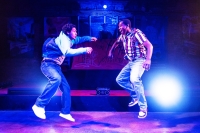
Definition's How We Got On: A Mixtape for the Stage
21 September 2026 in Theatre in ReviewWhat happens when three young people discover hip-hop and realize they might have something to say? Idris Goodwin’s How We…

Open Space Arts Presents BEFORE WE ARE HISTORY October 23 – November 8
21 September 2026 in Upcoming TheatreOpen Space Arts presents BEFORE WE ARE HISTORY, a three-week theatrical exploration of LGBTQ+ theater created during and in response to…

Northlight Delivers a Headline-Making, Hilarious Front Page
20 September 2026 in Theatre in ReviewNorthlight Theatre opened its new venue with Jeffrey Hatcher’s smart, rejuvenated adaptation of The Front Page. Commissioned by Artistic Director…
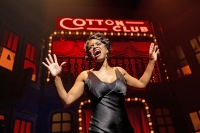
Chicago Shakes' Play On!: With a Syncopated Harlem Beat
20 September 2026 in Theatre in ReviewThere are some productions you watch, and then there are productions that make your heart swoon and your toe tap.…

Overshadowed's Flame of Fire Finds Humanity, Strength, and Forgiveness in a Tragic Chapter of Missionary History
19 September 2026 in Theatre in ReviewOvershadowed Productions’ Flame of Fire revisits one of the most polarizing true stories in mid‑century missionary history, and the result…
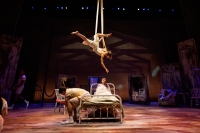
The Attic at Goodman Theatre Redefines Memoir Through Breathtaking Physical Storytelling
19 September 2026 in Theatre in ReviewAt intermission, I sent Ken, Buzz Center Stage’s managing editor, a text: “So thankful I made it!! It’s intermission, and…
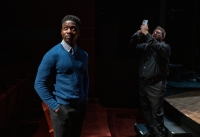
Class is back in session with Victory Gardens’ World Premiere of The Humanities
19 September 2026 in Theatre in ReviewCoincidentally (or not), Victory Gardens’ new play about a controversial campus speaker opens just days after the one-year anniversary of…

Babes With Blades's Announces William Shakespeare's KING LEAR, playing October 22 - November 21
18 September 2026 in Upcoming TheatreBabes With Blades Theatre Company’s (BWBTC) announced today new production dates for the final production in its 2026 season, William Shakespeare’s King…

Layered, Lovely, and Lasting; The Joffrey Ballet's Liliom Lights up The Lyric Opera
18 September 2026 in Dance in ReviewSometimes when we reach into the past to resurrect or revive an old story, we find it doesn’t age well.…

Cast and Production Team Announced for Fleetwood-Jourdain Theatre's THE NICETIES, October 31 – November 15
18 September 2026 in Upcoming TheatreFleetwood -Jourdain Theatre, an award-winning theatre company that has been thrilling audiences with over four decades of unique, inspirational, and invigorating Black…

Goodman’s centennial is its all‑time most successful year, with 300,000 patrons at 4,000 performances & events
18 September 2026 in Theatre BuzzThe Goodman wraps its 2025/2026 Centennial Season, an unprecedented line-up marking the 100th anniversary of Chicago's flagship not-for-profit theater, as the…

The Jinkx & DeLa Holiday Show - December 6th at Auditorium Theatre
17 September 2026 in Upcoming TheatreThe greatest holiday show south of the North Pole returns for its 9th year with another brand spankin' new wintertide…

Paramount’s smash hit, immersive Million Dollar Quartet returns for its final run at Aurora’s Stolp Island Theatre, October 7-January 3
17 September 2026 in Upcoming Theatre“Great Balls of Fire!” Chicago audiences have just one last chance to catch Paramount Theatre’s immersive musical Million Dollar Quartet, returning more…

Holiday Cheer (and an earlybird discount) come to The Second City November 25th through December 27th
17 September 2026 in Upcoming TheatreTis' the season for laughter and cheer! The Second City is decking its holiday lineup with shows for every sense…
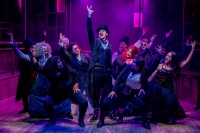
Kokandy Productions’ Jekyll & Hyde: A Fearless Reworking Elevated
17 September 2026 in Theatre in ReviewKokandy Productions’ Jekyll & Hyde, now presented by Broadway In Chicago at the Broadway Playhouse, arrives with the momentum of…

Chicago City Opera presents Chicago premiere of Der Vampyr October 7-11
16 September 2026 in Theatre in ReviewChicago City Opera (CCO) presents the Chicago premiere of gothic horror opera Der Vampyr by composer Heinrich Marschner to a…

Full Casting Announced for A Red Orchid Theatre's HEROES OF THE FOURTH TURNING - October 29 – December 6, 2026 - Chicago Premiere!
16 September 2026 in Upcoming TheatreA Red Orchid Theatre is pleased to announce full casting for its Chicago premiere of Will Arbery's politically-charged drama Heroes of the Fourth Turning, directed…

Chicago Legend Da Brat to Host and MC THE HIP HOP NUTCRACKER
16 September 2026 in Upcoming TheatreBroadway In Chicago is thrilled to welcome trailblazing hip hop artist and Chicago legend Da Brat as special guest host…
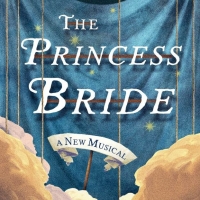
THE PRINCESS BRIDE to have Pre-Broadway World Premiere in Chicago July 19 - August 22, 2027
16 September 2026 in Upcoming TheatreProducer Jeffrey Seller and Broadway In Chicago have announced the world-premiere of the new musical THE PRINCESS BRIDE will begin performances in…

American Son - Friendship Community Place - Through October 4th
16 September 2026 in Now PlayingGhostlight Ensemble's production of American Son, written by Christopher Demos-Brown and directed by Ebby Offord, opens on Friday, September 18,…

MARRIOTT THEATRE REVEALS A 2027 SEASON OF SHOWSTOPPING MUSICALS AND BELOVED STORIES
16 September 2026 in Upcoming TheatreMarriott Theatre, Chicagoland's longest-running musical theatre, presents its 2027 subscription season featuring five thrilling and memorable musicals: Pippin, A Gentleman's Guide to…

Kokandy Productions Concludes 2026 Season with A CLOCKWORK ORANGE: A PLAY WITH MUSIC November 5, 2026 – January 10, 2027 - Full Casting Announced!
15 September 2026 in Upcoming TheatreKokandy Productions is pleased to conclude its 2026 Season with A Clockwork Orange: A Play with Music, a live adaptation of Anthony Burgess's dystopian…

Raíces to Roots’ Unpacking Home - Collaboraction's House of Belonging - Through September 27th
15 September 2026 in Now PlayingCollaboraction Theatre Company is thrilled to host a limited run of Unpacking Home by Chicago’s Raices to Roots as part of the 9th Destinos…





Latest Articles
-
 Detroit ’67: A Basement Becomes a City on the Brink
Written by Wesley DavidDetroit was burning in the summer of 1967, inside one basement, life was still going on. That contrast is at the heart of Dominique Morisseau’s Detroit ’67, now being produced by Pulse Theatre Company in residence at eta Creative Arts…
Detroit ’67: A Basement Becomes a City on the Brink
Written by Wesley DavidDetroit was burning in the summer of 1967, inside one basement, life was still going on. That contrast is at the heart of Dominique Morisseau’s Detroit ’67, now being produced by Pulse Theatre Company in residence at eta Creative Arts… -
 Now Boarding: Bonnie’s Last Flight, a Sky‑High Comedy with Real Heart
Written by Ken PayneRivendell Theatre Ensemble closes its milestone 30th season with Bonnie’s Last Flight, a sly, sky‑high comedy set during a flight attendant’s final day on the job - a blend of sharp satire and warm, traditional character comedy that’s genuinely, disarmingly…
Now Boarding: Bonnie’s Last Flight, a Sky‑High Comedy with Real Heart
Written by Ken PayneRivendell Theatre Ensemble closes its milestone 30th season with Bonnie’s Last Flight, a sly, sky‑high comedy set during a flight attendant’s final day on the job - a blend of sharp satire and warm, traditional character comedy that’s genuinely, disarmingly… -
Chicago Shakes' Play On!: With a Syncopated Harlem Beat
Written by Wesley DavidThere are some productions you watch, and then there are productions that make your heart swoon and your toe tap. Sheldon Epps’ Play On! is definitely the latter. Now playing at Chicago Shakespeare Theater, this exuberant musical takes Shakespeare’s Twelfth…
-
 Step Right Up and Ride the Cyclone (The Musical) at Metropolis Arlington Heights
Written by Anne RakowieckiIf anyone has ever told you to buckle up and enjoy the ride, they were talking about life—and even if they didn’t know it, they were talking about Ride the Cyclone, the musical. When six teenagers die in a rollercoaster…
Step Right Up and Ride the Cyclone (The Musical) at Metropolis Arlington Heights
Written by Anne RakowieckiIf anyone has ever told you to buckle up and enjoy the ride, they were talking about life—and even if they didn’t know it, they were talking about Ride the Cyclone, the musical. When six teenagers die in a rollercoaster…


Does your theatre company want to connect with Buzz Center Stage or would you like to reach out and say "hello"? Message us through facebook or shoot us an email at This email address is being protected from spambots. You need JavaScript enabled to view it..
*This disclaimer informs readers that the views, thoughts, and opinions expressed in the text belong solely to the author, and not necessarily to Buzz Center Stage. Buzz Center Stage is a non-profit, volunteer-based platform that enables, and encourages, staff members to post their own honest thoughts on a particular production.