
Displaying items by tag: dance Chicago
Chicago Black Dance Legacy Project Gala: Radiant & Sumptuous at the Harris
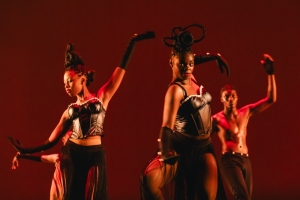
The first thing you notice about the meticulously curated Black dance performance held at the Harris Theater over the weekend is language. The eloquence and weight of the words used to explain why the Chicago Black Dance Legacy Project (CBDLP) exists and what it hopes to achieve.
Organized in 2019, Black dance companies rooted in Chicago joined forces to learn from one another artistically and operationally while working in collaboration with the Reva and David Logan Center for the Arts in Hyde Park and “other University of Chicago entities”. Sustaining viability and preserving legacy were placed at the heart of the project’s end objectives.
Its formation would have several residual benefits. An annual festival of dance performed by the companies who make up CBDLP remains chief among them. Events like the one held Friday night to a sold-out house also raise the profile of Black dance in Chicago and underscore its contributions to the city’s cultural topography and its continuing vitality.
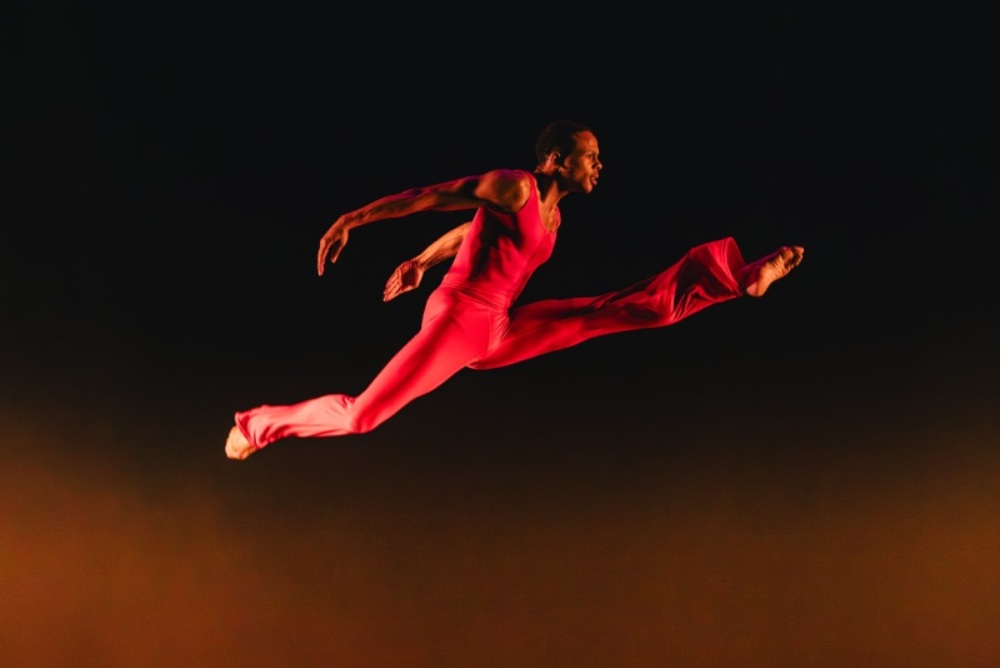
Dancing the Archive: Embodied Histories, Collective Power / Photos by Kyle Flubacker.
Honoring and showcasing the history and the arc of Black dance sat at the core of Dancing the Archive: Embodied Histories, Collective Power, the title of the evening’s multi-textured production. Not only was it dense with dance featured by ten of the project’s cohort companies, video clips that provided essential context on the trailblazers who spearheaded creative renewal within the Black creative community was also woven through this remarkable gala. The clips also helped to convey the importance and significance of the works being performed. Framed as chapters in a book, the dances flowed together to tell a comprehensive story.
Made up of 175 companies, dance culture in Chicago is extraordinarily deep, wide and rich. For Black companies who often face greater exposure challenges, Dancing the Archive serves to train the spotlight on their presence and gifts. The high degree of that talent and its proliferation marked the entire program that opened with a focus on youth.
Each individual work or dance suite performed honored a key individual who is making or has made significant contributions to Black dance or some other aspect of the city’s cultural art forms that reflect the Black experience. Through The Stillness celebrated Homer Bryant, founder of the Chicago Multi-Cultural Dance Center. A work that Mr. Bryant choreographed and performed here by members of his company, it used Albinoni’s Adagio for Organ and Strings to pay homage to concentrated sensuousness. A dance for two performed by Sasha Levy and Davion Bellinger, it was an accomplished composition of strength, control and technical mastery executed with extreme beauty by two young dancers.
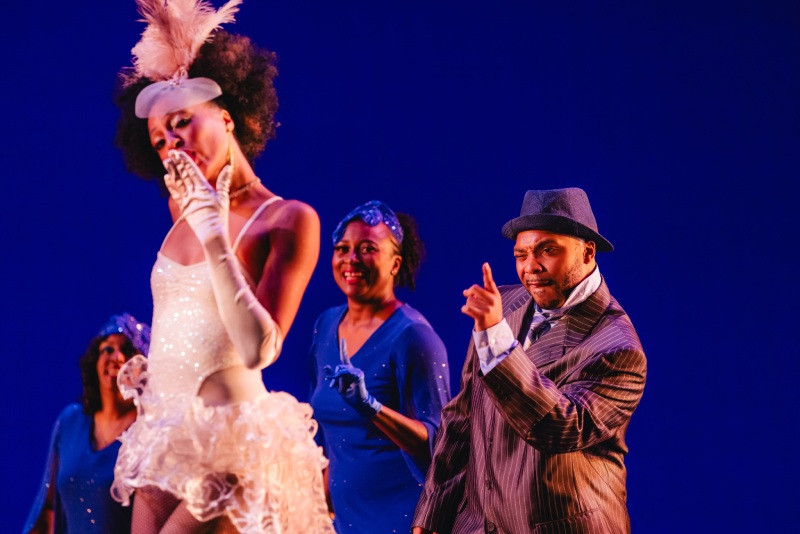
Dancing the Archive: Embodied Histories, Collective Power
The first chapter’s companion piece, Touch U, was a world premiere and an adaptation of Gerald Arpino’s Touch Me. In it, choreographers Bradlee Lathon and Pierre Lockett collaborated with a phalanx of their very youthful and talent-laden dancers at Forward Momentum Chicago to present a dance sparkling with infectious positivity. Bursting with innovative and highly sophisticated contemporary dance design, Touch U felt as if you were watching the next generation of dance on a maiden voyage. One that couldn’t have been more stimulating or aesthetically refreshing.
That sense of captivating vibrancy defined Dancing the Archives. In addition to the absorbing heritage-centered components of the program, dance was used to provide visual markers to history and highlight the place Black dance held during its march. Najwa Dance Corps’ Ancestral Steps looked back to dance crazes 100 years ago in the mid 1920s when the Charleston electrified a generation and the music of Count Basie ruled the airwaves. Later, in another world premiere, M.A.D.D. Rhythms with their Oscar Plays Gershwin Suite (They All Laughed, Summertime, Nice Work If You Can Get It), deftly exalted the “fire, finesse and swing” of tap with cool bravado.
The span of time and of dance expressions that paralleled it was vast. Muntu Dance Theatre of Chicago in Woven jubilantly recalled another time and place when “living archives” were embodied in a central griot-like figure.
Lines in Motion danced by The Era Footwork Collective was all about the kind of suavity that happens when you fuse mellow chill to dazzling footwork; creating repeated flashes of dance lightning in the process.
With Chance the Rapper as honoree, Chicago Multicultural Dance Center and Hiplet Ballerinas placed an impish toe in the future with its playfully eerie Speed of Light; attaching culturally specific overtones to our tech laden times.
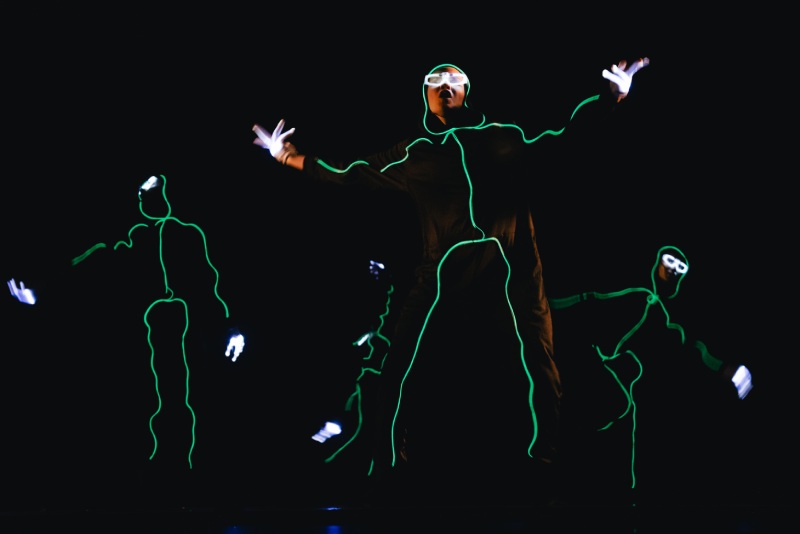
Dancing the Archive: Embodied Histories, Collective Power
Superlatives in either concept, execution or; most commonly, both ran thick in many of the other dances performed. Most of which have never been seen by audiences until now. Dorianne Thomas’s solo in Who Will Comfort Me, a world premier for the record books by the Joel Hall Dancers, was flawless in her display of dance fluency and emotional projection through movement. Attributes found in other performances were just as noteworthy. Praize Productions Inc.’s Leader of the Pack and Deeply Rooted Dance Theater’s excerpt from Crowns instantly come to mind. As does that churning and jubilant tribute to Curtis Mayfield and Lupe Fiasco by Move Me Soul. Curtis Suite and Sour, masterminded by Diana Muhammed, brought back to life the musical catalog of a genius and created a dance piece that complemented it gorgeously.
Because remembrance played such a significant role in the program, the In Memoriam segment commemorating leaders and standard bearers who died in 2025 was particularly notable and memorable. Before presenting the names and images of the fallen, a solo rendition of Precious Lord was sung by Cholé Johnson. Distinguished by its spare simplicity and for Ms. Johnson’s captivating interpretation, the artistic merits of the performance were astonishingly high. The song’s inclusion fittingly reveals the thread of the divine that lies within so much Black creative enterprise. An indispensable component often found in the bedrock of creative inspiration.
Dancing the Archive: Embodied Histories, Collective Power
Chicago Black Dance Legacy Project
August 28, 2026
The Harris Theater for Music and Dance
205 E. Randolph Street
Chicago, IL 60601
For more information: https://www.chicagoblackdancelegacy.org/
Young dancers and performers invited to audition for Joffrey Ballet's The Nutcracker, September 10 and 13
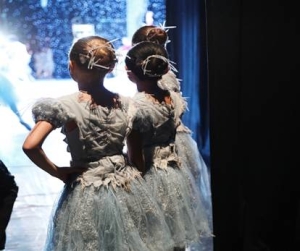
The Joffrey Ballet holds open auditions for the Children's Cast of Christopher Wheeldon's The Nutcracker at its downtown studios in Joffrey Tower, 10 East Randolph Street, Thursday, September 10 and Sunday, September 13, with a video submission audition for a specific role that closes at 9:00PM on Saturday, September 12. All students in the Chicagoland area with dance experience that meet casting criteria are welcome to audition. This annual audition is for all young dancers, from any studio or school, interested in auditioning for Christopher Wheeldon's The Nutcracker, whether they have participated in the Joffrey's Nutcracker in the past or not. The audition will be directed by artistic staff from The Joffrey Ballet. For full audition details visit joffrey.org/nutcracker-childrens-cast/
Audition Times Based on Dancer Criteria
Thursday, September 10 | 5:00 PM – 7:00 PM | General Audition #1
- Audition for dancers of all genders age 8 or older on audition day
- Maximum height 4'7" (no minimum height)
- Dancers may be asked to return to audition on Sunday, September 13 from 10:30 AM – 4:30 PM
Sunday, September 13 | 10:30 AM – 11:00 AM | General Audition #2
- Auditions for male-identifying dancers ages 10 - 18 on audition day
- Minimum height 4'7", maximum height 5'8"
Sunday, September 13 | 11:00 AM – 4:30 PM | General Audition #3
- Auditions for female and non-binary-identifying dancers ages 10 - 18 on audition day
- Minimum height 4'7", maximum height 5'6"
- Dancers may be released before 4:30 PM
The age and height parameters are strict and students who do not fall within the parameters will not be admitted into the audition.
Anytime through Saturday, September 12 at 9:00 PM
Diverse movers are encouraged to submit a video audition for the role of Worker Child, performed in a non-motorized wheelchair specially crafted for The Nutcracker. Dance training is not required. Dancers should be comfortable waiting for long periods of time and performing silently in a group setting on a stage with bright lights, loud music, and a large audience.
Video submissions close at 9:00 PM on Saturday, September 12
- Ages 10-18 on audition day.
- Dancers of all genders.
- No minimum or maximum height requirements.
Registration
Space is limited and pre-registration is required at least one day in advance of your audition. In-person forms will not be available. Registration Form can be found here. If you have questions about pre-registration, please email This email address is being protected from spambots. You need JavaScript enabled to view it..
About Joffrey's The Nutcracker
Wheeldon's modern masterpiece rings in the holidays. Follow young Marie and the Nutcracker Prince on a whirlwind journey through the 1893 World's Fair—a dazzling spectacle of sights, sounds and enchantment. This annual tradition celebrates the magic of the season and the rich cultural heritage of Chicago like no other.
Single tickets start at $47 and are available for purchase at Lyric Opera Box Office located at 20 N. Upper Wacker Dr. and by telephone at 312.386.8905 or online at joffrey.org
Red Clay Dance Company announces Season 18 programming
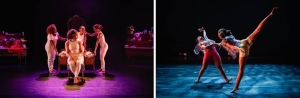
Red Clay Dance Company, Chicago's premier Afro-contemporary dance company, proudly announces its exciting Season 18: Spectrum programming, including Founding Artistic Director and CEO Vershawn Sanders-Ward's powerful evening-length work Freedom Square: The Black Girlhood Altar at Northwestern University's Wirtz Center in Evanston in October 2026, and a spring concert featuring work by Sanders-Ward alongside Rena Butler, Beatrice Capote and Bebe Miller at The Dance Center of Columbia College Chicago in April 2027.
For more information, concert updates and tickets, visit redclaydance.com/season18. Tickets for performances of Freedom Square: The Black Girlhood Altar, October 1-3, 2026, are now available starting at $42, with discounts for students and seniors.
In its 18th season, Red Clay Dance Company celebrates the theme Spectrum, a reflection of how one bold vision has grown into a vibrant movement. Like light passing through a prism, the Company's founding mission has expanded into a diverse community of artists, students, educators, audiences, partners and supporters—each bringing their own unique brilliance to a shared purpose. Season 18: Spectrum honors the collective power of Artivism and the many voices that shape Red Clay Dance Company's story, celebrating the full spectrum of Artivists whose creativity, resilience and collective action are shaping a more just, vibrant and connected future.
"I am thrilled to welcome audiences to our 18th season, Spectrum. Every season is a milestone worth celebrating, and this one feels especially meaningful because it reflects the extraordinary village that has grown from one vision into a movement fueled by so many voices and spirits," says Red Clay Dance Company's Founding Artistic Director and CEO Vershawn Sanders-Ward. "As we celebrate where we've been and look toward the future through our 1 Million Artivists Strong initiative, I hope this season reminds us all that our unique gifts shine brightest when they come together to create something greater than ourselves."
Season 18: Spectrum kicks off with a performance from Red Clay Dance Company during the free Chicago Live Festival at Navy Pier on Saturday, September 19 at 6:30 p.m.
Fall 2026 concert Freedom Square: The Black Girlhood Altar
In October, the Company stages a reprisal of Vershawn Sanders-Ward's powerful evening-length work Freedom Square: The Black Girlhood Altar at Northwestern University's Wirtz Center (1949 Campus Drive, Evanston, IL) from October 1–October 3, 2026, at 7:30 p.m. daily. A post-show discussion will be held in partnership with the Black Arts Consortium on opening night, October 1, moderated by Northwestern University Professor Thomas F. DeFrantz.
Freedom Square: The Black Girlhood Altar honors the lives, stories and enduring legacy of missing and murdered Black women and girls. Performed by the award-winning Red Clay Dance Company ensemble, with original music by acclaimed Chicago musician Jamila Woods and costume design by Shaqui Reed and Alyna Michelle, the production blends Afro-contemporary dance, storytelling, digital media and immersive design to create a powerful and deeply resonant experience.
Inspired by The Black Girlhood Altar—the mixed-media installation created by A Long Walk Home artists Scheherazade Tillet and Robert Narcisco—this dance performance incorporates elements of the altar into its scenic and visual design, transforming the stage into a living sanctuary for remembrance, healing and collective action.
Spring 2027 concert at The Dance Center of Columbia College Chicago
Season 18: Spectrum continues with concerts from the Red Clay Dance Company ensemble at The Dance Center of Columbia College Chicago (1306 S. Michigan Avenue, Chicago) on April 8 and April 9, 2027, at 7:30 p.m. daily. The Company will perform Her Table by Rena Butler, Field: New Ground by Bebe Miller, Written on the Flesh by Vershawn Sanders-Ward, and a new work by Beatrice Capote.
Paint the Town Red fundraiser
Red Clay Dance Company's season concludes with its annual Paint the Town Red Fundraiser on Saturday, April 10 at 7 p.m. at Red Clay Dance Center (808 E. 63rd Street, Chicago). Themed A Spectrum Celebration, this evening of entertainment, community engagement and philanthropy supports Red Clay Dance Company's mission to awaken Glocal Artivism and empowerment through dance, and build the Company's 1 Million Artivists Strong initiative to connect and activate supporters who believe the arts can strengthen communities and move justice forward.
About the Season 18 choreographers
Vershawn Sanders-Ward is a visionary director, choreographer, educator, and Artivist who is transforming the landscape of contemporary dance through her art and activism. As the Founding Artistic Director and CEO of Red Clay Dance Company, she blends African diasporic dance forms with contemporary techniques, creating performances that inspire social change and provoke thought. A lifelong advocate for community empowerment, Vershawn uses dance as a platform to explore themes of identity, race, and justice.
She has earned numerous accolades, including the inaugural Walder Platform Award, a Dance/USA Artist Fellowship, a Chicago Dancemakers Forum Award, and a 3Arts Award. Most recently, she was selected as a 2026 Creation Fund Artist in support of her new interdisciplinary work, WE THE PEOPLE, and as a 2026 BTLI Artist-in-Residence, contributing to the creative development of the Bronzeville Trail through community-engaged artistic practice. She is also commissioned to create a new work for the University of Texas at Austin Department of Theatre and Dance during the 2026–27 season.
Vershawn's choreography has been presented at prestigious institutions including Northwestern University and Loyola University Chicago, with commissions extending across the United States and internationally. An accomplished educator, she holds an MFA in Dance from NYU. Her influence extends beyond the stage through her service as a Board Trustee for Dance/USA. A Community Impact Fellow for the Harvard Business School Club and a featured guest on PBS's The Expressway with Dulé Hill, Vershawn's commitment to equity and inclusion in the arts continues to shape the future of dance, culture, and civic engagement globally.
Rena Butler hails from Chicago and began her studies at The Chicago Academy for the Arts. She studied overseas at Taipei National University of the Arts in Taiwan, and received her BFA from SUNY Purchase Conservatory of Dance. Rena performed with companies including Hubbard Street Dance Chicago, AIM by Kyle Abraham, Bill T. Jones/Arnie Zane Company, David Dorfman Dance, The Kevin Wynn Collection, Pasos Con Sabor Salsa Dance Company, and Gibney Company. Rena is a recipient of the prestigious 2019 Princess Grace Foundation Award for Choreography and San Francisco's 2024 Isadora Duncan Dance Award for Outstanding Achievement in Choreography. She has created works for Het Nationale Ballet in The Netherlands, National Ballet of Canada, San Francisco Opera's Orpheus and Euridice, Hubbard Street Dance Chicago, Pacific Northwest Ballet, Norrdans in Sweden, AIM By Kyle Abraham, Gauthier Dance in Stuttgart, Germany, The Lyric Opera of Chicago's Proximity, Cincinnati Ballet, Le Ballet de L'Opéra Grand Avignon and Arles Youth Ballet Company in France, The New Orleans Museum of Modern Art, SALT Dance, a film for Third Coast Percussion x Devonté Hynes/Blood Orange, Oregon Ballet Theater, The Juilliard School, Oklahoma City Ballet, Parsons Dance, TEDxChicago Virtual Salon 3.0: Design Your Life, Charlotte Ballet, BalletX, and more. She was the featured cover story for Dance Magazine's November 2021 issue.
Beatrice Capote is a Cuban American dancer, choreographer, and educator, and the creator of Capotechnique™, a fusion of Afro-Cuban traditions and Contemporary dance. She is an Associate Professor of Contemporary Dance at Indiana University Bloomington and has received critical acclaim for her work, including her role as Yoruba Consultant and Choreographer for The Half God of Rainfall, which earned a 2023 AUDELCO Award nomination. Capote's choreography centers Afro-Cuban narratives and has been presented at major festivals and venues nationwide. She has collaborated with artists such as Angeìlique Kidjo, Paquito D'Rivera, and Wynton Marsalis, and performed with renowned dance companies including Camille A. Brown & Dancers, A.I.M by Kyle Abraham, INSPIRT by Christal Brown, and others. Her honors include the 2024–2025 Mellon Foundation Hemisphere Guest Artist in Residence award.
A native New Yorker, Bebe Miller first performed her choreography at NYC's Dance Theater Workshop in 1978. She formed Bebe Miller Company in 1985 to pursue her interest in finding a physical language for the human condition. Committed to keeping dance available to a wide spectrum of people and to further the conversation about the role of arts and creativity in our culture, Miller is dedicated to providing access to the creative process and expression to diverse communities. She has created more than 50 dance works for the company and has been commissioned and presented by 651 ARTS, BAM Next Wave, DTW, Jacob's Pillow, Joyce Theater, PICA, REDCAT, Walker Art Center, and Wexner Center for the Arts among others. Her choreography has been performed by Kyle Abraham's A.I.M. (Abraham In Motion), Dayton Contemporary Dance Company, Oregon Ballet Theater, Boston Ballet, Philadanco, Salt Lake City's Repertory Dance Theater, the UK's Phoenix Dance Company, PACT Dance Company of Johannesburg, South Africa, and at a host of colleges and universities including the Dance Center of Columbia College Chicago. Named a Master of African AmericanChoreography by the Kennedy Center in 2005, Bebe has been a Movement Research honoree, has received four New York Dance and Performance "Bessie" awards, the David R. White Award from New York Live Arts, United States Artists and Guggenheim Fellowships, honorary doctorates from Ursinus College and Franklin & Marshall College, and is one of the inaugural class of Doris Duke Artist Award recipients. Bebe is a Distinguished Professor Emerita in The Ohio State University's Department of Dance and lives in Columbus, OH.
About Red Clay Dance Company
Led by Founding Artistic Director and CEO Vershawn Sanders-Ward, Red Clay Dance Company is a Black women-led, Black-benefiting professional dance organization that moves the world through Artivism—the integration of art and activism to inspire social transformation. Rooted in the dances, histories, and movement technologies of the African Diaspora, Red Clay Dance creates, performs, and teaches work that uplifts Black voices, dismantles systemic inequities, and cultivates collective joy and liberation.
At the heart of the organization is our professional touring company, Red Clay Dance, Chicago's premier Afro-Contemporary dance ensemble. Now in its 17th season, this award-winning company serves as the artistic engine of Red Clay Dance Company, touring locally, nationally and internationally to share stories of the African Diaspora that challenge oppression, celebrate identity, and ignite agency. Red Clay Dance has graced renowned stages such as Jacob's Pillow, The Yard, the Museum of Contemporary Art Chicago, Harris Theater for Music & Dance, the Dance Center of Columbia College Chicago, the DuSable Museum of African American History, ODC Theater, Dance Mission Theater, The Painted Bride Art Center, and the National Theatre of Uganda. Through technically rigorous and culturally grounded performance, the company affirms African-rooted forms as powerful and enduring modes of innovation, expression, and resistance.
The touring company's artistic excellence informs our education and community engagement programs, including Making the Artivist Apprenticeship and School/Community Education Partnerships, reaching more than 2,500 students and 4,000 families annually. From our home—the Red Clay Dance Center in Chicago's historic Woodlawn neighborhood—we provide access to high-quality dance training, mentorship, and professional development for artists and community members through our classes and In the Making Membership. Together, our ecosystem of touring, teaching, and training sustains a vibrant hub for Glocal Artivism—proving that dance is not just performance, but a pathway to equity, empowerment, and lasting change.
Chicago Danztheatre's Architecture of Memory Turns Personal Reflection Into Collective Catharsis

At first glance, the performance space for Architecture of Memory feels less like a theater and more like a living museum of human experience. Before a single performer moves, the audience is invited into an art installation featuring the work of three artists whose visions quietly prepare us for the emotional terrain ahead: multidisciplinary artist Hart Ginsburg of Digital Tapestries; Candance Casey, whose photography examines abandoned urban ruins and the possibility of rebirth within decay; and director and creator Ellyzabeth Adler, who transforms discarded letters, notes, and forgotten objects into vessels of memory and meaning.
Scattered throughout the space are boxes labeled “generational trauma,” “pain,” “hurt,” “reflection”, “rebirth” and other life experiences. The symbolism is immediate but never heavy-handed. These fragments of emotional inheritance become the foundation for Chicago Danztheatre Ensemble’s Architecture of Memory, a deeply personal yet profoundly universal meditation on how memory shapes identity, relationships, and healing.
Divided into nine interconnected chapters - Intersecting Voices, Petals, Directions, Cliffside Postcards, Pathways, Carry Forward, Carry Back, Enough, The Red String That Has No End, and Beginning Again—the production unfolds like a stream of consciousness. Rather than relying on traditional narrative structure, the work moves through movement, visual imagery, soundscapes, and emotional association. Remarkably, the transitions between sections feel fluid and organic, as though each chapter emerges naturally from the emotional residue of the one before it.
Founded in 2001, Chicago Danztheatre Ensemble has built its reputation on socially conscious, politically engaged performance work rooted in community activism and social justice. Architecture of Memory represents something of a departure. While the production still carries the company’s trademark emotional honesty and collaborative spirit, it turns inward rather than outward. This is not overtly political theater. Instead, it is reflective, intimate, and autobiographical in feeling. Yet its themes - loss, memory, connection, generational wounds, and renewal - resonate broadly.
The ensemble performers - Nik Graves, Maya Paletta, Austin Rambo, collaborator Anthony Taylor, and Virginia Vanlieshout - bring extraordinary vulnerability and physical precision to the piece. Because the production relies less on dialogue and more on movement, gesture, and emotional presence, the performers must communicate interior states through embodiment alone. Each artist contributes distinct emotional textures to the work, whether conveying longing, grief, tenderness, or release. Together, they function less as individual characters and more as collective carriers of memory itself, moving through Adler’s fragmented emotional landscape with remarkable cohesion and sincerity.
The production’s visual language is especially striking. Props are used extensively and intentionally throughout. Door frames become portals between emotional states and remembered spaces. Mannequins suggest the ghosts of former selves or absent loved ones. Clothing carries traces of identity and history. Nothing onstage feels accidental. Every object appears charged with emotional residue, as though memory itself has physical weight.
Hart Ginsburg’s multimedia projections add another evocative layer, creating dreamlike environments that blur the boundaries between physical and emotional landscapes. The integration of movement and projection often produces images of startling beauty.
Most impressive, however, is the emotional sincerity at the heart of the work. Architecture of Memory is not interested in tidy conclusions. Instead, it acknowledges the messiness of grief, the persistence of memory, and the complicated process of carrying pain while still choosing renewal. The result is a production that feels cathartic and quietly healing.
By the final chapter, Beginning Again, the audience is left not with answers but with a sense of release. Architecture of Memory reminds us that memory can imprison us, but it can also connect us, sustain us, and ultimately help us begin anew.
As Chicago Danztheatre Ensemble celebrates its 25th anniversary season, Architecture of Memory feels like both a reflection on the company’s artistic journey and a reminder of its continued evolution. And while I am not at liberty to discuss a project slated for next season, audiences would be wise to keep a close eye on Chicago Danztheatre Ensemble. If this production is any indication, the company is entering an exciting new creative chapter.
Highly Recommended
When: May 3 to 18 Friday/Saturday @8pm
Where: The Auditorium at Ebenezer Lutheran Church
1650 W. Foster Avenue
Running time: 80 minutes with a 10 minute intermission
Tickets: $10 - $25
New Leadership on Display at Alvin Ailey Dance Theater with Alicia Graf Mack

Sustaining legacy is no simple task, especially when considering the arts. How do you preserve continuity of spirit while simultaneously establishing artistic harmony with the past, present and future? Knowledge, skill and vision at the top are always critical. But there are other intangibles that ultimately determine long term success.
When Robert Battle unexpectedly announced he could no longer act as artistic director for Alvin Ailey American Dance Theater in 2023 for health reasons, one of the most accomplished and revered dance companies in the United States began a search to fill a pair of epic shoes. Since its inception in 1958, nearly 70 years ago, the company has only had three artistic directors, Mr. Ailey himself, his designated successor and former principal Ailey dancer, Judith Jamison, and Mr. Battle whose initial association with the Ailey company was that of a guest choreographer. He’d go on to distinguish himself as a master in his field.
Late in 2024, Alvin Ailey Dance Theater chose Alicia Graf Mack, at the time director of the dance division at Juilliard, to become its fourth artistic director. She began her tenure as Ailey’s new artistic director in July last year.
Mack’s background and credentials are all exemplary and on their own portend a fruitful stewardship. Born in California and raised in Columbia Maryland, her parents, one Jewish the other African-American, were socially engaged academics who encouraged their children’s creative interests. Mack trained in ballet and by 17 was accepted into Dance Theater of Harlem where, at nearly 6’ tall and willowy, her height and grace contributed to building her celebrity. Consequential injuries necessitated that she quit dance, leading her to acquire a History degree at Columbia University.
After finishing Columbia, Mack returned to the Dance Theater of Harlem where the company’s financial difficulties made her homecoming brief. Applying to the American Ballet Theater and being rejected because of her height, she approached the Ailey company where she was not only accepted into the company, but she was also “embraced” in her totality.

Artistic Director Alicia Graf Mack. Photo by Andrew Eccles.
Her initial time with Ailey, from 2005 and 2008, allowed Mack to explore and hone other dance styles more deeply and to intellectually mature as a dancer. After leaving the company to obtain a degree in non-profit management at Washington University in St. Louis, she returned to Ailey in 2011 where she enjoyed notable success as one of its premier dancers until 2014. Mack then redirected her career and devoted it to education.
At a luncheon held in her honor at Chicago’s Auditorium Theater earlier this year, Mack talked about the people and experiences that led her from being an aspiring teenage dance professional to heading one of the world’s leading dance organizations. As she recounted her past, the emotional intelligence and natural humility she’s noted for were readily apparent. In her remarks, the new artistic director recognized the wealth of experience, knowledge and talent resident in the Ailey staff and stated she would be relying on those resources to help her fulfill her mission. She also credited the mentorship she received from dance titans, including Ms. Jamison, pioneering Black ballerina Lorraine Graves and the legendary Carmen de Lavallade. The advice and counsel they all shared will prove valuable assets for the future.
Just as she balanced the need to adapt to tomorrow while respecting heritage at Juilliard, Mack addressed doing much the same in her new role with Ailey. Not only is she mindful in honoring the “Ailey aesthetic”, but she also shared her interest in bringing in new choreographic voices to complement, expand and enhance the principles and values Mr. Ailey displayed in his work and that of the choreographers he admired.
Providing avenues for dancers to achieve fulfillment in their craft is also central to Mack’s mission. One she’s shown to advance through an ethos of affirmation.
As the climax to the Auditorium’s 2025-2026 Celebrating Women in Dance season later this month, the Alvin Ailey Dance Theater engagement at the theater is a welcome to Ms. Mack. The three-day run will see two programs performed. In addition to Alvin Ailey’s classic Revelations and an excerpt from Judith Jamison’s 2005 Reminiscin’, the remaining five dances are contemporary creations of pioneering luminaries in choreography. All five works saw their world premieres in 2025.
Giordano’s Ignite the Soul Dance Concert a Study in Topflight Versatility

It’s no secret every new dance season is filled with its own undercurrent of anticipation. Regardless of the company, audiences who follow them silently wonder what will be the prevailing theme that will dominate a troupe’s next major performance. What attributes will signal growth and maturity. What kind of insights are going to be shared through a gifted choreographer’s storytelling skills. What unexpected feat of technical or physical prowess is going to once again prove dance’s unmatched ability to translate the full scope our humanity.
Some companies can always be relied on to provide brilliant responses to those kinds of musings. Giordano Dance Chicago (GDC) is one of them and their Ignite the Soul program at the Harris Theater for Music and Dance Friday night demonstrated that even with more than 60 years’ experience dancing at the top, the growing process never ceases. The will and desire to keep striving, learning and absorbing does much more than simply avert atrophy. It fuels the kind of energy that invigorates everyone on the stage and in the seats. And it enables some of the galvanizing moments found in Ignite the Soul.
A broad ranging show that spanned genres of dance and artistic temperaments, half of the program’s six dance roster consisted of works that have never previously been performed publicly. Two of the three world premieres were made possible by donors who, not so uncommonly, prefer to remain anonymous.
The show opened with resident choreographer Al Blackstone’s Latin inspired, Sana. Receiving its own world premier last year, the dance lives as comfortably in the realm of contemporary dance as it does jazz. Meant to evoke notions of healing, Sana highlights the beneficence of community and the power of the collective. Thrillingly dynamic and often probing, Stahv Danker’s original score makes for a potent force that enhances Sana’s appeal.
Over the years, GDC has fine-tuned the way it incorporates film shorts to provide supporting information about the company, its history, its dancers, the choreographers it partners with and the wealth of community initiatives it conducts. Each season these interludes become more polished and prove more indispensable. One preceded each of the evening’s new dance segments; providing priceless insights into what fuels a talented choreographer’s creative process. By the time tap dancer, choreographer and arts executive Mike Minery finished his explanation on how My Kind of Girl came about, you couldn’t wait to see the world premier he collaborated with GDC’s Artistic Director, Nan Giordano, to produce for the company.

Adam Houston and Sasha Lazarus - photo by Zach Kemper.
Through his lead in, we learn how crucial tap is to much of modern dance and how instructive it can be to a dancer’s technical foundation. Then we were reintroduced to how therapeutic and beautiful the dance form can be when Minery himself took to the stage with GDC’s splendid Erina Ueda to enrapture the hall with a gorgeous tap duet. In this hyper-digitized, infamously disconnected world, My Kind of Girl is as analog as a warm hug and twice as pleasing. Loaded with dance prowess of the highest level and bathed in Frank Sinatra’s silky voice backed by Count Basie’s band, the audience couldn’t help but cheer heartily after My Kind of Girl came to its swoon worthy close.
Following that welcome touch of sweetness, the company brought out the flame throwers with Sabroso, a 2011 torcher crafted by Del Dominguez and Laura Flores. Quintessential Giordano in its presentation, dancers shimmied and strutted their way through a sassy half dozen Latin dance styles that came packed with plenty of sensual heat. Flaunting knock-out sequined costumes designed Nina G., the women in the company made sultry soar while their male counterparts wrapped machismo in a thick layer of sophistication. Adam Houston and Analysse Vance picture perfect Bolero highlighted the exceptional individual artistry dancers bring to a performance. The kind that always guarantees delight.
Something of the transformational arrived with Jon Rua’s namuH, a dance signifying the power and importance of love at its most basic and pure. Rua’s video explanation of his personal background and the trajectory of his career from street dancer to choreographer ideally framed the dance that followed. The word “Human” spelled backward, namuH feels as if it has one foot in the present day and one in the future. Bjork and Stateless’s music draw an intense landscape. Rugged and difficult. Coupled with neutral, utilitarian costumes worn by the dancers and you sense a sterile almost bleak world. The energy and magnetism come from the dance and the dancers who, despite any obstacle or hardship, invariably end up leaning on each other to keep on keeping on.
The music, the way the dance unfolds, the unorthodox movements whose origins clearly derive from the grit of urban streets, all draw you in and leave you captivated. As rewarding as the choreography itself is, the company’s dancers give it life by fully internalizing its precepts and projecting its message so beautifully.
This is about as far away from jazz dance as you can get, but namuH’s central theme of cohesion and co-dependence; as well as the way it helps us see the latent generosity in all of us, make it an ideal match for this venerable dance company that can shape shift so elegantly.
Excerpts of Ronen Koresh’s 2015 Crossing/Lines preceded the night’s finale and final world premiere, Dumb Luck!, choreographed by Mr. Blackstone. A salute to the country’s upcoming 250 anniversary and an intentional lighthearted salve to our erratic times, Dumb Luck!, with its nautical pastiche and post-war verve, is a happy escape to nostalgia. Nina G.’s period sailor outfits take you right back to the grand old days of splashy Hollywood musicals. Coasting on jazz gold via the sounds of The Nate King Cole trio, the Manhattan Transfer, and Big Bad Voodoo Daddy, dancers cavort while maintaining tight but jaunty dance formations.
A very fine effort, strengthening the dance’s core character would make it more even more distinctive.
Whetting the appetite for more is what Dumb Luck! and the rest of the dances making up Ignite the Soul’s program do all too well. Placing those expectation reveries about their next stage outing on high boil once again.
Ignite the Soul
Giordano Dance Chicago
April 10-11, 2026
Venue: The Harris Theater for Music and Dance
205 E. Randolph Street
Chicago, IL 60601
For more information about Giordano Dance Chicago: https://www.giordanodance.org
This review is proudly shared with our friends at www.TheatreInChicago.com.





Latest Articles
-
 Steppenwolf Theatre Presents Revival of TOPDOG/UNDERDOG September 17 – November 1 / Rehearsals Underway
Written by Buzz Center StageSteppenwolf Theatre Company, the nation's premier ensemble theater company, is pleased to launch its 51st Season with Suzan-Lori Parks' Pulitzer Prize-winning drama Topdog/Underdog, helmed by Tony Award-winning director Kenny Leon, who returns to Steppenwolf following his hit production of King James. Ensemble members Glenn Davis (Windfall, Purpose–Chicago/Broadway, King James) and Namir Smallwood (Windfall, The Book of…
Steppenwolf Theatre Presents Revival of TOPDOG/UNDERDOG September 17 – November 1 / Rehearsals Underway
Written by Buzz Center StageSteppenwolf Theatre Company, the nation's premier ensemble theater company, is pleased to launch its 51st Season with Suzan-Lori Parks' Pulitzer Prize-winning drama Topdog/Underdog, helmed by Tony Award-winning director Kenny Leon, who returns to Steppenwolf following his hit production of King James. Ensemble members Glenn Davis (Windfall, Purpose–Chicago/Broadway, King James) and Namir Smallwood (Windfall, The Book of… -
 Chicago Black Dance Legacy Project Gala: Radiant & Sumptuous at the Harris
Written by Mitchell OldhamThe first thing you notice about the meticulously curated Black dance performance held at the Harris Theater over the weekend is language. The eloquence and weight of the words used to explain why the Chicago Black Dance Legacy Project (CBDLP)…
Chicago Black Dance Legacy Project Gala: Radiant & Sumptuous at the Harris
Written by Mitchell OldhamThe first thing you notice about the meticulously curated Black dance performance held at the Harris Theater over the weekend is language. The eloquence and weight of the words used to explain why the Chicago Black Dance Legacy Project (CBDLP)… -
BrightSide Theatre Announces "Monte Carlo Night" 15th Anniversary Gala and Fundraiser on September 25
Written by Buzz Center StageBrightSide Theatre will celebrate its 15th anniversary with "Monte Carlo Night," a gala and fundraiser, on Friday, September 25, 2026, at Yellow Box Theatre, 1635 Emerson Lane, Naperville. The special evening will bring together supporters, artists, audiences, and community members…
-
GDC Hosts 19th Anniversary “Dancing With The Giordano Stars” Ballroom Dance Competition October 8th
Written by Buzz Center StageGiordano Dance Chicago (GDC) hosts its highly anticipated 19th Anniversary "Dancing With The Giordano Stars" ballroom dance competition 7-11 p.m. Thursday, Oct. 8 at Park West, 322 W. Armitage Ave. This popular annual event, patterned after the hit ABC series "Dancing With The…


Does your theatre company want to connect with Buzz Center Stage or would you like to reach out and say "hello"? Message us through facebook or shoot us an email at This email address is being protected from spambots. You need JavaScript enabled to view it..
*This disclaimer informs readers that the views, thoughts, and opinions expressed in the text belong solely to the author, and not necessarily to Buzz Center Stage. Buzz Center Stage is a non-profit, volunteer-based platform that enables, and encourages, staff members to post their own honest thoughts on a particular production.